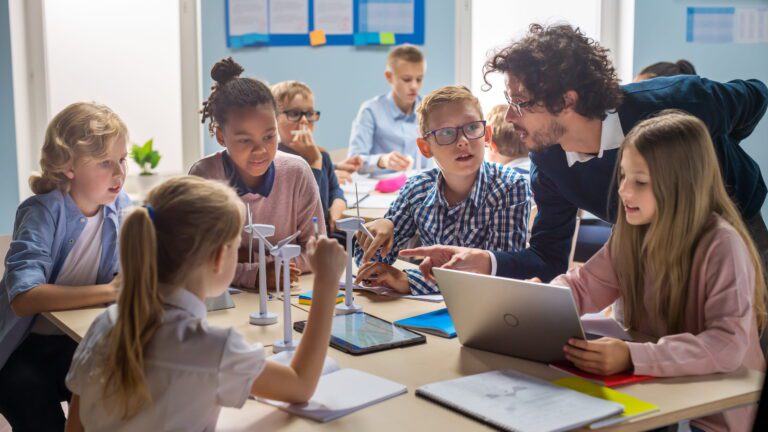
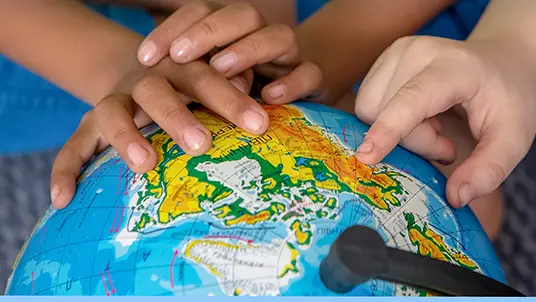
In the ever-growing world of educational technology, it’s tempting to reach for the newest, flashiest tool to grab students’ attention. But the real magic doesn’t come from the technology itself – it comes from the way it’s used. Without a clear connection to learning goals and a real understanding of the principles of immersion, even the most dazzling tools risk becoming just another distraction.
Discovery Education’s primary principle of immersive learning is pedagogy first, technology second. Engagement is important, but purposeful engagement – grounded in curriculum, skills, and outcomes – is what truly transforms learning.

Immersion without the Price Tag
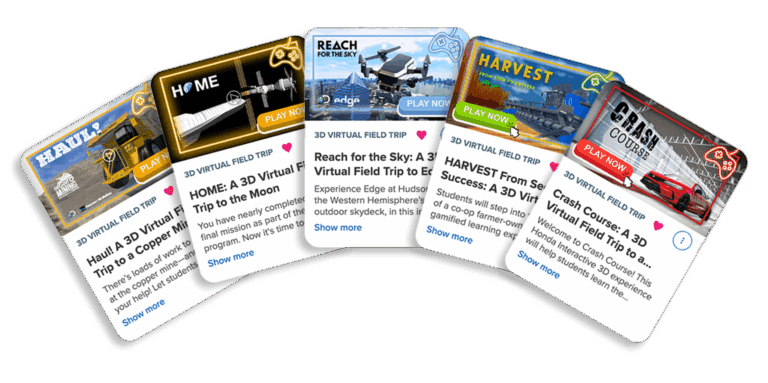
When people hear the term immersive learning, they often picture classrooms stocked with expensive VR headsets. While high-end hardware can be exciting, powerful immersive and experiential learning doesn’t require thousands of dollars of investment. What matters is creating moments that spark curiosity, ignite imagination, and build deeper understanding.
Take Discovery Education’s immersive tools:
- Sandbox – A 3D creation space where students can build worlds, model ideas, and explore concepts at any scale.
- TimePod Adventures – Bite-sized interactive journeys through time and space, blending AR storytelling with problem-solving challenges.
- 3D Virtual Field Trips – Browser-based explorations that transport students to unique locations, from ocean depths to historic landmarks.
All of these can be accessed with devices many classrooms already have, such as iPads, Chromebooks, or standard laptops.
The ‘Jelly in the Doughnut’
Think of the immersive moment – whether it’s stepping into an ancient city, exploring a science phenomenon in 3D, or manipulating a virtual ecosystem – as the jelly in the doughnut. It’s the sweet, memorable part that students will look forward to and look back on, but it’s only one piece of the whole and simply doesn’t hold up on its own.
The rest of the doughnut – the structure, substance, and nourishment – comes from what you do with that moment. That’s where pedagogy leads.
Every immersive experience from Discovery Education comes with robust supporting classroom activities designed to:
- Draw out key concepts
- Link directly to curriculum standards
- Provide opportunities for reflection and application
- Encourage collaboration and discussion

In other words, the immersive tool is the spark; the learning comes when teachers connect that spark to deeper exploration, skill-building, and assessment.
From Hook to Habit of Mind
Imagine your students exploring a virtual coral reef. For a moment, they’re surrounded by colorful fish, intricate corals, and shifting sunlight – an awe-inspiring scene. Without follow-up, that moment might fade as just “something cool we did in class.”
But with the right pedagogical framing, it becomes much more:
- Science: Students investigate biodiversity, food chains, and the effects of climate change.
- Math: They measure reef growth rates or calculate fish population changes.
- ELA: They write persuasive speeches or informational texts about reef conservation.
The immersive moment is the hook which amplifies outcomes through increased knowledge absorption, contextual understanding, and retention; the lesson plan turns it into a habit of mind.
Practical Ways to Capture and Extend Learning in Sandbox
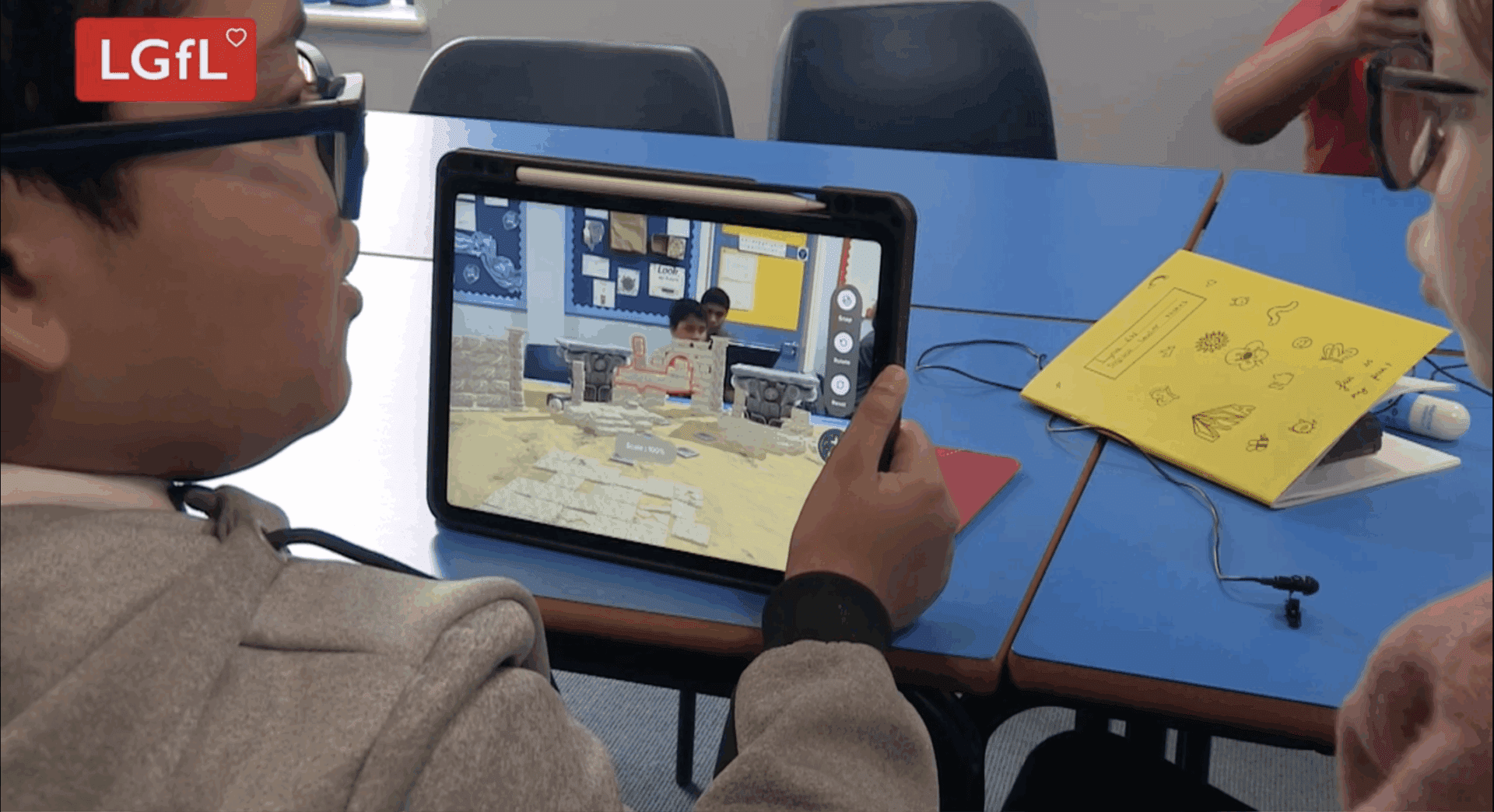
One of the most versatile examples is Sandbox, the free environment-building app from Discovery Education. This 3D creation space can be a powerful way for students to show what they’ve learned, not just tell it. Teachers can ask students to:
- Recreate a historical event or location – e.g., building a World War II trench system to explain conditions on the front line.
- Model a scientific process – e.g., demonstrating the way shadows move and change with the position of the sun in the sky.
- Understand perspectives – e.g., exploring the thoughts and feelings experienced in a specific location.
To make the learning visible, students can record their Sandbox creations as videos, narrate their thinking, or take screenshots and annotate them.
For more ideas, see “Measuring Engagement: Tools to Capture Learning Evidence with Sandbox.” You’ll find practical strategies for using built-in features to document student work – turning engagement into assessable evidence.
Why ‘Playing with Purpose’ Matters
The best learning happens when students are active participants, not passive consumers. Immersive and experiential tools tap into curiosity, but purpose ensures that curiosity leads somewhere meaningful.
When we lead with pedagogy:
- Technology becomes a vehicle, not the destination.
- Engagement is sustained because it’s tied to a bigger question or challenge.
- Students can make connections between their immersive experience and the wider world.
A Call to School Leaders
The best learning happens when students are active participants, not passive consumers. Immersive and experiential tools tap into curiosity, but purpose ensures that curiosity leads somewhere meaningful.
As school leaders, you set the tone for how technology is adopted in classrooms. Encourage your teams to:
- Start with the learning goal. Ask: What do we want students to know, understand, or be able to do by the end?
- Choose technology that serves that goal. Resist the urge to adopt tools solely for novelty.
- Support professional learning. Give teachers time to explore, experiment, and plan how to connect immersive moments to curriculum standards.
- Celebrate purposeful play. Immersive learning doesn’t have to be serious all the time – play and exploration can be deeply educational when guided by intentional design.

Immersive learning can be transformative – not because of the technology itself, but because of the way it’s woven into the learning journey.
So the next time you introduce a new digital experience into the classroom, remember: the technology is the jelly in the doughnut.