
Key takeaways
-
Effective classroom management is a skill that teachers develop over time; skilled teachers apply classroom management strategies to create productive learning environments.
-
How teachers handle classroom management affects how well classrooms function and directly impacts student outcomes.
-
Classroom management strategies that set clear expectations and address misbehavior allow teachers to create productive learning environments.
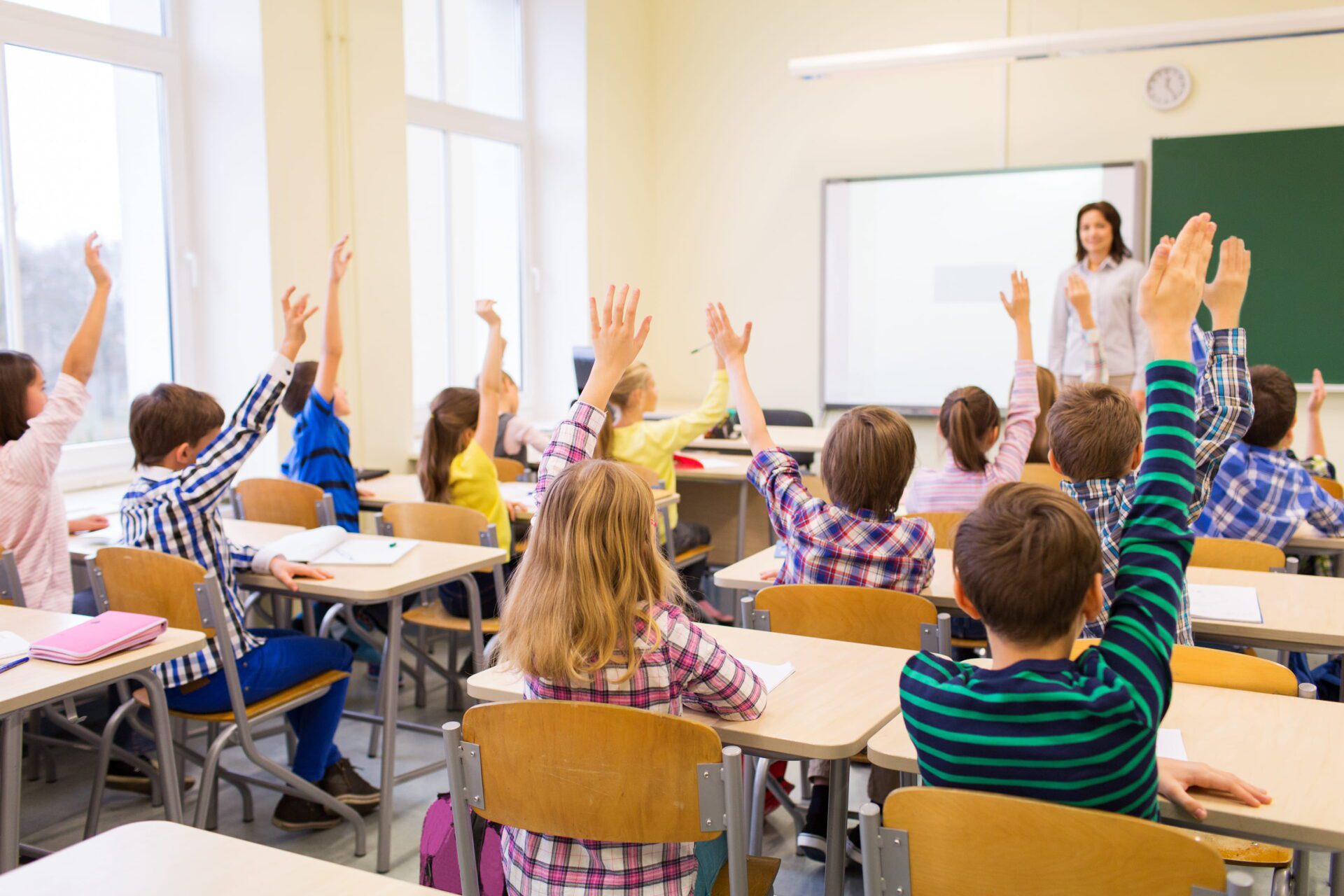
When you walk into a well-managed classroom, you know. Teachers who are skilled at classroom management build positive relationships, have efficient procedures, and clear, enforced rules. Teachers who are developing their classroom management skills run into challenges ranging from mismanaged time to student misbehavior to more egregious incidents like disrespect or consistent disruption.
Classroom management, or the strategies and practices that teachers use to create a positive, organized, productive learning environment, must be in place for learning to occur. When a classroom is well managed, teachers can effectively implement the curriculum and use other educational resources to advance learning. The importance of classroom management can’t be understated; effective classroom management impacts how teachers and students feel and the student outcomes that can be achieved. In addition, negative student behavior is a top concern among teachers and a reason that many teachers leave the classroom.
The primary goal of classroom management is to maximize positive behavior and minimize disruptive behavior. Effective teachers do this by implementing strategies and practices that teach students how to behave and incentivize students to engage in productive behaviors. Ineffective classroom management, when time is wasted and student behavior interrupts learning, has detrimental effects on teachers and students: students do not learn, classrooms are chaotic, and teachers often feel defeated.
Classroom Management and New Teachers
Teachers’ ability to manage a classroom develops over time, from managing individual behaviors to understanding the classroom as a dynamic system. One study found that new teachers focused on controlling student behavior, whereas veteran teachers managed complex classroom dynamics. School leaders can help new teachers develop the most effective classroom management strategies by identifying what they have in place and coaching them to implement strategies that will address broader classroom dynamics.
Effective Classroom Management Strategies for Teachers
We have outlined 15 research-based classroom management strategies that teachers can use to strengthen or focus their classroom management skills. First, teachers must apply strategies to teach students how to behave. Then they must have strategies to address negative behaviors. School leaders can use this list of established, effective classroom management strategies for both new and veteran teachers.
7 Classroom Management Strategies to Teach Positive Behaviors
Create and post rules
The first thing any teacher needs to establish is classroom rules. Rules describe acceptable classroom behaviors and direct the communication teachers use to manage a classroom. For example, when a teacher sets the rule that students act safely, they can apply it to a student using scissors inappropriately and to prevent bullying behavior. Teachers may start with school rules and adapt them for their classroom, or they can build rules from the ground up with students. Either way, a manageable list of rules (3-5) should be posted and used to establish and reinforce positive behaviors.
Rules should be:
- Written in general, objective language,
- Posted where students can see them, and
- Referred to during instruction or when disruptive behavior occurs.
Once classroom rules are established, they become a living document. Teachers and students can add rules throughout the year as situations arise. For example, if students increase their time using technology mid-year, they can add a rule to always plug in computers at the end of the day, or include technology responsibility in the rules list.
Set Routines to Minimize Downtime
Rules create the expectations for the classroom, and routines maximize productivity and minimize unstructured time. Before the school year, teachers can think through each routine, what they will be doing, and what they want students to do. Then, they plan to teach those routines and procedures at the start of the year and after longer breaks. New teachers in particular should plan to reteach procedures as needed throughout the year.
Build Relationships
The relationships that teachers build with students can help or hurt classroom dynamics and learning. Relationship-building is ongoing, but teachers can plan to get to know students at the start of the year with activities that allow students to share information about themselves. Throughout the year, teachers can build relationships by:
- Have a morning greeting that allows the teacher to greet each student by name,
- Engage with students during downtime (recess, etc),
- One-on-one teacher-student conferences
- Call home with a good report at the start of the year.
Set the Classroom up for Success
The way a classroom is organized, from where the teacher’s workspace is to how desks are arranged, impacts student behavior. As teachers set up the classroom, they can think about:
- How will the teacher move around the classroom? What arrangement allows them to circulate and provide proximity and feedback?
- How should the desks be arranged? What type of work will students be doing? How does the seating arrangement support that?
- Which students should or should not sit near each other?
- How will students move within the space? Are desks or tables arranged so that students can easily move from one space to another?
Praise
How we talk to students matters as much as what we say. Teachers can use praise to reinforce the behavior they want to see, build relationships, and support students who struggle to meet classroom expectations. Praise should be specific and positive. For example, a teacher may notice a student helping a peer, and say, “I noticed you took time to help Sarah put away her items; that was really being responsible and kind.”
Provide Active Supervision
Teachers can encourage positive behavior in all students by catching them being good. Then, teachers reinforce those positive behaviors in the classroom. To do this, teachers must actively monitor student behavior and provide feedback on how students can change their behavior to align with expectations, especially during transitions and unstructured time. For example, while students transition from the classroom to the playground for recess, a teacher may thank those who walk silently.
Assign Classroom Jobs
Classroom jobs provide ownership over the classroom and minimize downtime. Teachers can assign classroom jobs depending on their grade level. A kindergarten teacher may have a line leader, a caboose, a paper monitor, and an “electrician” to turn the lights on and off. On the other hand, a middle school teacher may have a paper monitor, class librarian, and technology assistant.
Explore K-12 Classroom Management Resources
See how Discovery Education can support educators.
8 Classroom Management Strategies to Address Negative Behaviors
At some point, students will demonstrate negative behaviors. What a teacher does to establish positive behaviors, and how they respond to negative behaviors determine what happens next.
Provide Proximity
When teachers stand in the front of the room for the entire lesson, they miss opportunities to catch and redirect negative behaviors. Circulating ensures that teachers are aware of behaviors and can monitor them. For example, a teacher may walk around the room to provide certain students with more proximity depending on their ability to stay on task. School leaders can support new teachers with this strategy by visiting classrooms as well and providing their own proximity to students.
Use Nonverbal Cues
A shake of the head or a nonverbal gesture redirects students without interrupting the lesson. Teachers can use:
- Nonverbal cues (thumbs up, thumbs down) provide students with quick information about how they are doing.
- Student cues (a T made with two hands) that teachers can use to prompt student attention.
Reward Positive Behaviors
When teachers use positive reinforcement, they ignore inappropriate behavior and reinforce appropriate behavior to replace it. For example, a teacher uses a points system to reward students who have started working. As the teacher rewards students who are on task, the remaining students who were having trouble getting started also get on task and are rewarded.
One way for new teachers, in particular, to set up a reward system is to ask students what they like and develop one around that. Rewards do not have to be tangible or purchased. Teachers may provide lunch with a peer buddy, lunch with a teacher, choosing a seat, or choosing a song at the end of the day as rewards that students can earn.
Corrective Feedback
Students need feedback when they are not behaving appropriately. Corrective feedback, a short verbal reminder, is the first step in correcting misbehavior. For example, a teacher has set the rule that only one person can speak at a time. During the discussion, a student shouts across the room. The teacher stops the discussion to remind the student that they are expected to raise their hand and wait to be called on.
Clear, Quick Consequences
If a quick reminder does not change behavior, teachers can use a quick consequence, such as removing a classroom privilege. For example, a teacher reminds a student to focus on their own work. The student continues to disrupt the students around him. The teacher tells the student to move to a desk closer to the teacher. They are removing the privilege of sitting with their chosen peers.
Understand Behavior Using Data
Teachers often use data to drive instruction, but they may not apply the same planning to behavior. If a teacher is experiencing consistent behavior concerns from a class or one student, it is helpful to track that behavior over time.
- How frequently is the behavior occurring?
- How much time does it take from instruction?
- Does the behavior occur at one time of day? Or during one day of the week?
- Are there any events that happen right before or after the behavior that could be adjusted to reduce or change the behavior?
Once the teacher identifies trends, they can better address the issue.
One-on-One Conference
If a student breaks a rule multiple times, a quick conference can help teachers understand why and what to do next. To implement a conference effectively, teachers either give students a task or wait until the class is working independently. Then, they pull the student aside to talk to them one-on-one. Ask:
- What are you doing?
- What should you be doing?
- What can you do to fix it?
Involve Students in Problem Solving
When a student continually struggles to meet class expectations, engage in longer-term problem-solving. Meet with the student and tell them you want to help them succeed in class, but need their help. Then, ask the student why they are struggling to follow the rules. You may find that the student isn’t able to complete work independently or is hungry at a certain point in the day. The goal is to understand where a teacher can support a student, make those changes, and collaborate with the student until the behavior improves.
Managing a classroom is a skill that develops with time; however, teachers can start with these 15 effective classroom management strategies to create functioning, positive classroom environments.