
February is a powerhouse month for connecting academics with careers. We find ourselves at the intersection of Career and Technical Education (CTE) Month and National Engineers Week (E-Week). It’s the perfect moment to show students that the “E” in STEM isn’t just an academic subject, it’s a high-demand career pathway built on technical skill and creative problem-solving.
Some of the strongest classroom connections happen when we show the parallel between “learning a concept” and “training for a career.” When students see how a geometry lesson or a physics experiment translates into a paycheck and a purpose, their engagement skyrockets. This is learning applied in its most authentic form.
To make the connection between CTE and engineering concrete, we’ve created two engaging, high-impact activities. These classroom-ready resources transform abstract concepts into tangible, professional practice and are aligned with national standards.
Activity 1: The "Blueprint-to-Build" Relay
CTE x Civil & Mechanical Engineering
Engineering starts with a plan; CTE brings that plan to life. This activity highlights the relationship between Architectural Drafting and Construction Trades.
- The Challenge: Divide the class into “Design Firms” (Engineers) and “Field Crews” (Technicians).
- The Task:
- Designers receive a goal (e.g., “Build a bridge that spans 12 inches using only 10 straws”). They must draw a detailed, labeled schematic with precise measurements. Provide the Designers with 10 minutes to design. While designers are designing, field crews can prep their building space
- Field Crews can only use the drawing to build. They cannot speak to the designers during the build phase. Provide the field crews 10 minutes to build the design
- The Reflection: Discuss where communication worked and where it failed. What would have students done the same or differently? How important is communication in the iteration of a design?
This mirrors the real-world synergy required in modern manufacturing and construction.
Standards Alignment:
- NGSS (MS-ETS1-4): Develop a model to generate data for iterative testing and modification of a proposed object, tool, or process.
- Common Core Math (7.G.B.6): Solve real-world and mathematical problems involving area, volume, and surface area of two- and three-dimensional objects.
- Common Core ELA (WHST.6-8.4): Produce clear and coherent writing in which the development, organization, and style are appropriate to task, purpose, and audience.
Activity 2: The "Sustainability Audit"
CTE x Environmental Engineering
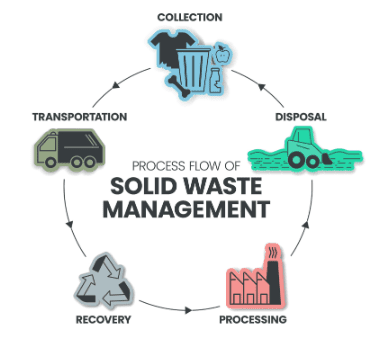
This activity connects the CTE focus on Business and Natural Resources with the engineering goal of Sustainable Design.
- The Challenge: Ask students to conduct a “Micro-Audit” of the school cafeteria or a classroom. They must identify one “waste stream” (e.g., food waste, electricity usage, or paper consumption).
- The Task: Students design a technical solution or process improvement to reduce that waste by 10%.
- STEM Careers Coalition Connection: Use the STEM Careers Finder to watch a profile on a Sustainability Coordinator, Environmental Engineer or Chief Energy and Sustainability Officer.
- The Pivot: Students draft a “Technical Proposal” explaining the logic of their design.
Standards Alignment:
- NGSS (MS-ETS1-1): Define the criteria and constraints of a design problem with sufficient precision to ensure a successful solution.
- Common Core Math (6.RP.A.3): Use ratio and rate reasoning to solve real-world problems (calculating the 10% reduction).
- Common Core ELA (RST.6-8.1): Cite specific textual evidence to support analysis of science and technical texts.
Activity 3: The "Blueprint-to-Build" Relay
CTE x Civil & Mechanical Engineering
Engineering starts with a plan; CTE brings that plan to life. This activity highlights the relationship between Architectural Drafting and Construction Trades.
- The Challenge: Divide the class into “Design Firms” (Engineers) and “Field Crews” (Technicians).
- The Task:
- Designers receive a goal (e.g., “Build a bridge that spans 12 inches using only 10 straws”). They must draw a detailed, labeled schematic with precise measurements. Provide the Designers with 10 minutes to design. While designers are designing, field crews can prep their building space
- Field Crews can only use the drawing to build. They cannot speak to the designers during the build phase. Provide the field crews 10 minutes to build the design
- The Reflection: Discuss where communication worked and where it failed. What would have students done the same or differently? How important is communication in the iteration of a design?
This mirrors the real-world synergy required in modern manufacturing and construction.
Standards Alignment:
- NGSS (MS-ETS1-4): Develop a model to generate data for iterative testing and modification of a proposed object, tool, or process.
- Common Core Math (7.G.B.6): Solve real-world and mathematical problems involving area, volume, and surface area of two- and three-dimensional objects.
- Common Core ELA (WHST.6-8.4): Produce clear and coherent writing in which the development, organization, and style are appropriate to task, purpose, and audience.
Why This Matters Now
CTE Month celebrates the how, and Engineers Week celebrates the why. By combining them, you help students build a STEM Identity. They start to see that being “good at school” is the first step toward being “good at a career.”
However, this bridge between the classroom and the career shouldn’t stop when the month ends. These strategies remain a powerful way to fuel student engagement and keep learning relevant as you move into your March and April lesson planning, there is always a place for “learning applied.”
Explore more industry-aligned activities at the STEM Careers Coalition Resource Center.