
Key takeaways
-
An effective lesson plan has clear objectives, purposeful activities, and meaningful assessments
-
Activities should be closely aligned with learning goals; no “busy work.”
-
Lesson plans should contain a mix of formative and summative assessments to check for understanding.
-
Reflection helps create stronger teachers and is an essential part of any lesson.
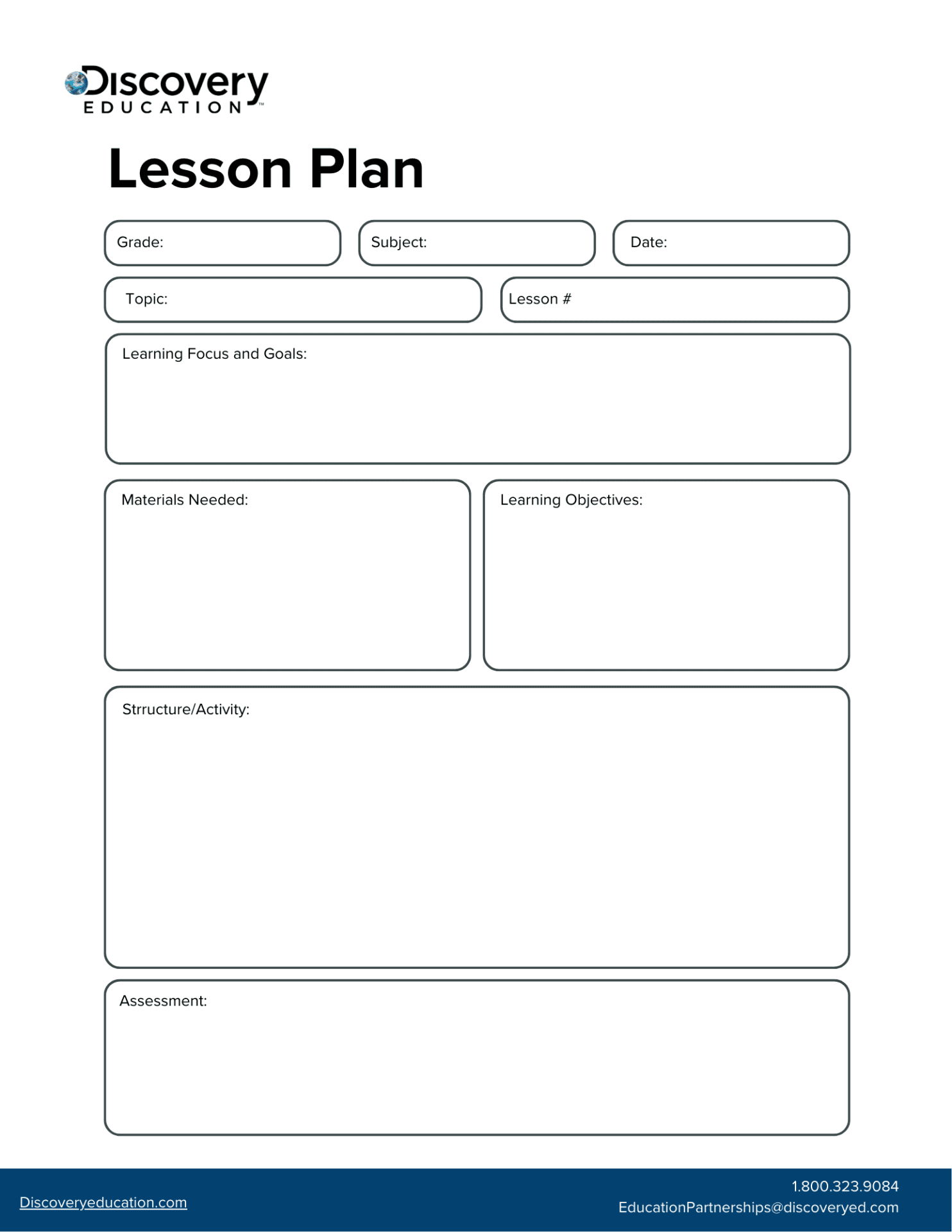
Get Our Free Lesson Plan Template
Download the lesson plan template to start designing clear objectives, aligned activities, and meaningful assessments that strengthen instruction and support student success.
Lesson planning is an integral part of teaching and serves as the blueprint for purposeful instruction and deeper learning. However, lesson planning is much more than choosing “fun” activities and games that students will enjoy. While engagement is incredibly important for learning, an effective lesson plan outlines clear learning goals, carefully chosen teaching strategies, and effective ways to assess student progress. In this article, we take a closer look at lesson plans, breaking down the essential components and providing step-by-step guidance. Plus, we share a free lesson plan template to help you get started designing lessons that truly transform learning.
What is a Lesson Plan?
Simply put, a lesson plan is a detailed guide of what students need to learn, how the teacher will facilitate that learning, and how the learning will be measured. It should always be written out–physically or digitally–well before the lesson takes place. A well-prepared lesson encourages organization, time management, and is key to feeling less stressed out in the classroom! While every lesson plan is unique, just like every student and classroom, all include several key components that we’ll examine more closely.
Explore K-12 Classroom Management Resources
See how Discovery Education can support educators.
How to Write an Effective Lesson Plan
There are six main steps to writing an effective lesson plan, and each deserves as much time and care as the others. If that seems overwhelming, please don’t worry! Designing a purposeful lesson does take patience and flexibility, but with practice, you’ll naturally begin to consider the important questions in each step.
Lesson Objectives and Learning Goals
The most important part of lesson planning is identifying clear objectives and learning goals. What do you want your students to understand and be able to do? This backward design ensures that your lesson is meaningful, effective, and focused. There are many ways to determine your objectives, but using the SMART goal-setting criteria is especially helpful for planning.
- Specific: Do the objectives clearly state what students should learn?
- Measurable: How can the learning be measured?
- Attainable: Are the goals realistic for your students, and can they be met in the learning environment?
- Relevant: Do the goals align with state or school standards and clearly support what students are expected to learn?
- Timely: Does your lesson have a specific, realistic timeframe for completing the activities and reaching the learning goal?
Although this process may seem overly detailed at first, breaking objectives into manageable steps makes lesson planning more straightforward. Even more importantly, it helps you feel confident that your lesson is teaching students the concepts or skills they need.
Design the Assessment
In this second stage of planning, design the assessments students will complete to demonstrate their learning. Following the principles of backward design, assessment is designed before lesson planning, keeping the focus on learning outcomes rather than activities or “busy work.” Lessons should offer both formative and summative assessments.
Assessments
Formative assessments are quick ways to gather information throughout the lesson to determine how well the students are learning and monitor their progress. These assessments can also help identify misunderstandings so you can address them before the lesson progresses. Examples of formative assessments include“fist to five,” where students hold up fingers to show how much they understand; online polls or quizzes on an interactive learning platform; or exit tickets to find out what kids remember or what questions they still have. Formative assessments can be as straightforward or as creative as you want, like drawing a sketch or writing a letter to a friend explaining what they learned.
On the other hand, summative assessments are formal measures of how well your students have learned. Summative assessments are higher-stakes and often count for a larger portion of students’ grades. Examples of summative assessments include: traditional exams, written reflections, group projects, or portfolios. In addition to measuring whether students have achieved learning objectives, summative assessments provide teachers with data to use as they reflect on their lessons and make adjustments for the future.
You likely won’t have a summative assessment after each lesson; these typically take place at the end of a unit or the entire course. However, it’s important to design the summative assessment before planning the learning activities, because knowing the final goal helps students understand what they are working toward. It also helps teachers focus their instruction and avoid getting sidetracked by activities that don’t contribute to students’ success on the final learning evaluation.
Lesson Procedure
After you identify the learning objectives and create the assessments, develop the lesson procedure. This is a step-by-step guide to how the lesson will progress from beginning to end.
Hook/Introduction
Spend time developing the introduction, because captivating your students’ attention from the beginning is important. In fact, research shows that students who feel positive at the beginning of a lesson feel more motivated and confident, which supports their overall learning.
To design a creative introduction that sparks your students’ interest, you could share a powerful personal anecdote, show a short video, or conduct a fun, hands-on quiz. As you plan, ask yourself:
- How will I find out what students already know about this topic?
- What opinions, beliefs, or ideas might they already have?
- Are there any common misunderstandings about this topic?
Learning Activities
After you’ve created your hook, the next step is to map out the learning activities, or what students will actually be doing. Remember to include quick formative assessments and finish with a summative assessment (if appropriate). A strong lesson usually includes a balance of direct instruction, guided practice, and independent work.
With direct instruction, the teacher explains the concept, models the skill, and demonstrates how to do the work. Then, guided practice allows students to try the activity with the teacher’s support and feedback, building the confidence to work independently.
When planning activities, keep your unique students and classroom in mind. Questions to ask yourself include:
- What type of instruction works best for this lesson?
- How will I model the skill?
- How will I adjust this for students who need more support or a deeper challenge?
- How/where can I pause to check for understanding?
- Is the allotted time realistic?
- Does the activity help students achieve the overall learning goals?
When it comes to planning specific activities, the sky’s the limit! The most effective activities depend on the topic, time, or environmental constraints, and the specific knowledge or skills you want students to gain. Some activity ideas can include:
- Think-Pair-Share: Students think about a question and then discuss their answers with a partner. Finally, the partners share their ideas with the whole class or another small group.
- Debate: Students research and then debate the best method for solving a problem.
- Jigsaw: Students become “experts” on a different type of problem or concept and then teach it to other students in their group.
- Journaling: Students answer prompts, solve problems, and reflect on what they’ve learned. Journaling can also be a way for students to ask the teacher questions they may not feel confident enough to ask aloud.
- Logic Puzzles: Students solve puzzles or problems that require critical and flexible thinking. They can be collaborative or independent and are a low-stakes way to promote stamina and curiosity about a topic.
- Real-World Projects: Working independently or in small groups, students apply their knowledge and skills to tackle a challenge they might encounter in everyday life.
- Online Learning Platforms: Students use online learning platforms or apps to practice skills through interactive games and challenges. This allows each student to work at their own pace and get instant feedback.
Reflection
Another essential part of lesson planning is reflection, but this important step is often overlooked. The school day is hectic, and many teachers feel pressure to quickly move to the next learning objective. However, making space to reflect on a lesson provides invaluable information that helps you become a stronger teacher. Here are some questions to get you started:
- What went well? How do you know? What evidence do you have?
- What would you change?
- What surprised you?
- Were the students engaged? Why or why not?
- Did I adjust instruction for different learners?
- Was the pacing too fast/too slow?
Reflection doesn’t have to be as formal as the main lesson plan. What matters most is choosing a method you’ll consistently use. Whether making quick notes on your phone, writing in a journal, or using a structured template, the goal is to take time to self-reflect.