
Key takeaways
-
Schools will achieve better results when they intentionally align standards, instruction, and assessment.
-
Vertical alignment helps students build on their skills from one grade to the next, which helps close learning gaps.
-
Horizontal alignment creates consistent expectations across classrooms, ensuring students have an equitable learning experience.

Explore K-12 Curriculum Resources
When achievement data looks different from one classroom or grade to another, school leaders often respond by refocusing teachers on a high-leverage instructional strategy or adopting a new evidence-aligned program. While well-intentioned, these efforts usually do not achieve the consistency they are hoping for. Sometimes, the real issue stems from misalignment among standards, instruction, and assessment. Aligning the curriculum assures these elements work together rather than in isolation.
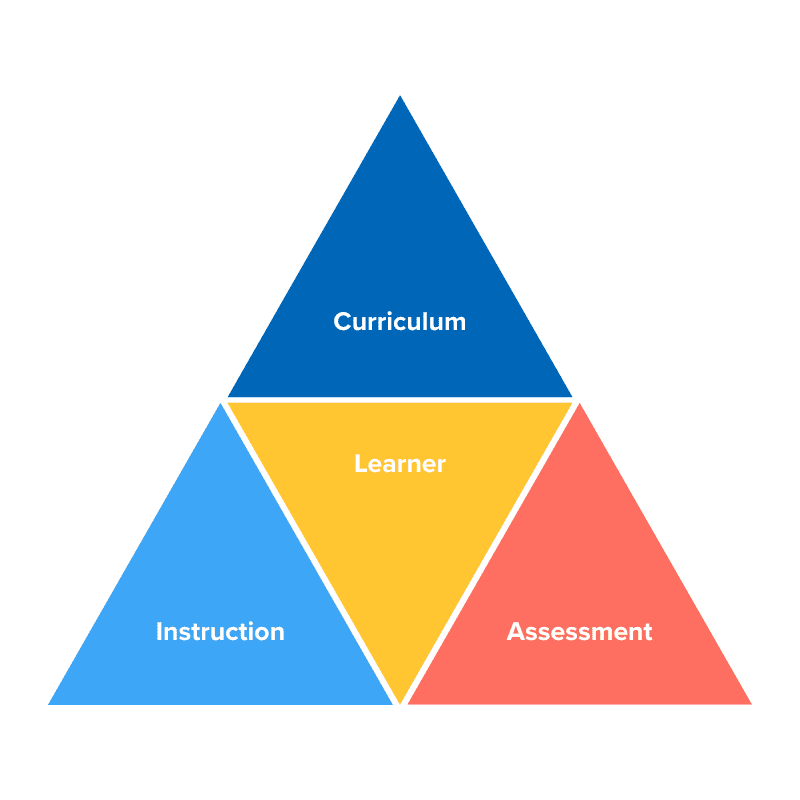
Curriculum alignment means that learning expectations, instructional practices, and assessments are intentionally connected, and that teachers have a common understanding of that connection. When alignment is strong, teachers uphold consistent expectations, students have equitable learning experiences, and assessment data becomes more reliable. But when alignment is weak, there is more variation not only in teachers’ expectations and students’ experiences, but also in student achievement data.
For school leaders committed to student achievement, aligning the curriculum and creating time for collaboration are essential parts of schoolwide improvement.
What Is Curriculum Alignment?
Curriculum alignment is the extent to which standards, instructional materials, classroom activities, and assessments work together to support a common learning goal and ensure every educational resource points toward the same expectations.
In an aligned system:
- Standards clearly define what students should know and be able to do.
- Instructional materials are chosen to support those expectations.
- Classroom activities reinforce the targeted knowledge and skills.
- Assessments measure the learning that was intentionally taught.
- Student data reflects progress toward the standards.
When these components work together, student achievement improves because expectations are clear and consistent. But this level of coherence does not happen automatically.
It requires time for teachers to build a common understanding of:
- What the standards mean in practice.
- Ways they plan to teach them.
- How to measure student learning.
Schools must intentionally create space in schedules for this calibration process to occur, so that consistency in teaching, student experience, and progress measurement can take hold.
When alignment is not strong, challenges begin to surface. For example:
- Teachers may emphasize skills that are not reflected in assessments.
- Assessments may measure expectations that were not the focus of instruction.
- Teams may assume a common understanding of standards or of what proficiency looks like without ever testing that assumption.
Over time, these differences add up, and the gaps between classrooms and in achievement data become more pronounced.
Curriculum alignment alone does not guarantee results. However, without it, even the best instructional strategies will struggle to produce steady, lasting growth. No single teacher, no matter how skilled, can drive schoolwide success in isolation. Schoolwide improvement happens when teachers across classrooms and grade levels work from common expectations.
When those expectations are aligned:
- Professional learning communities gain clarity.
- MTSS efforts become more focused.
- High-quality instructional materials are implemented with greater purpose.
In short, curriculum alignment allows the work already underway to have a greater impact.
Explore K-12 Curriculum Resources
See how Discovery Education can support educational leaders.
Types of Alignment
Curriculum alignment operates in multiple dimensions within a school system. Two forms in particular—vertical alignment and horizontal alignment—play a key role in instructional consistency and data clarity.
Vertical Alignment in Education
Vertical alignment in education focuses on how knowledge and skills build from one grade or course to the next. It centers on the student experience over time and whether each year of instruction builds purposefully on the one before.
Foundational skills should be taught with intention so students are ready for more complex work as they move forward. When the progression is clear, learning from year to year feels purposeful and connected.
When vertical alignment in education is strong, teachers know not only what students need to learn this year, but also how that learning fits within the larger trajectory. They see how today’s lessons build on past learning and prepare students for what comes next.
When vertical alignment in education is not strong, achievement data often show inconsistencies. For example, a grade-level team may notice a dip in performance and work to address it right away. But when teachers step back and look across grades, they may find that a foundational skill was introduced inconsistently or not fully mastered in earlier years. In that case, the current team can respond to the data now, but lasting improvement requires earlier grades to strengthen how and when that skill is taught. Otherwise, the same dip is likely to appear again with the next group of students.
The issue is not a lack of effort. It’s the progression of skills across years.
Looking at how skills progress across grades helps teams spot where expectations may be misaligned. Leaders and teachers might look at:
- Where and how a skill is first introduced.
- How expectations increase in complexity from year to year.
- Whether students are practicing the skill with increasing independence.
- Whether students are being asked to use the skill in new contexts before they are confident with it.
Understanding this progression strengthens instruction in practical ways.
- Teachers can scaffold deliberately to close gaps in foundational skills.
- Teachers can extend learning intentionally for students ready to move beyond grade-level standards.
With strong vertical awareness, teachers understand what students were expected to learn in earlier grades and what they will encounter next, so their instructional decisions can be more precise.
Over time, strong vertical alignment in education turns isolated lessons into a clear learning path. Instead of reacting to unexpected dips in data, schools begin to see growth as cumulative and more predictable.
Horizontal Alignment in Education
While vertical alignment focuses on how learning builds over time, horizontal alignment in education focuses on consistency across multiple teachers teaching the same grade level or course.
Horizontal alignment refers to shared expectations across classrooms. It ensures students have equitable access to standards-based instruction, regardless of which teacher they are assigned.
Strong horizontal alignment does not mean identical lessons or scripted instruction.
When horizontal alignment in education is strong, it means teachers have a common understanding of expectations and a shared definition of proficiency. As a result, students encounter consistent expectations across classrooms. Teachers collaborate more effectively because they share a common understanding of what the standards require and what proficiency looks like.
When horizontal alignment in education is weak, differences may not be apparent in daily instruction, but rather in student achievement. For example, two classrooms may administer the same common assessment. One class performs well; the other struggles. At first glance, the data may suggest differences in instructional effectiveness. But when teachers look more closely, they may discover that “proficient” was defined differently, that certain skills were emphasized more heavily in one classroom than the other, or that expectations were interpreted differently.
The issue is not effort. It’s consistency.
This kind of variability is often unintentional. Teams may share pacing guides, rubrics, and assessments, yet not always pause to look at student work together and compare what they consider strong, developing, or not yet meeting expectations. Without taking the time to define proficiency together, expectations can drift from one classroom to the next. Teachers may assume they are aligned, but even small differences in interpretation can create variations in teaching and grading.
Looking at horizontal alignment helps teams identify where expectations may differ by looking at:
- How the standards are interpreted and applied in practice.
- What proficient work looks like when teachers review student work together.
- Which instructional strategies are selected to move students toward the standard.
- Whether assessments and grading reflect shared expectations or individual interpretation.
Over time, strong horizontal alignment in education creates greater consistency across classrooms and more equitable experiences for students. Additionally, it strengthens confidence in instruction and results. When teachers establish expectations together from the start, differences in outcomes are more likely to reflect student learning rather than variation in interpretation or emphasis.
Types of Curriculum Development Approaches
While clear principles define what a strong curriculum should do, approaches determine how those principles take shape. There isn’t one “right” way to develop a curriculum, but understanding the pros and cons of different models can help curriculum development teams make informed decisions.
- Subject-Centered Approaches organize learning around content and standards. They focus on what skills and knowledge are taught and in what order. When used thoughtfully, these approaches ensure students cover essential skills and knowledge in a logical progression and that the progression is applied consistently across classrooms. However, if teachers are not equipped to adapt the curriculum to the students in front of them, these approaches can slip into coverage for its own sake rather than deep understanding.
- Learner-Centered Approaches organize learning around student interests and choices. These approaches often increase student engagement, especially when students need a personal connection to the work. However, the challenge with these approaches is coherence. Without predefined learning progressions, rigor can vary, and essential knowledge can be missed depending on which options students select.
- Problem-Centered Approaches organize learning around real-world questions or problems. They help students see how learning connects to life beyond the classroom. These approaches can be powerful because they encourage the application of skills in meaningful ways. Still, without careful long-term planning, key skills and knowledge can be taught reactively rather than by design.
While each approach has its strengths and limitations, most strong curricula don’t adhere to a single approach. They pull from different approaches depending on their goals, content, and students. What matters is not the approach used, but that the design is intentionally created to stay focused on student learning.
How to Make Curriculum Alignment Meaningful and Effective
Effective curriculum alignment goes beyond well-written curriculum maps or pacing guides. It depends on intentional leadership and allocated time for collaboration. When leaders set aside time for alignment, it shows that it matters, and consistency follows.
A good place to start is by reviewing vertical progressions. Before adjusting pacing guides or starting new programs, school leaders can help teachers see how learning builds over time. A simple first step is to bring teachers from adjacent grades or courses together and ask them to compare what students are expected to know and do for the same or similar skill. Those conversations often bring to light gaps or overlaps that would otherwise be unnoticed. This works best when schools set up regular times for teachers from different grades to collaborate. Vertical alignment in education requires teachers to see how their class fits into the bigger picture of a student’s learning.
It is just as important to make sure teachers in the same grade or course are on the same page. Teams may assume a common understanding because they share standards and assessments. Yet calibration conversations can reveal key differences. When teachers in the same grade or course collectively analyze student work to define proficiency, alignment moves from paper to practice.
For this work to take hold, schedules must reflect this priority. Leaders can demonstrate commitment by including the following in the master schedule:
- Time for teachers across grade levels to talk through how skills build from year to year.
- Dedicated team meetings within each grade or course to clarify expectations and review student work.
- Built in time to look at student work together before and after common assessments.
Without dedicated time, alignment remains assumed, rather than a reality.
These conversations do not need to be elaborate. Even short, focused discussions can clarify expectations and reduce variability. As teachers agree on what proficiency looks like, planning and grading become clearer, and the data they collect is more useful for improving instruction.
When results are uneven, schools often try new programs or add more training. However, lasting progress usually starts with evaluating how well current standards, instruction, and assessment are aligned.
In many cases, meaningful improvement does not require doing more. It means making sure what is already in place—effort, teaching, and assessment—are all working together. When this happens, classrooms are more consistent, data is more reliable, and the whole school can grow.