Square roots don’t want to sit still on a number line. They’re abstract by nature, and for Leigha Jordan’s eighth graders at Valley Springs Middle School, that abstraction was the whole problem. No matter how she explained it, the concept wouldn’t hold.
That’s when Ms. Jordan had an idea. She remembered a lesson in DreamBox Math built around exactly this standard, so she assigned it to her class. Inside the program, students could grab a square root and place it along the number line, testing and adjusting until it landed in the right place. It was something no worksheet could offer. One by one, light bulbs came on.
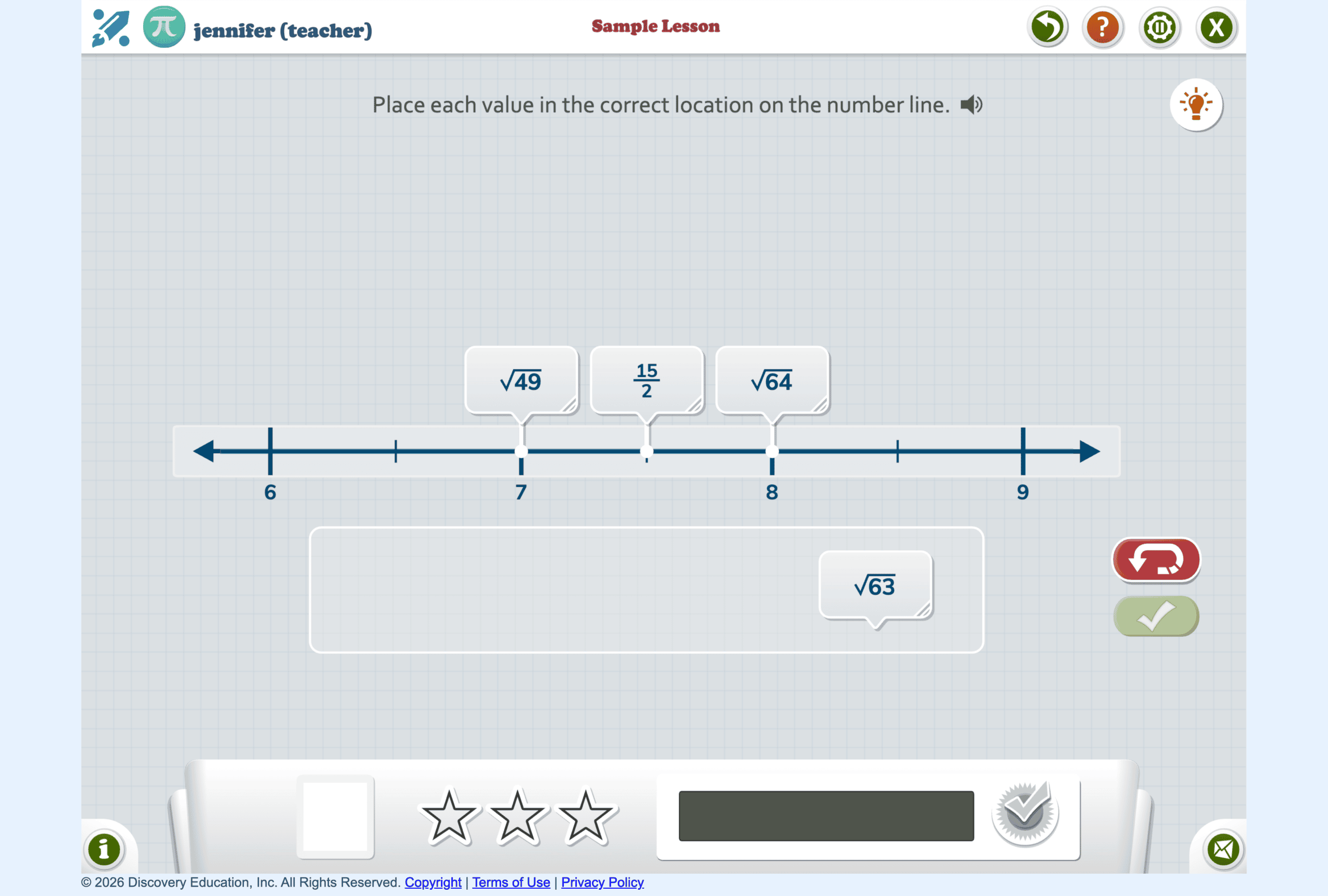
It’s a great example of a teacher using a device with intention, so students aren’t just clicking through an assignment. Rather, they are thinking, testing, and building understanding in a way paper alone can’t offer. For Ms. Jordan’s students, the screen wasn’t replacing learning. It was extending it.
Strengthening Teacher Impact
Teachers remain the single most important in-school factor influencing student learning, and technology should strengthen their impact, not replace it. Ms. Jordan points out how DreamBox Math helps her do so.
Ms. Jordan will teach a concept one day, then find a compatible, standards-aligned lesson in DreamBox Math to reinforce the concept. The next day, she’ll ask students to complete that lesson. She’s able to check data reports to ensure their understanding. “DreamBox Math allows me the opportunity to meet every need of every student, because it truly meets each child where they are and gives them what they need in the moment,” Ms. Jordan said.

Closing Gaps for Better Learning Outcomes
Of course, the real test of intentional screen time is whether the learning sticks after the screen goes dark. Ms. Jordan says her students come to her at different learning levels, and some have IEPs or English is their second language. When a student hasn’t mastered an earlier skill, it can be difficult to move forward, since math builds on what came before. She finds that DreamBox Math makes it easy to fill those information gaps.
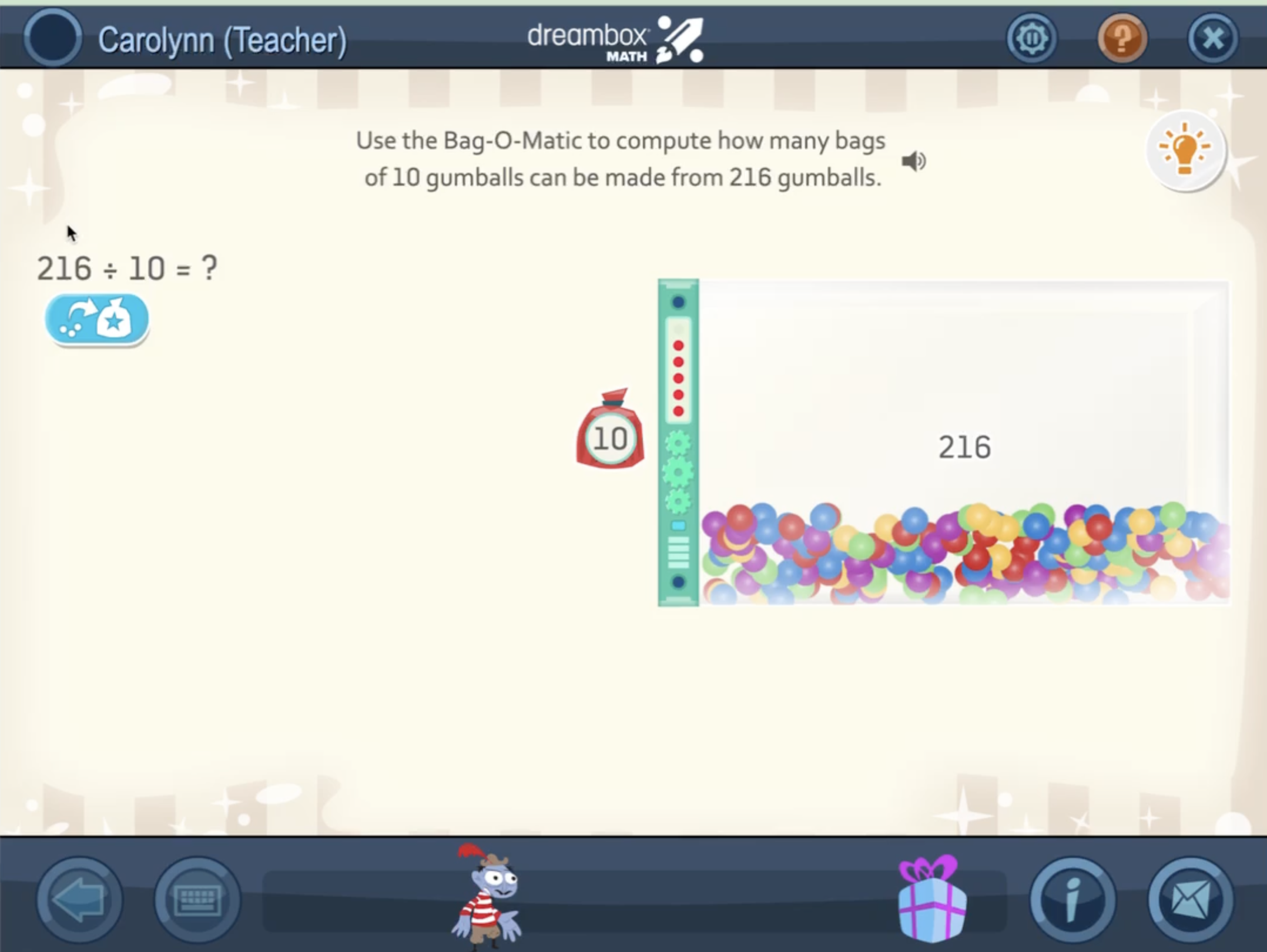
“I had a student who was struggling with long division, and that’s not a topic we cover in eighth grade, since it’s a fifth-grade standard,” Ms. Jordan said. He desperately needed to know the skill in order to be successful in her class, so she used a DreamBox Math lesson during the school’s remediation time. “I sat with him on DreamBox Math and watched him reason through and figure it out. He was able to apply it to the classroom and feel confident.”
Real-Time Data, Real-Time Insight
Effective instructional technology should also provide metrics that show it is working. That’s where DreamBox Math’s data reports are especially helpful. Ms. Jordan utilizes the data to get a complete picture of where each student is on their learning journey. She begins by checking time and activity, so she can see which students are using the program effectively. She also uses reporting to track learning gains and monitor proficiency, gaining comprehensive insight into each student. If she sees any red flags, she pivots her instruction to focus on areas that are problematic.
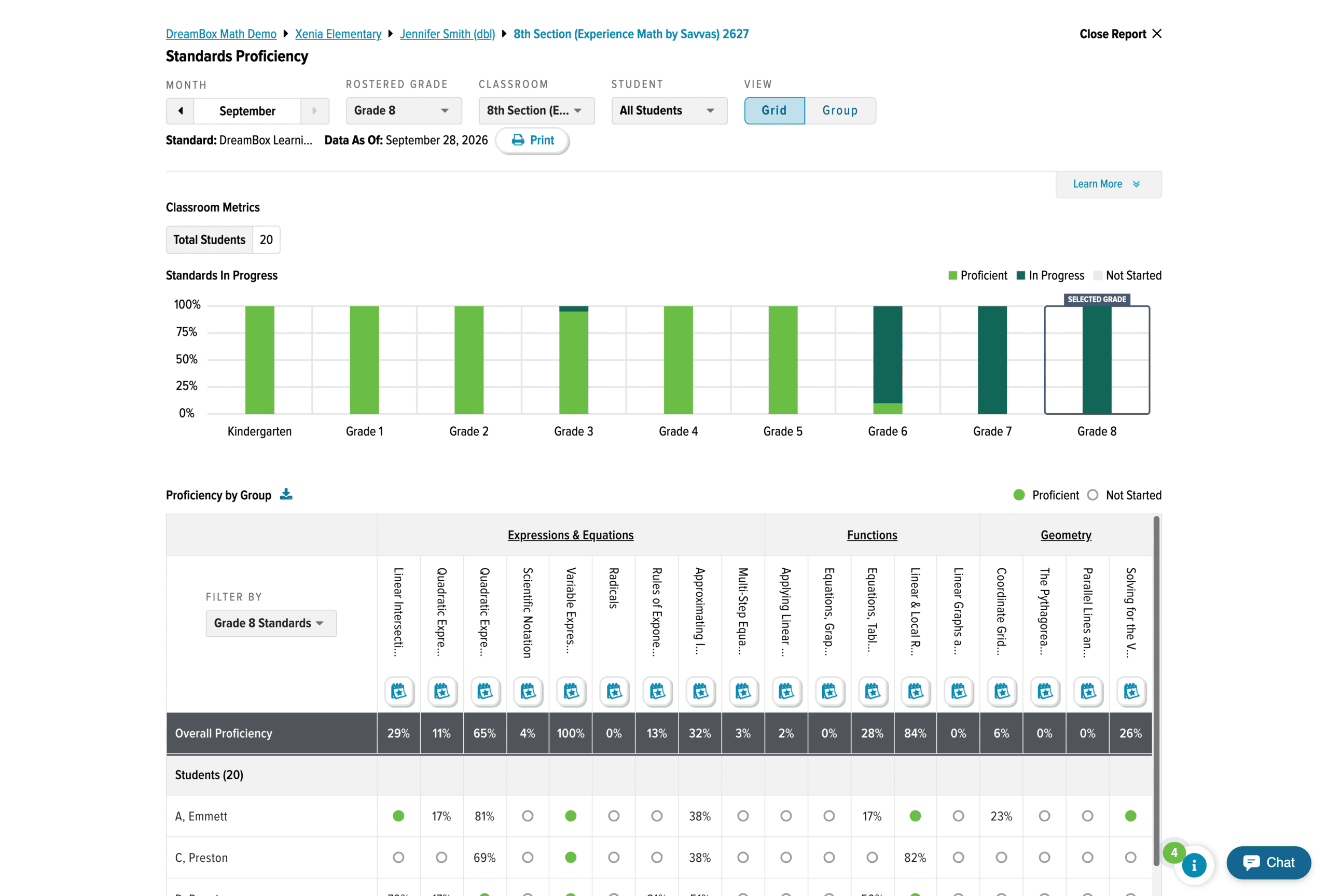
“The benefit of the data that I receive from DreamBox Math is outstanding. I am able to see where students are, how long they spend on a particular lesson, and how many lessons they’re completing a week,” Ms. Jordan said.
“I’m able to see how our students are growing by looking at how many standards they’ve become proficient in over time, and how many grade levels they’ve grown as they put forth the effort through the program.”
None of this works because of the technology alone. It works because Ms. Jordan uses it with purpose, turning data into decisions and screen time into real understanding. That’s the difference between a screen that fills time and one that fills a gap.
3 Key Takeaways About How Ms. Leigha Jordan Uses DreamBox Math with Intention
1. She pairs it with her teaching. Ms. Jordan teaches a concept, then assigns a matching DreamBox Math lesson the next day to reinforce it.
2. She targets specific gaps. Rather than generic practice, she uses targeted lessons to fill individual skill gaps, like sitting with a student to work through long division.
3. She monitors data to adjust. Ms. Jordan tracks time, activity, and proficiency to spot red flags and pivot her instruction accordingly.