Key takeaways
-
Developing 1st grader curiosity into observation, comparison, and explanatory skills.
-
Covering 1st grade science standards, including: foundational life, observing patterns, investigation, Earth and physical science.
-
Interactive 1st-grade science activities to facilitate student learning and confidence building.
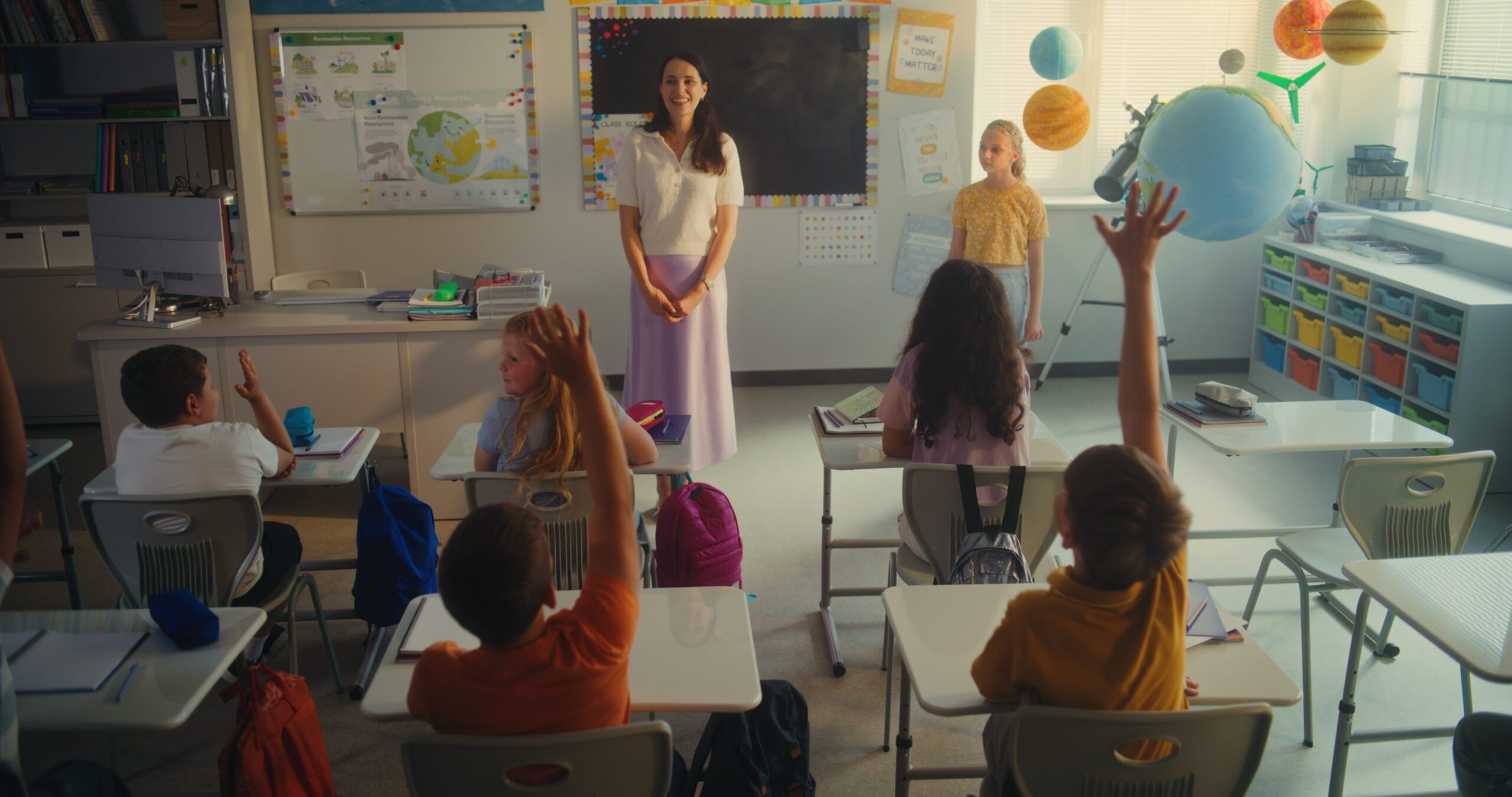
1st graders are entering a developmental stage that prepares them for early scientific thinking. Students in this age range still learn best through hands-on exploration, but they respond more positively to structured, intentional lessons than in kindergarten. It’s helpful to ask students to notice patterns, discuss scientific evidence, and make predictions rather than to allow free exploration in science activities. The activities and facilitated learning should not be overly complex. For the 1st grade, it’s necessary to build intellectual confidence through structured observation and application.
1st grade science is a chance to help students build a foundation for scientific thinking that they will use in later grades. By providing repeated opportunities to observe, notice, and verbalize patterns, students begin to build confidence in their science capabilities.
1st grade science activities provide a structured way to teach the 1st grade science standards. Also, it creates an opportunity to touch on other subjects. Having students draw, write, or solve simple math problems that align with the scientific activity helps build communication skills and contributes to well-rounded student development.
What are the 1st grade science standards?
The 1st grade standards fluctuate by state but are generally aligned with core concepts. In 1st grade science, students are developing the ability to explain scientific evidence, notice patterns, and compare, while building on their previous observation skills. Connecting these skills to Earth, life, physical, and space science curriculum.
1st grade standards:
- Observe, notice, and explain patterns in the sky, weather, seasons, and everyday environment.
- Characteristics of plants and animals.
- The physical needs of plants and animals are to live.
- Push and pull forces.
- How to sort materials and objects.
- Describe changes and patterns with observed evidence.
1st grade science standards are focused on concepts and understanding, not memorization. To facilitate learning, it is important to keep materials easily accessible to students, fostering a sense of independence. Maintain clear verbal and written directions for all 1st grade science activities.
Over the course of the school year, students will begin to notice patterns and repetition in science class. Building an understanding of science and how to record, notice, and explain what they see. These are big steps and will be applied the following year to broaden their understanding further.
10 1st Grade Science Activities and Experiments
1. Outdoor Observation
Students keep a log of all their outside findings and when they occur—building a log over time to notice any patterns. Then compare with a classmate. They might notice flowers blooming, birds on a particular tree, or lots of mosquitoes near water. Giving students a chance to observe, communicate, and notice patterns.
2. Texture Trail
This can be done inside and outside the classroom; however, it is easier to facilitate outside. Gather objects with a variety of textures and create a trail with them. Allow students time to explore. Ask them to feel, describe, and compare the objects with their classmates.
3. Season Match
Have students make cards to represent the four seasons. Include seasonal clothing, weather, and holidays. Allow students to match cards and explain why each pair goes together. Promoting sorting skills with a connection to the real world.
4. Sunlight and Shade
Take the class outside on a sunny day and have them describe how they feel in the sun versus the shade. Bring out a couple of cups of water, a plant, or another sun-exposed object. Place one object in the sun and one in the shade. Ask students what they think will happen, monitor their responses, and discuss. Gives students a chance to form opinions, test them, and ultimately reach a conclusion based on evidence.
5. Animal Sort
Making cards that display parts of an animal, its environment, or ways they move. Let students sort them into correct pairs and explain their logic. Students build their communication skills and sorting skills.
6. Circuit Exploration
Give students a bulb, a battery, and a wire, along with a group demonstration, so that they can assemble their own. In this activity, they will discover what an open and a closed circuit are and how they can influence each other—a fun activity to demonstrate cause and effect.
7. Egg Splat
Have students build an egg basket—anything they build counts as a basket for this exercise. The goal of the basket is to keep its egg safe when dropped from a predetermined height. Give ample resources so that imagination can be tried and tested. Then drop all of the eggs in their basket to see which ones survive.
8. Plant Project
Give students the same materials and a couple of seeds. Allow them to plant, water, and pick a place to watch them grow. Naturally, some students will pick spots with direct, indirect, and no sunlight. If the students don’t place a plant in all three, put one there for observation. Have them log their actions, monitor for patterns, and share their results.
9. Water Inspector
Give students a pipette and a cup of water, and designate 3–5 surfaces for them to drip water onto. Ask them to observe, discuss, and document how the water acted on the different surfaces. Students can work on comparison and verbal communication.
10. Draw, Shape and Sort
Ask students to draw three shapes and find these shapes in objects around the classroom or outside. Have students share their shapes and objects. An opportunity to work on shape recognition, and a teacher could incorporate basic math skills.
Throughout all 1st grade science activities, it is important to prompt students. Having students explain their thinking helps solidify their understanding. Some effective questions include:
- What changed?
- Is there a pattern?
- What do you think will happen?
- Do you think there is a way to improve?
- Were you surprised?
1st Grade Science Classroom and Supports
Have students create scientific drawings with labels, charts, and short written explanations for posting around the room. Including student work in the classroom helps them build confidence and feel important. Cultivating a sense of pride and ownership helps students feel eager to contribute and work on their science skills.
Student work being displayed also helps with content review. It makes it easy to return to past lessons and build on them. Teachers can have students design a weather chart that the class will revisit each month to build a larger seasonal pattern. A labeled plant drawing can facilitate a review of characteristics and evolve into a discussion on needs. Repetition is how students learn; coupled with scaffolding, it is often how lasting learning occurs.
Helping students organize their class work by setting up graphic organizers can save class time down the line. Creating tables, graphs, or other forms of comparisons together as a whole class can save lecture time while still efficiently covering material. Having a ready-to-go 1st grade science curriculum is another time saver. By using the education resources provided by Discovery Education, teachers can spend less time designing activities and more time helping students. Structured resources also help students by providing clear steps, expectations, and visuals. A well-prepped curriculum meets the developmental needs of 1st graders and promotes thinking around new ideas.
Teaching first grade is focused on balancing natural curiosity with scientific structure to keep students excited and learning. Focusing on 1st grade standards through 1st grade science activities helps students build skills while learning the science curriculum. It builds their confidence in pattern observation, scientific questioning, trying new things, and seeing what happens. These learning tools will help them in all subjects as they grow and learn.
First grade science offers the opportunity to inspire young students to become self-assured, investigative learners. With a warm and purposeful approach, teachers can help 1st graders enjoy science.
Discovery Education offers phenomena-driven, three-dimensional, standards-aligned science programs to build foundational and transferable skills across K–12. Their programs include Science Techbook for ready-to-teach K–12 lessons that engage students with real-world phenomena and hands-on learning, Mystery Science for K–5 investigative lessons anchored in everyday scientific phenomena, the Pivot Interactives supplement for grades 6–12 with 500+ interactive activities, and Discovery Education Experience for supplemental K–12 instructional resources that support high-quality Tier 1 science teaching and career readiness.