Key takeaways
-
Through structured, hands-on learning, second graders will learn to compare, test, and explain scientific evidence.
-
The 2nd-grade science standard covers material from physical, life, and Earth science.
-
Second-grade activities provide a structured format to help students collect data, discuss results, form predictions, and strengthen communication.
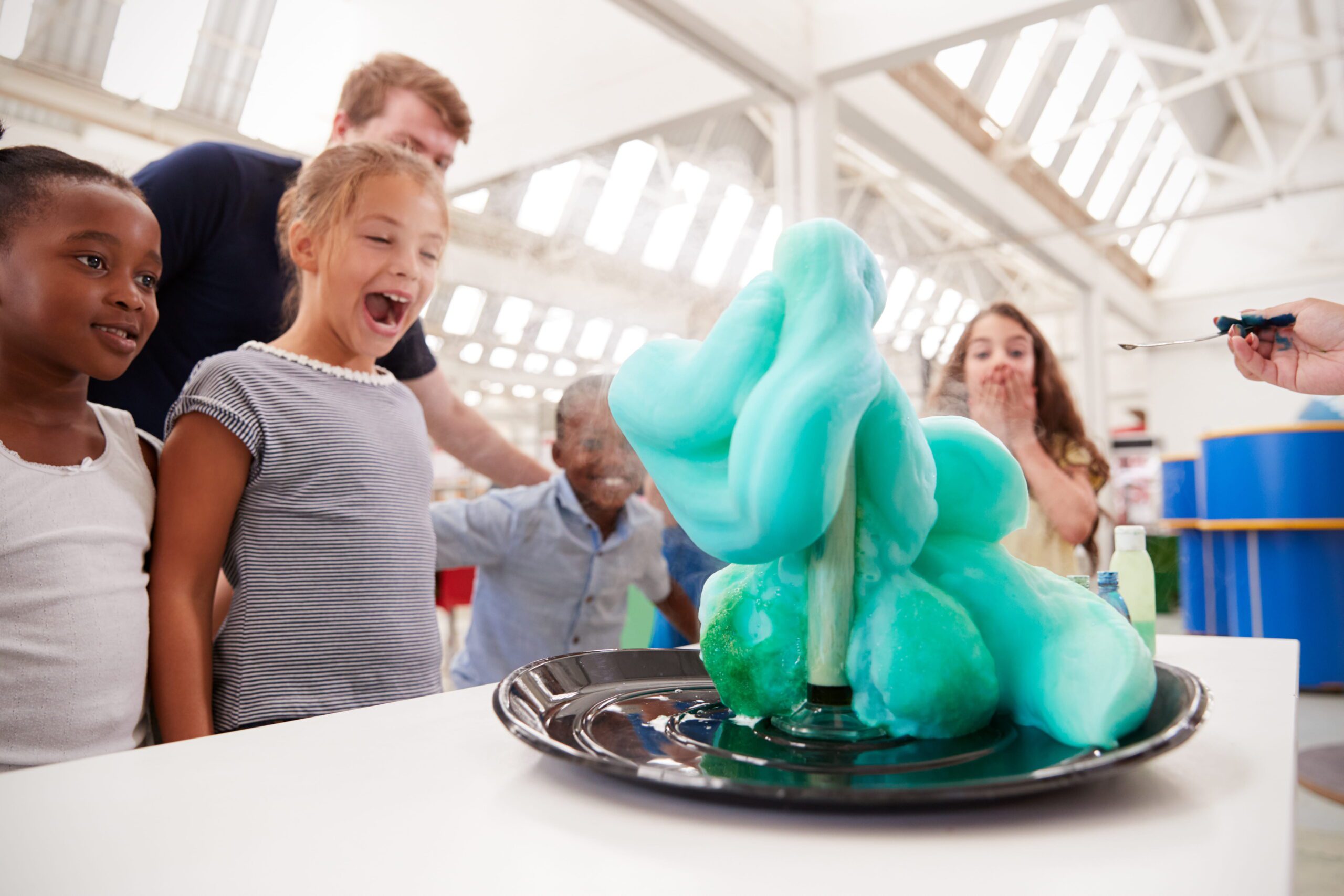
Second- grade science is when students come to class ready to investigate, collect data, and explain their findings. Teachers help students compare outcomes, track change, and use all of their scientific evidence to explain their reasoning. At this age, students are becoming independent. When provided with structure, routine, and clear expectations, they excel.
The 2nd-grade science standards are intended to build on prior understanding and delve deeper into physical, life, engineering, Earth, and space science. The underlying skills that will be strengthened across all scientific topics are students’ understanding of scientific thinking: questioning, investigating, data collection, and verbal explanation.
What are the 2nd-grade science standards?
Specific science standards vary slightly by state, but there is overlap on key concepts. Students are expected to develop their observational skills into the ability to recognize patterns. Taking a more active role in science exploration by making predictions, comparing outcomes, collecting data, and drawing conclusions that go beyond summarization. Second grade often includes weather systems, simple engineering, and force and motion within Earth and physical science units.
Second-grade science standards cover habitats, weather patterns, plant and animal survival, matter, and movement. Students are encouraged to strengthen their recording skills by using drawing, charts, written responses, or tally boxes. Science education resources can support teachers by providing pre-made visuals, charts, or lesson plans. In 2nd grade, instructors should challenge students to move beyond simple summarization. Encourage the class to explain their personal reasoning based on the how and why, and compare it to their predictions. Repeatedly promoting this shift in logic is important because it is necessary for the later grades.
Instead of stating observable facts, students move on to comparisons of outcomes, evidence-based conclusions, and discussions of their ideas. To prepare them for third grade, it is important to strengthen their scientific reasoning and investigative skills. Physical science in 2nd grade is focused on matter, change, and material purpose. Life science covers the needs, habitats, and biodiversity of plants and animals. Earth and space science primarily addresses the water cycle, water, and landforms. Engineering science focuses on problem-solving, comparing outcomes, and modeling simple systems. The 2nd-grade science standards cover a variety of topics in just one school year and set students up for success with the 2nd-grade science activities.
10 2nd-Grade Science Experiments and Teaching Activities
The 2nd-grade science activities are designed to promote investigation beyond 1st-grade exploration. For effective 2nd-grade science activities, it’s important to prompt students to describe, test, revise, and provide explanations supported by scientific evidence. Students thrive with clear instruction, repeated attempts, and open discussion. An opportunity to explain what they thought would happen, what did happen, why it happened, and what they would change. Taking this approach keeps students engaged and develops communication skills and deductive reasoning.
1. Make a Filter
Compile a few resources for students to choose from, including coffee filters, rocks, pebbles, sand, clay, beads, and other safe materials. Ask the students to build a filtration system, and once everyone is done, test it with dirty water. Have students collect data on every filtration system and write a conclusion at the end. This activity sparks excitement, problem-solving, and independent data collection.
2. Motion Test
Give the students a ball and ask them to predict where it will roll fast and where it will roll slowly. Then let them go and test their hypothesis freely around the classroom. Ask them to collect data, and at the end of the activity, have students verbalize their findings. This reinforces the force and motion lesson in a real-world, tangible way.
3. Insulation or Bust
Set up stations around the classroom with Mason jars wrapped in foil, bubble wrap, paper, or other materials available. Ask the students to predict which cups will keep the ice from melting. This activity practices comparison and variables.
4. Sound Vibration Vibes
This lesson goes beyond sensory exploration and offers students a chance to develop their advanced science skills. Provide students with inexpensive instruments, rubber bands, cups, and other classroom materials. They can test what happens when changes are made to materials, tension, or size.
5. Design a Habitat
Let students pick an animal and list out everything they know about it before starting the activity. If you can take the students outside, the activity is easier, but it can be completed indoors. Let the students build a habitat for their chosen animal. They may draw parts of the habitat if they are not available; their imagination is their sharpest tool. Ask students to explain their choices when they finish the habitat.
6. Young Geologist
Make 3-5 trays with sand, dirt, pebbles, rocks, and a mixed tray. Ask the young scientist to predict what will happen when water is poured onto each tray. Students can compare results and, as a class, discuss different angles for dropping water—a great activity to touch on Earth science and investigative skills.
7. Simple Machines
Provide students with a variety of simple machines, including: levers, ramps, or wheels. Then give them a few tasks to try, lifting, moving or raising the object. Have them perform the task without the machines, then with them, to establish a baseline for comparison. Ask them to explain which machine works best for each task and expand on why. This activity helps students start to understand the basics of engineering science.
8. Strength Test
Gather a wide variety of materials and have students explore whether each is movable, breakable, sturdy, or soft. Ask them what purpose the material could serve. Have them record their findings and explain them to connect the function to the evidence.
9. Light Path
Bring in mirrors, semi-reflective surfaces, and flashlights. Let students discover how light moves and watch as they develop unique methods. Allow them to test how light hits a variety of surfaces and explain why.
10. We All Scream for Ice Cream
A fun and rewarding activity is making ice cream in the classroom. Prep a few bags with heavy whipping cream, sugar, and a pinch of vanilla. Put one bag together in front of the class. Then pass them out with a larger bag of ice, and have them add salt. Instruct some students to put 1 tablespoon, then 3 tablespoons, and so on. Just to give students the ability to compare. Ask students to make predictions and shake. A science investigation with a tasty reward.Have an alternative treat ready for any lactose-intolerant student.
Classroom Suggestions
Setting up an efficient classroom sets teachers up for a successful year. The 2nd-grade science classroom should have a simple organization system with clear rules. Displaying charts, tables, and graphs that are relevant to a standard is a great way to build in content review. Having them posted on the classroom wall prevents them from being lost in folders, cubbies, or backpacks over the years.
Dedicating a wall to weekly student projects helps them take pride in their work and do their best. Accompanied by graphs, charts, or other important concepts available for quick reference. This leads to repetitive practice that builds students’ understanding and confidence.
Teachers may have a backup, ready-to-go science curriculum in case a barrier prevents the original lesson plan from going forward. Curriculum that has clear steps and visual support on relevant science topics. It helps students be present, proactive, and engaged.
2nd-grade science is a fascinating time. Students are moving past surface-level observation to pattern recognition and investigation. These scientific activities will help students record data, compare results, and explain ideas. Implementing 2nd-grade science standards with hands-on, organized, and exciting activities.
Discovery Education offers phenomena-driven, three-dimensional, standards-aligned science programs to build foundational and transferable skills across K–12. Their programs include Science Techbook for ready-to-teach K–12 lessons that engage students with real-world phenomena and hands-on learning, Mystery Science for K–5 investigative lessons anchored in everyday scientific phenomena, the Pivot Interactives supplement for grades 6–12 with 500+ interactive activities, and Discovery Education Experience for supplemental K–12 instructional resources that support high-quality Tier 1 science teaching and career readiness.