Key takeaways
-
Social studies instruction in fifth grade helps students better understand the people, events, and ideas that shaped the United States and the world around them.
-
Interactive learning strategies such as debates, primary sources, maps, and collaborative activities encourage deeper thinking and student engagement.
-
Strong instruction aligned to 5th-grade social studies standards helps students strengthen literacy, communication, inquiry, and civic responsibility skills.
George Washington and Benjamin Franklin are two innovative leaders who left lessons that are still used today. It prepares the civic action and social change brought about by Rosa Parks, as well as the expressions of citizenship and equal rights advanced by Susan B. Anthony, to serve as the basis for growing into tomorrow’s voters, leaders, business owners, and community members. The exploration of how societies function, how and why decisions are made, how people work together to solve problems, and more, 5th-grade social studies becomes an exploration of influential men and women. The efforts of Washington, Franklin, Park, and Anthony are just a few of the historic figures who have shaped our communities, our government, and our world. The use of high-quality instructional materials to explore the standards ensures that students maximize learning about these influential people and events.
What are the 5th-grade social studies standards?
5th-grade social studies standards outline the knowledge and skills students need to learn throughout the academic year. The standards vary somewhat by state, but they share similar themes and learning goals, covering history, civics, geography, economics, and culture.
The history of the United States is explored in fifth grade. These topics range from colonization to the American Revolution, Westward Expansion, and the foundations of government. Throughout these lessons, students will improve their analytical skills by examining source documents, comparing perspectives, and interpreting maps.
Students explore many key topics that extend beyond learning dates and historical figures. These studies are helping students develop important academic and life skills, such as comparing perspectives, identifying cause-and-effect relationships, and participating in discussions and debates. Reading maps, charts, and timelines and evaluating other information illustrate the process of concluding as fifth-grade students become stronger readers, writers, and critical thinkers.
Clear standards are a strong predictor of how well students will receive consistent instruction that prepares them for middle school learning expectations. It enables them to gain a strong foundation rooted in inquiry and deeper thinking about the roles individuals play within their communities. Furthermore, students recognize that civic responsibility, cultural understanding, and informed decision-making are part of the 5th-grade social studies standards.
The 5th-grade social studies standards help students strengthen literacy and communication skills. Students often read informational texts, analyze maps and charts, participate in discussions, and write responses supported with evidence. Using these activities and resources promotes critical thinking and helps students see real-world situations through a critical lens.
How to Teach 5th-Grade Social Studies
Teaching social studies effectively means creating opportunities for students to explore ideas, ask questions, and make connections to the world around them. To make sure this happens, it is important to provide instruction that is visually appealing, interactive, collaborative, and discussion-based. Learning should be based on inquiry; this process means students investigate important questions rather than simply memorize facts. Beginning lessons with engaging questions is a simple technique that can spark curiosity and discussion.
Sample questions to facilitate such inquiry-based learning include: why do governments need rules; what causes conflict between groups of people; how does geography affect where people live; and why do people move from one place to another?
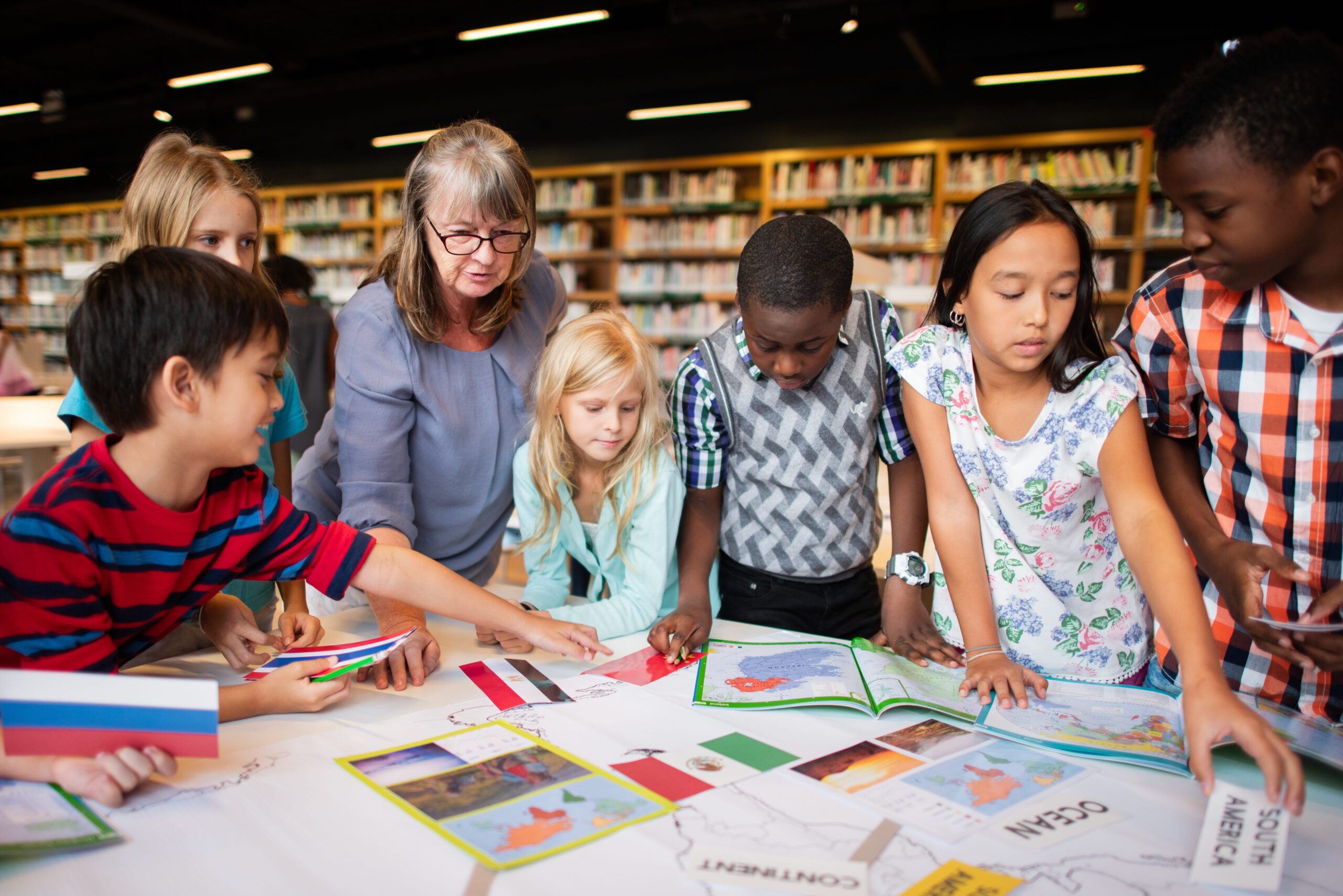
Visual learning tools are a key way to help students organize information and better understand historical and geographical concepts. Diagrams, maps, political cartoons, photographs, and timelines are ways to make abstract ideas more concrete. Throughout fifth-grade social studies, visual supports should be utilized to help students learn about chronology, movement, and geographic relationships.
Incorporating primary sources is another component of the 5th-grade social studies curriculum. Letters, speeches, photographs, diaries, and government documents are authentic materials that help students explore history through firsthand accounts.
Imagine showing students a diary entry from a passenger aboard the Mayflower. Their minds will soar as they reflect on who created this document, what was happening at the time, and what information can be learned from it. Analysis of primary source documents is a bridge to building evidence-based reasoning skills that encourage discussion and collaboration.
Giving students a chance to discuss and communicate encourages critical thinking skills. Fifth-grade students sharing their opinions and ideas; learning from classmates is a way to get everyone actively engaged in learning. Debates, turn-and-talk activities, Think-Pair-Share, and small-group discussions are engaging strategies that encourage participation. Collaborative activities can help students see and appreciate varying perspectives and strengthen learning skills.
Teaching 5th-grade social studies requires blending engagement with real life. Students are naturally more engaged when they are connecting learning to their lives and communities. Teachers can make social studies meaningful by connecting lessons to current events, local history, community issues, and civic participation.
Equally important is the use of hands-on and interactive activities. Research consistently shows that students learn best when they have hands-on experiences that help them retain information and stay engaged. Building artifacts or presentations, role-playing historical events, conducting research projects, designing timelines, creating maps or models, engaging in classroom debates, and participating in historical simulations are ways to encourage creativity, problem-solving, and collaboration.
Differentiating instruction is another way to help students understand complex vocabulary and challenging concepts. Differentiation ensures students can access the content successfully. Chunking reading passages, offering visual aids, using graphic organizers, providing vocabulary strategies, and incorporating read-alouds are flexible instructional tools to help meet the needs of diverse learners while maintaining high expectations.
Digital tools allow students to explore maps, participate in virtual field trips, conduct research, and analyze multimedia sources. There are many social studies curriculum tools and multimedia resources to provide students with opportunities to access primary source documents, interactive activities, and instructional supports
Explore K-12 Social Studies Resources
See how Discovery Education can support social studies.
Ten 5th-Grade Social Studies Questions (with answers)
These sample 5th-grade social studies questions help students review key concepts in citizenship, economics, government, geography, and history. These types of questions encourage students to think critically, explain ideas clearly, and make connections between classroom learning and the real world. These questions can be asked during classroom discussions, review games, bell ringers, small-group activities, or informal assessments. Open-ended social studies questions also help students practice supporting thinking with evidence and examples while strengthening communication skills.
1. What are the three branches of government?
Answer: The government is made up of three branches of government: the legislative, judicial, and executive branches. Each brand has different responsibilities and helps create a system of checks and balances within the government.
2. Why did colonists want their independence from Great Britain?
Answer: Many colonists believed that British taxes and laws were unfair because they did not have voting rights. They wanted greater self-government.
3. What is the purpose of the Constitution?
Answer: The Constitution creates the structure of the United States government and protects citizens’ rights.
4. How does geography affect where people live?
Answer: Geography influences people’s lifestyles, since the climates, resources, transportation, and access to land and water are directly related to the geography. The jobs people have and where they live are directly related to the geography.
5. What is supply and demand?
Answer: Supply refers to how much of something is available, but demand refers to how much people want it.
6. Why are primary sources important?
Answer: Primary sources provide firsthand information about historical events and perspectives.
7. What causes Westward Expansion in the United States?
Answer: People moved west because there were new opportunities based on the land, economic resources, and new settlements.
8. What responsibilities do citizens have?
Answer: Citizens should follow laws, vote, stay informed, and contribute to their communities when they can.
9. How do maps help us understand history?
Answer: Maps show how people have moved, their trade routes, the geography, and how the land changes over time.
10. Why is learning about different cultures important?
Answer: Learning about different cultures encourages understanding and respect for others who are different from us.
Teaching 5th-grade social studies offers opportunities to explore history, geography, civics, economics, and culture in meaningful ways. Students are ready to think critically, ask questions, examine evidence, and create connections between the past and the present.
The most effective social studies instruction is founded on inquiry-based, interactive lessons connected to students’ lives. Teachers can use various strategies, including discussion, hands-on learning, collaboration, primary sources, and digital tools. Creating lessons that promote curiosity and align with the 5th-grade social studies standards are ideal for helping students build the knowledge and skills to become informed citizens, thoughtful learners, and active community members.
Discovery Education offers inquiry-based, standards-aligned social studies programs to build deep conceptual understanding, critical thinking, and literacy. Their programs include Social Studies Essentials for ready-to-teach K–5 lessons that support consistent Tier 1 routines and include content aligned to the C3 Framework, Social Studies Techbook for grades 6–8 project-based learning that includes primary source analysis, and Discovery Education Experience for supplemental K–12 instructional resources that support high-quality Tier 1 social studies teaching and career readiness.
Find other grades
Whether you’re planning your year, mapping out units, or looking for grade-specific social studies resources, we’ve got you covered.
Select your grade level below to access targeted social studies guides, core objectives, and teaching tools.