Social studies helps students understand history, civics, communities, and the world around them, but fitting it into a busy school day can be challenging. Social Studies Essentials makes it more manageable with curated, standards-aligned resources grounded in the C3 Framework and designed to build literacy, inquiry, and critical-thinking skills. This sample lesson on leadership shows the program’s breadth and depth, with teacher-led instruction, rich content, and opportunities for students to discuss, question, and deepen their understanding.
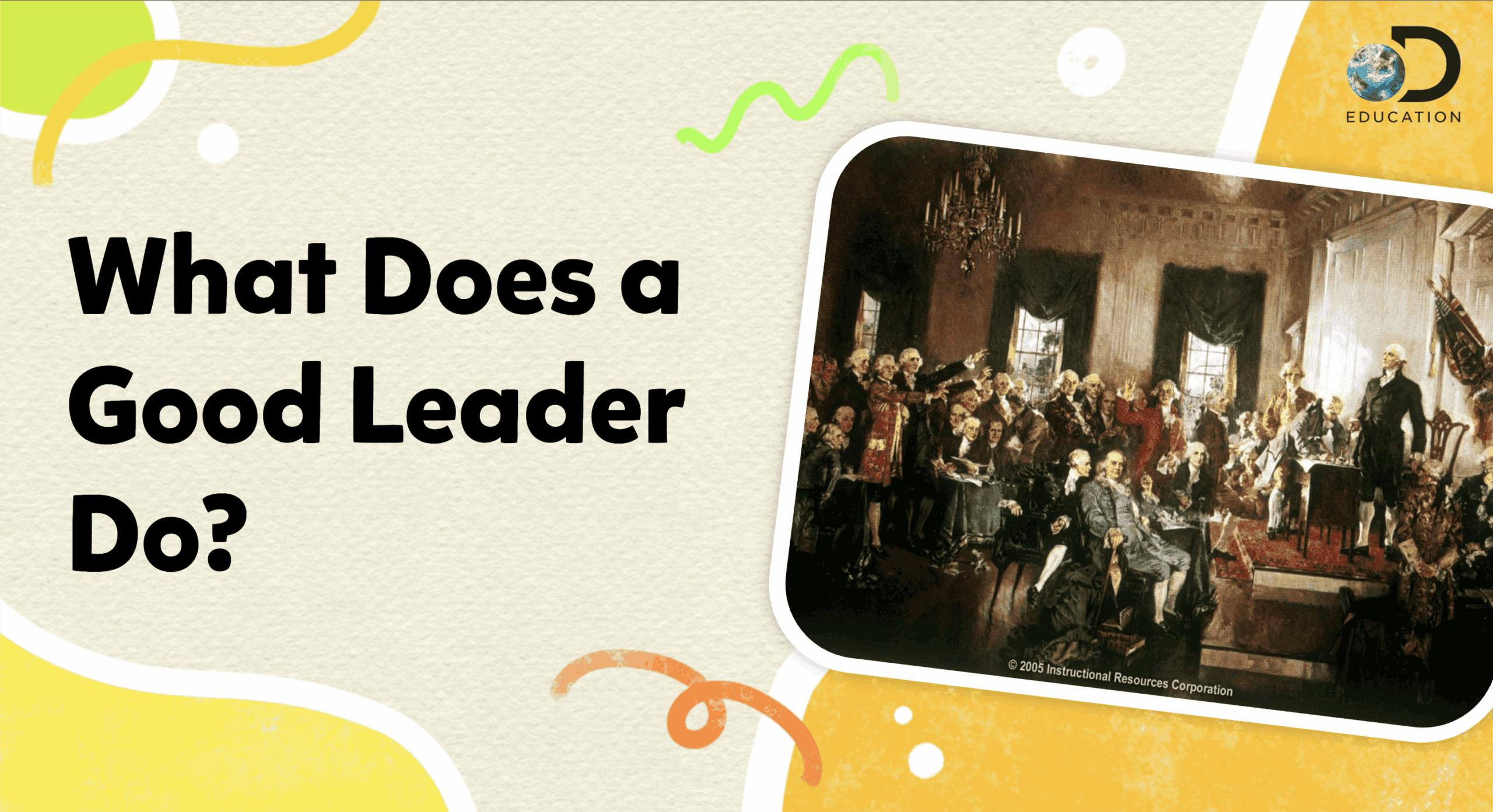
First graders already know leaders: the teacher at the front of the room, the principal, a coach. They may not yet have words for what makes someone a good one.
This leadership lesson plan helps students answer one question: What makes a good leader? They watch a video, look closely at pictures, and participate in an activity to apply what they learn to everyday life. Below you will find every step of the lesson, including timing, discussion questions, sample responses, differentiation ideas, and vocabulary.
Leadership Lesson Plan Overview
- Grade: 1
- Total time: 40 minutes (can be split into two 20-minute sessions; see the timing modification below)
- Lesson question: What makes a good leader?
- Learning target: Today, we will describe what a good leader does.
Lesson overview: This lesson explores leadership. Students will watch a video and participate in an activity to apply what they learn to everyday life.
How to Prepare and Present the Lesson
Preparation
- Access the educator support document to support lesson planning.
- Assess students after the lesson.
Suggestions for use
This is a lesson presentation to support instruction. Use the Present to Class button to view fullscreen.
The lesson moves through five stages:
- Slide 3: Hook students’ interest to learn more about what a good leader does.
- Slides 4 to 5: Build knowledge by watching a video and reading a definition about leaders.
- Slide 6: Encourage students to reflect on leadership.
- Slide 7: Lead students through an activity that connects to the lesson topic.
- Slide 8: Provide students with an opportunity to apply what they learned about what a good leader does.
Differentiation
Check for strategy-specific differentiation support in the Teacher Notes throughout this lesson. You can also use Copy & Edit to modify this lesson to further meet your students’ needs.
Access this and many other social studies lesson plans with a free trial.
Leadership Lesson Plan: Step by Step
Learning Target (2 minutes)
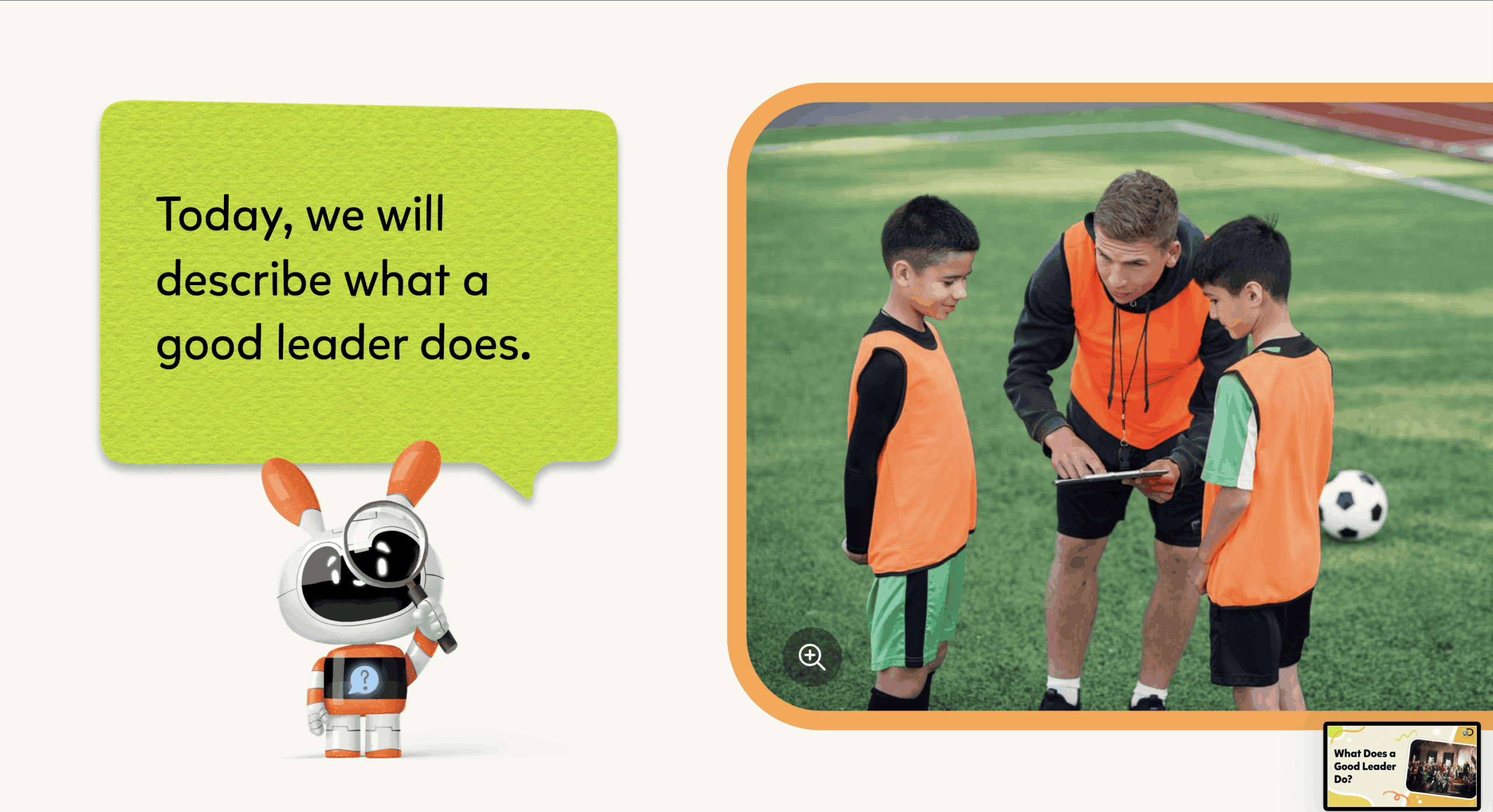
On the slide: Today, we will describe what a good leader does.
Learning target: Today, we will describe what a good leader does.
Let’s Think: Hook Students With Can You Guess It? (5 minutes)
Strategy: Can You Guess It?
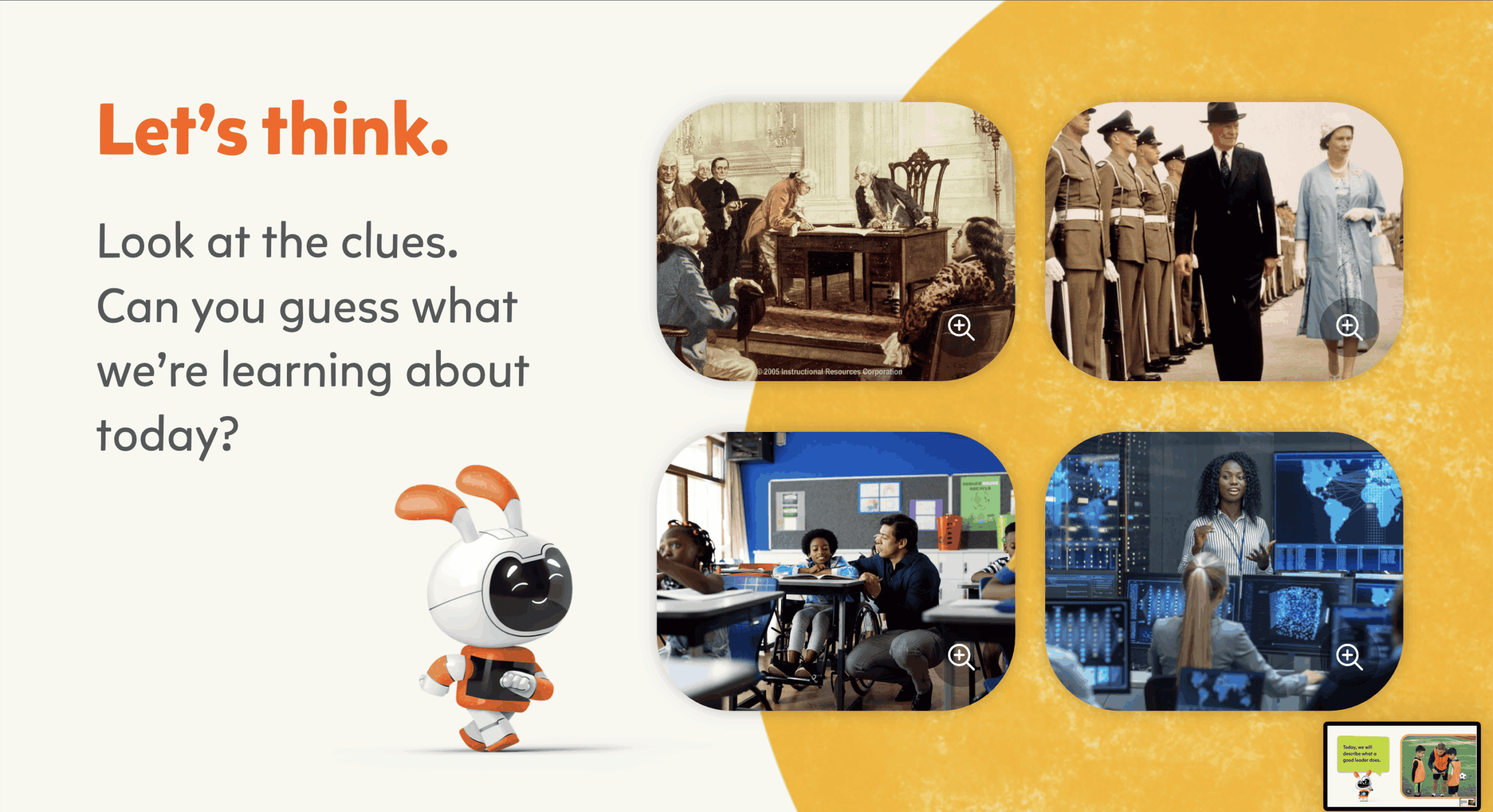
On the slide: Let’s think. Look at the clues. Can you guess what we’re learning about today?
Suggestions for use
- Use Present to Class with this slide to get students thinking about what they know about leaders.
- Ask students:
- Can you guess what we’re learning about today? Sample response: Answers will vary. Accept all reasonable responses.
- Use the Zoom feature for an even closer look at the images.
- If students need follow-up questions to jumpstart their thinking, consider asking them to make connections among the resources.
- Have students make guesses using the clues.
- Provide time for students to share and explain their thoughts with the class, a small group, or a peer.
- Encourage students to explain the connections between the clues and their guesses.
Differentiation
- Provide a series of guiding questions to help students focus on specific details within the images.
- Students can work with a partner to talk about their observations.
Hook strategy support: This hook strategy was inspired by the instructional strategy Collage. Refer to the Collage strategy guide for additional support.
Watch to Learn (10 minutes)
Use this video to learn about leaders.
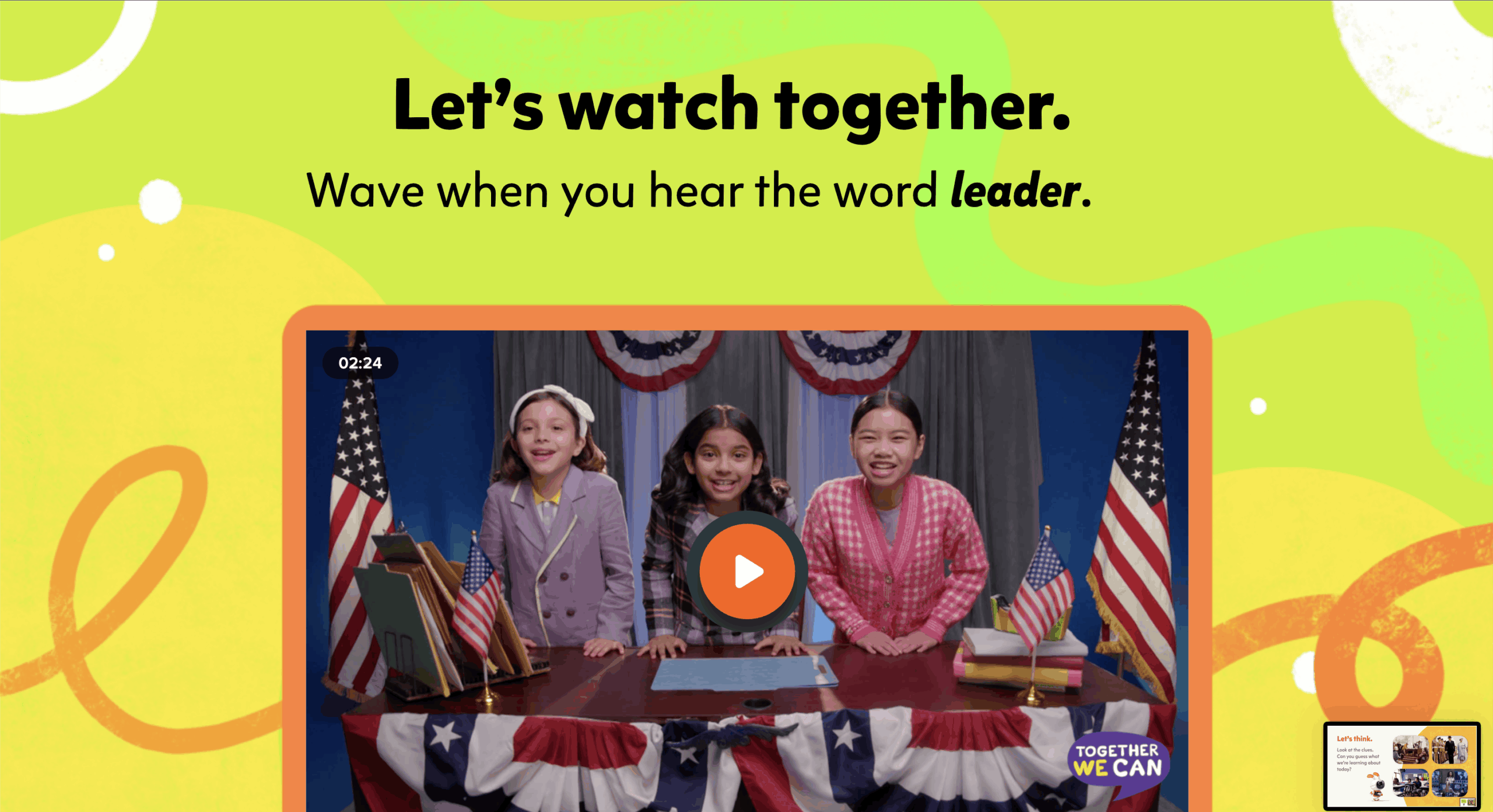
On the slide: Let’s watch together. Wave when you hear the word leader. The video runs 2 minutes and 24 seconds.
Suggestions for use
- Ask students to wave when they hear the word leader.
- After playing the video, check for students’ understanding of the meaning of:
- leader: someone who is in charge and makes decisions for a group of people
- Provide time for students to share what they saw and heard with the class or a partner.
- Summarize student responses about leaders.
- If there is time, play the video again for students, pausing as needed, letting them comment on anything new they learned.
Differentiation
- Students’ observations can be shared through partner, small-group, or class discussions.
- Ask questions to scaffold students’ observations:
- What did the song say that leaders do? Sample response: The song said that leaders have confidence, earn our respect and trust, stand up for others, and are good listeners.
- Who are some leaders mentioned in the song? Sample response: The principal of the school and the mayor of a town are leaders.
- How does the song say that kids can be leaders? Sample response: Kids can be leaders by standing up for others and stepping up to do what they have to do.
- What do you think makes a good leader? Sample response: I think a leader should listen to others, make others feel good, help others with what to do, and help people when they need it.
Lesson Vocabulary: Leader (5 minutes)
Use this slide to reinforce students’ understanding of the term leader.
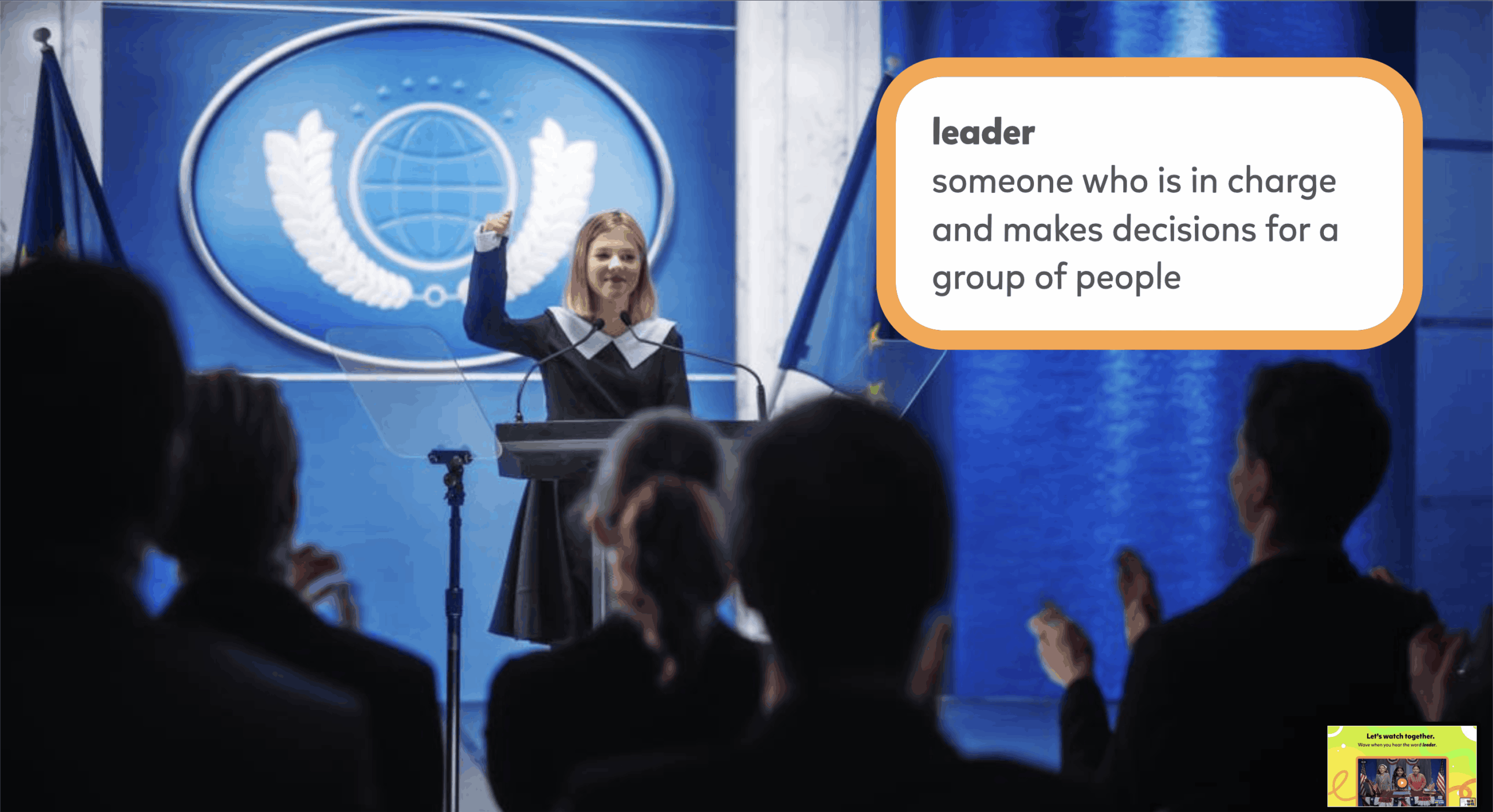
On the slide: leader: someone who is in charge and makes decisions for a group of people.
Suggestions for use
- Have students look at the image. Ask:
- What do you notice? Sample response: Answers will vary. Accept all reasonable responses.
- Read the text with your class. Ask:
- What are the people doing in the photo? Sample response: There is a person speaking at the front, and a lot of people are looking at her and listening to her.
- Do you think the speaker is a good leader? Why? Sample response: I think she could be a good leader because she is talking in front of a group of people in an important place.
Differentiation
Ask questions to scaffold students’ observations:
- Does the speaker look confident? Why? Sample response: Yes, she looks confident because she is looking out at the people and is standing up straight.
- Do you think people are listening to what she is saying? Why? Sample response: Yes, I think that they are listening because they are looking at the speaker and seem to be clapping.
Let’s Reflect (5 minutes)
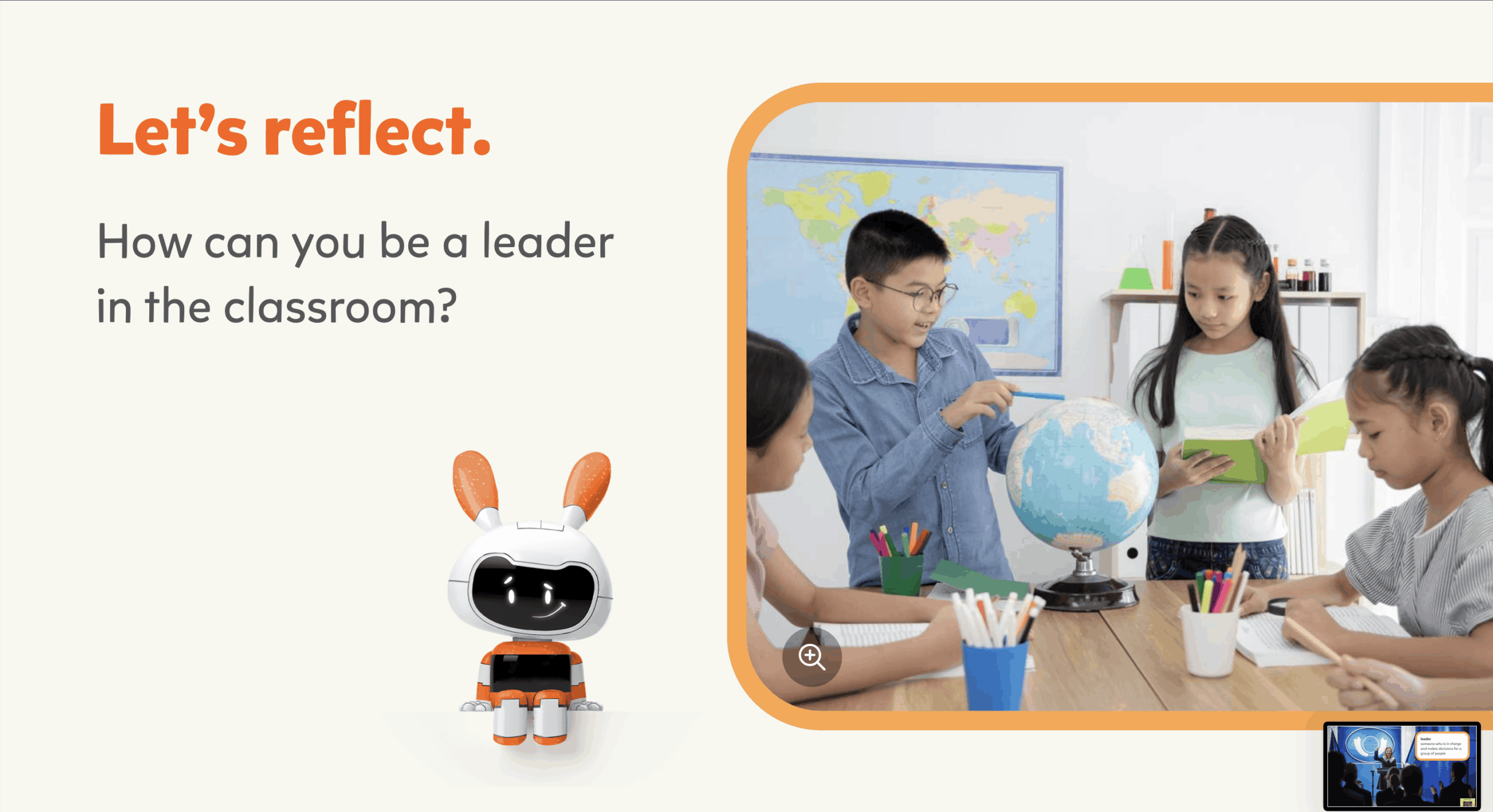
On the slide: Let’s reflect. How can you be a leader in the classroom?
Suggestions for use
- Read the question to help students make a connection to the video.
- How can you be a leader in the classroom? Sample response: I can listen to others, solve problems, and treat others with respect.
- Provide time for students to share their responses with the class or a partner.
- Summarize student responses about being a leader in the classroom.
Let’s Try It: What Is This Leader Doing? (5 minutes)
Use the images on slides 7 to 8 to practice describing what a good leader does.
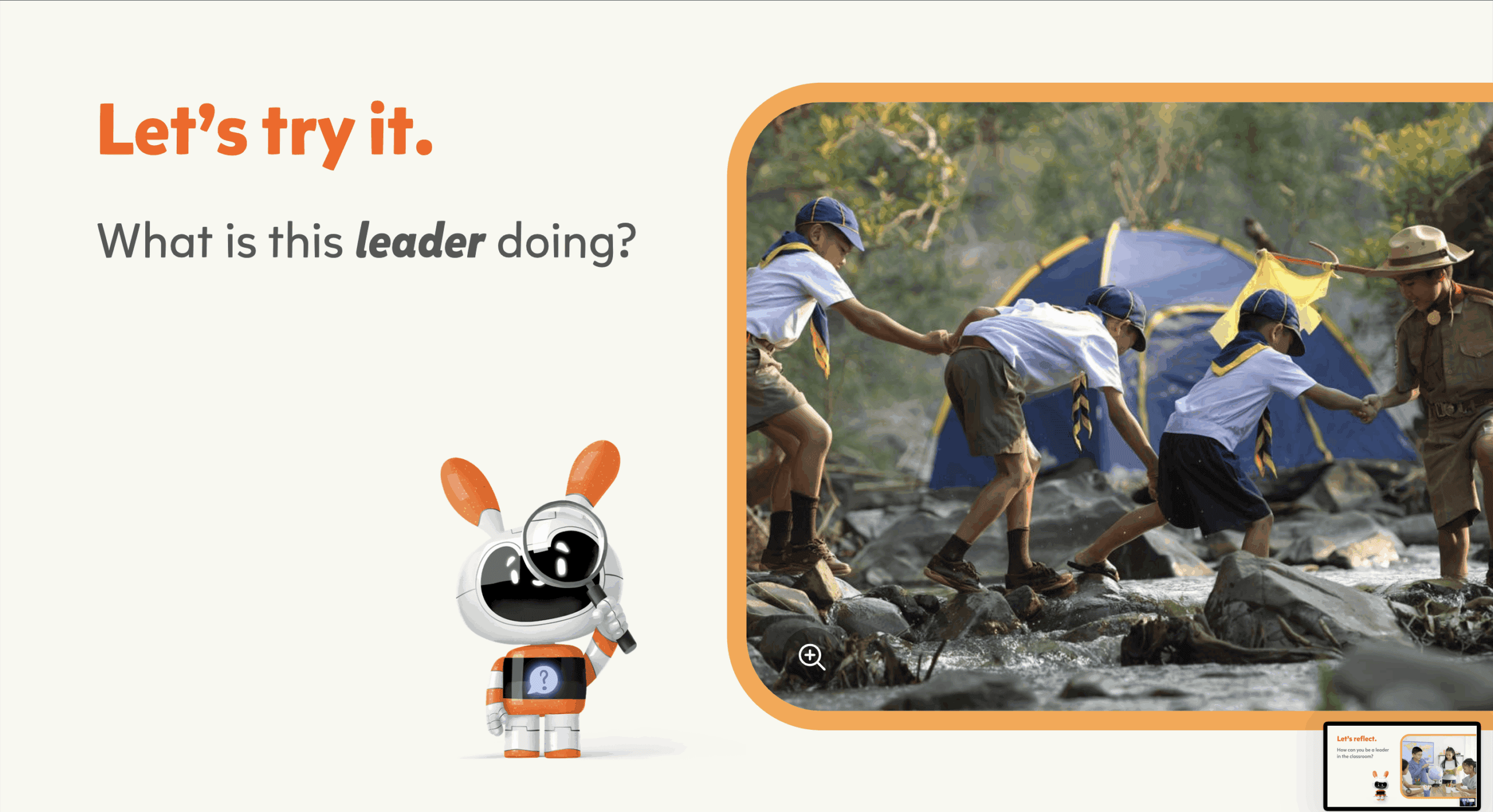
On the slide: Let’s try it. What is this leader doing?
Suggestions for use
- Remind students that they have been learning about what a good leader does.
- Have students look at the image. Select the Zoom icon to provide students with a larger view of the image.
- Prompt students with the following:
- Look carefully at what is happening in the picture.
- What is the leader doing? Sample response: The leader is helping the kids cross the river. The leader is making sure everyone is safe.
- Do you think this person is a good leader? Why? Sample response: Yes, because they are making sure everyone is safe and they are taking care of a group of people.
- Provide time for students to share their responses with the class or a partner.
- Summarize student responses to identify common qualities of a good leader.
Differentiation
- Students can work with a partner to talk about their observations.
- If students continue to struggle with describing what a good leader does, ask the following questions:
- Who is the leader in the picture? Sample response: The person on the right side of the picture with the big hat is the leader.
- What are the people in the group doing because of the leader? Sample response: The people in the group are holding hands and crossing safely because of the leader.
Your Turn: What Is This Leader Doing? (5 minutes)
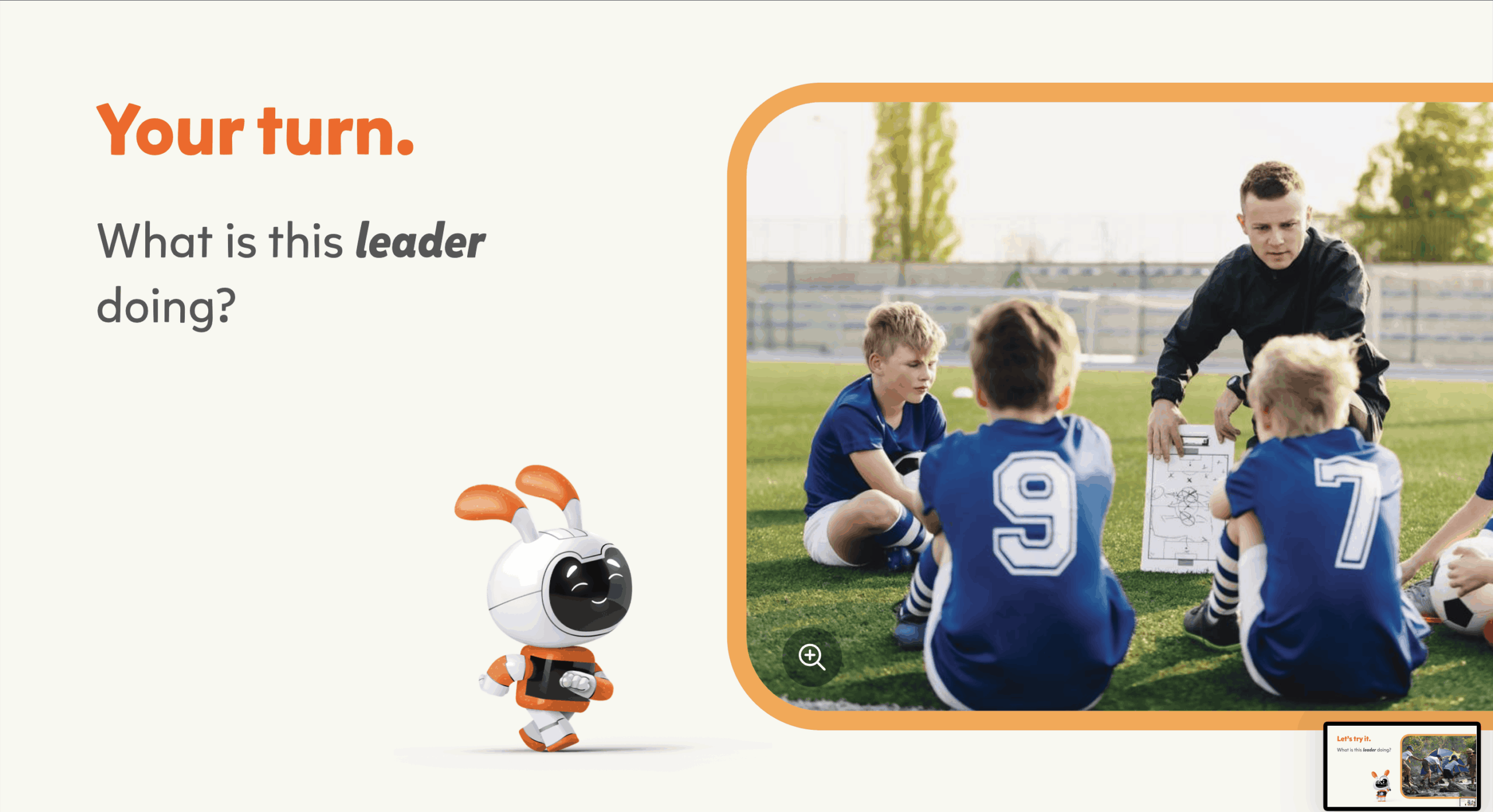
On the slide: Your turn. What is this leader doing?
Suggestions for use
- Continue to practice describing what good leaders do. Select the Zoom icon to provide students with a larger view of each image.
- Prompt students as follows:
- Think about what you learned about what a good leader does.
- Now, let’s look carefully at this picture. Think about what is happening.
- Turn to an elbow partner.
- Talk with your partner.
- What is the leader doing? Sample response: The leader is telling the players what to do in the game. The leader is giving advice.
- Do you think this person is a good leader? Why? Sample response: Yes, this person is a good leader because they are taking care of the group and they have a plan for what will happen next.
- Provide time for students to share their responses with the class or a partner.
- Summarize student responses to emphasize the characteristics of good leaders.
Differentiation
If students continue to struggle with describing what a good leader does, ask questions to scaffold their understanding:
- Who is the leader in the picture? Sample response: The coach or the grownup is the leader.
- What are the people in the group doing because of the leader? Sample response: The people are sitting and listening. They are probably thinking about how to win the game and work together.
- Who are some leaders in your life? What do they do? Sample response: A teacher tells us what to do in class, helps us learn, asks our opinions, and listens to us. A principal runs the school, fixes things when something happens, tells teachers and kids what to do, and keeps us safe.
Continue the learning: Have students share throughout the week when they hear about leaders or related vocabulary. For example, students may share something the principal or a coach said or did.
Way to Go: Celebrate the Learning (3 minutes)
On the slide: Let’s celebrate! Today, we described what a good leader does.
Learning target: Today, we will describe what a good leader does.
Suggestions for use
- Celebrate with your students what they learned today!
- We looked at pictures of leaders.
- We watched a video about leaders.
- We practiced what we learned about describing a good leader.
- We summarized what we learned about what good leaders do and why that is important.
- Ask students to identify the one thing they are most excited to share with others about what a good leader does.
Use the lesson assessment as an additional check for understanding.
Key Vocabulary for the Leadership Lesson
- leader: someone who is in charge and makes decisions for a group of people
Timing Modification: Split the Lesson Into Two Sessions
This lesson could be split into two 20-minute sessions:
Part 1: Introduce the lesson using slides 1 to 4, playing the video once.
Part 2: Return to slide 4 to rewatch the video. Then, use slides 5 to 8 to check for understanding.
Helping Students Describe What Good Leaders Do
Students leave this leadership lesson plan knowing that a leader is someone who is in charge and makes decisions for a group of people. By looking closely at pictures, watching a video, and talking with partners about leaders in their own lives, they practice describing what good leaders do. Everyday examples, such as a teacher, a principal, or a coach, help students see that leadership is part of the world around them.
Access this and many other social studies lesson plans with a free trial.