Key takeaways
-
4th grade social studies helps students connect geography, history, economics, and government to their everyday lives and communities.
-
Hands-on learning, storytelling, discussions, and classroom simulations help students stay engaged and better understand social studies concepts.
-
Strong instruction aligned to 4th grade social studies standards helps students develop problem-solving skills and citizenship skills.
Why do people live where they do? How do communities form and change over time? What role do citizens play in shaping their world?
These are the kinds of questions that 4th-grade social studies students explore. At this level, students begin to connect geography, history, and government to their personal experiences. Social studies is all about understanding how people, places, and systems are interconnected. This requires observation, questioning, and explanation.
An engaging social studies curriculum will help students make meaningful connections to their world. This helps them develop an understanding of their role within the world.
What are 4th grade social studies standards?
The standards summarize the knowledge and skills students should develop throughout the academic year. While these standards may vary by state, teaching should focus on exploring geography, state and local history, civics and government, and economics.
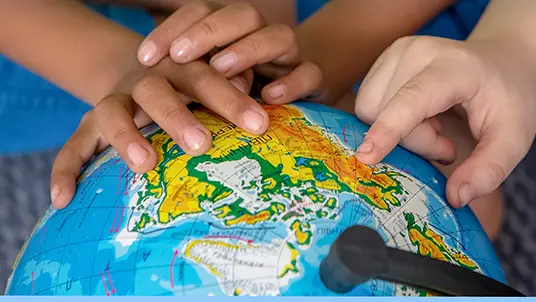
While students will already have some foundational knowledge of geography, their fourth-grade year will have them learning more about Earth’s physical features, including rivers, mountains, and regions. In addition, their knowledge of maps, directions, and spatial thinking will contribute to their understanding of how geography influences where and how people live.
The student’s specific state history takes center stage during the fourth grade year. Students will learn about important historical figures, cultural groups, and early communities. Learning how different groups contributed to the development of their state and how their experiences shaped local communities over time is an important part of 4th grade social studies.
Civics and government lessons will help students understand rules and laws and how they are created. Students will also explore how government impacts local communities through services such as schools, safety, and public resources, including police stations, fire departments, and hospitals. Furthermore, students will begin to see how their decisions, including following rules, and participating in discussions, are part of their civic responsibilities. For example, students might create classroom rules or participate in a classroom election to better understand how decisions are made.
Basic economic concepts are also introduced in 4th grade social studies. Students learn about goods and services and how communities meet needs and wants. They may also explore how people make choices about spending, saving, and using resources. This would be a great opportunity to explore saving to make a larger purchase. Meanwhile, a simple classroom marketplace or simulation activity would bring the concepts of goods and services to life.
All in all, 4th grade social studies standards matter because they ensure instruction is consistent, developmentally appropriate, and focused on content and skills.
How to teach 4th grade social studies
Teaching 4th grade social studies means connecting the world with visuals and hands-on activities that make the content meaningful and relevant to students’ everyday lives. Students are naturally curious about the world around them, so fourth grade is the perfect opportunity to help them explore communities, geography, government, history, and economics in authentic ways.
Storytelling and real-world connections are two great ways to teach social studies. Students will learn a great deal by listening to stories about important historical figures, local leaders, and others who helped shape their community and state. Reading historical fiction, biographies, and informational texts are just a few ways students can engage with social studies through storytelling. Seeing how these stories and the people in them shaped history through their lives and experiences helps students better understand what they are learning.
Visual learning is especially important in a fourth grade classroom. Studying maps, photographs, diagrams, timelines, and videos helps make abstract concepts more concrete for students. For example, when students use maps to compare regions of their state or create timelines to organize key historical events in chronological order, they are adding meaning to social studies. There are many social studies activities for 4th grade that help students develop geography and sequencing skills, which are essential for understanding how historical changes unfold over time.
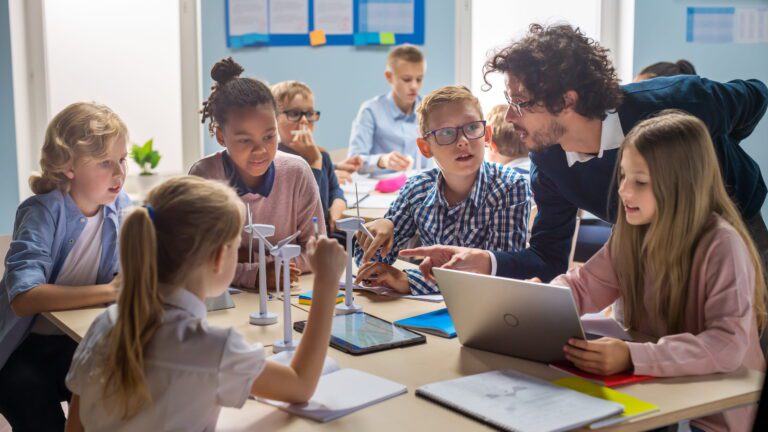
Hands-on learning opportunities can make social studies memorable and engaging. When students are given the chance to build, create, move, and explore, they better understand content. Imagine the knowledge that students explore more deeply when they create landform models, design posters about state symbols, participate in classroom elections, or run a simple classroom marketplace. These types of activities are meaningful experiences that define social studies. They help students apply concepts in active and creative ways.
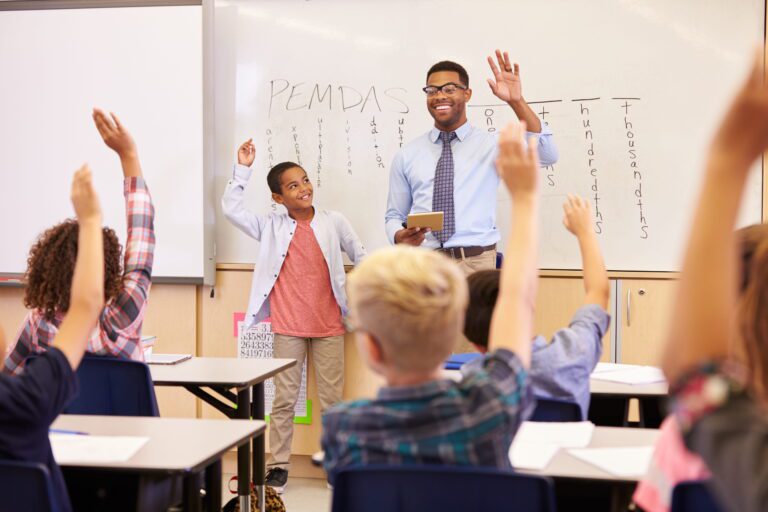
Allowing students to talk about the content helps build their understanding of social studies events and concepts. From turn-and-talk discussions to simple classroom debates, these types of activities encourage students to explain their thinking and practice listening to others. Through these discussions, students learn how citizens create rules within their communities. Furthermore, they explore the characteristics that define an effective leader. These conversations are more than just words; they help students practice communication skills while building a stronger understanding of civics and government.
Without a doubt, strong instruction aligned to 4th grade social studies standards should help students see themselves as active members of their communities. Encouraging students to observe local issues, participate in a service project, or learn about community helpers makes social studies meaningful and relevant. When students understand how history, geography, economics, and government connect to real life, they begin developing the critical thinking and citizenship skills they will use far beyond the classroom.
Explore K-12 Social Studies Resources
See how Discovery Education can support social studies.
5 4th grade Social Studies Activities
One of the best ways to teach social studies is through engaging, hands-on learning. When students are participating in meaningful activities, their minds will be abuzz with exploration as they create maps, participate in classroom simulations, or discuss community events. Active learning is engaged learning. The following activities are designed to make social studies both engaging and meaningful for fourth-grade learners.
Activity 1: Community Mapping Project
Students create a map of their neighborhood, town, or state using symbols, map keys, and cardinal directions. They can label important landmarks such as parks, rivers, schools, roads, and government buildings. This activity aids in building geography and spatial-thinking skills while helping students connect social studies to their community.
Activity 2: Classroom Marketplace Simulation
Students participate in a simple classroom economy, buying, selling, trading, or earning classroom currency. Students can create goods, provide a service, practice saving, and more. This activity introduces basic economic concepts, including goods and services, needs and wants, and emphasizes decision-making engagingly.
Activity 3: State History Timeline
State history can be so much fun to study because students may come across many places that they have been. As they research important people, events, and milestones from their state’s history, they will work together to create a classroom timeline. Students can be assigned specific dates and create a small portion of the timeline, which can then be combined to create one gigantic state history. This activity will strengthen their understanding of chronology, historical change over time, and connections to local history.
Activity 4: Mock Election Activity
Civics and government concepts are important to helping students see how voting, leadership, rules, and civil responsibility shape government. In this activity, students nominate candidates, create campaign posters, give short speeches, and vote in a classroom election. It doesn’t have to be about having classroom officers; instead, if there are classroom jobs, allow students to run campaigns for the most popular ones!
Activity 5: Landform Model Challenge
Students will actively visualize physical geography and understand how landforms affect where people live and work by using clay, playdough, or other materials to build models of landforms, such as rivers, mountains, valleys, plains, and plateaus. There are so many ways to make the landform model challenge a classroom activity that they will be talking about for a long time.
Deepen 4th grade social studies learning
These social studies activities for 4th grade will help students build a deeper understanding of their communities, their state, and the world around them. Engaging lessons, meaningful discussions, and hands-on learning experiences are what lay the foundation for connecting geography, history, economics, and government to real life. Aligning instruction to 4th grade social studies standards is equally important to supporting instruction with meaningful learning experiences. Developing critical thinking, problem-solving, and citizenship skills will continue to support students in future grades and everyday life.
Discovery Education offers inquiry-based, standards-aligned social studies programs to build deep conceptual understanding, critical thinking, and literacy. Their programs include Social Studies Essentials for ready-to-teach K–5 lessons that support consistent Tier 1 routines and include content aligned to the C3 Framework, Social Studies Techbook for grades 6–8 project-based learning that includes primary source analysis, and Discovery Education Experience for supplemental K–12 instructional resources that support high-quality Tier 1 social studies teaching and career readiness.
Find other grades
Whether you’re planning your year, mapping out units, or looking for grade-specific social studies resources, we’ve got you covered.
Select your grade level below to access targeted social studies guides, core objectives, and teaching tools.