Key takeaways
-
Overview of 5th-grade science standards traditionally covered: life science, physical science, Earth and space
-
10 interactive science activities aligned with 5th-grade science standards
-
Building critical thinking skills through real-world experiments and activities connected to 5th-grade science
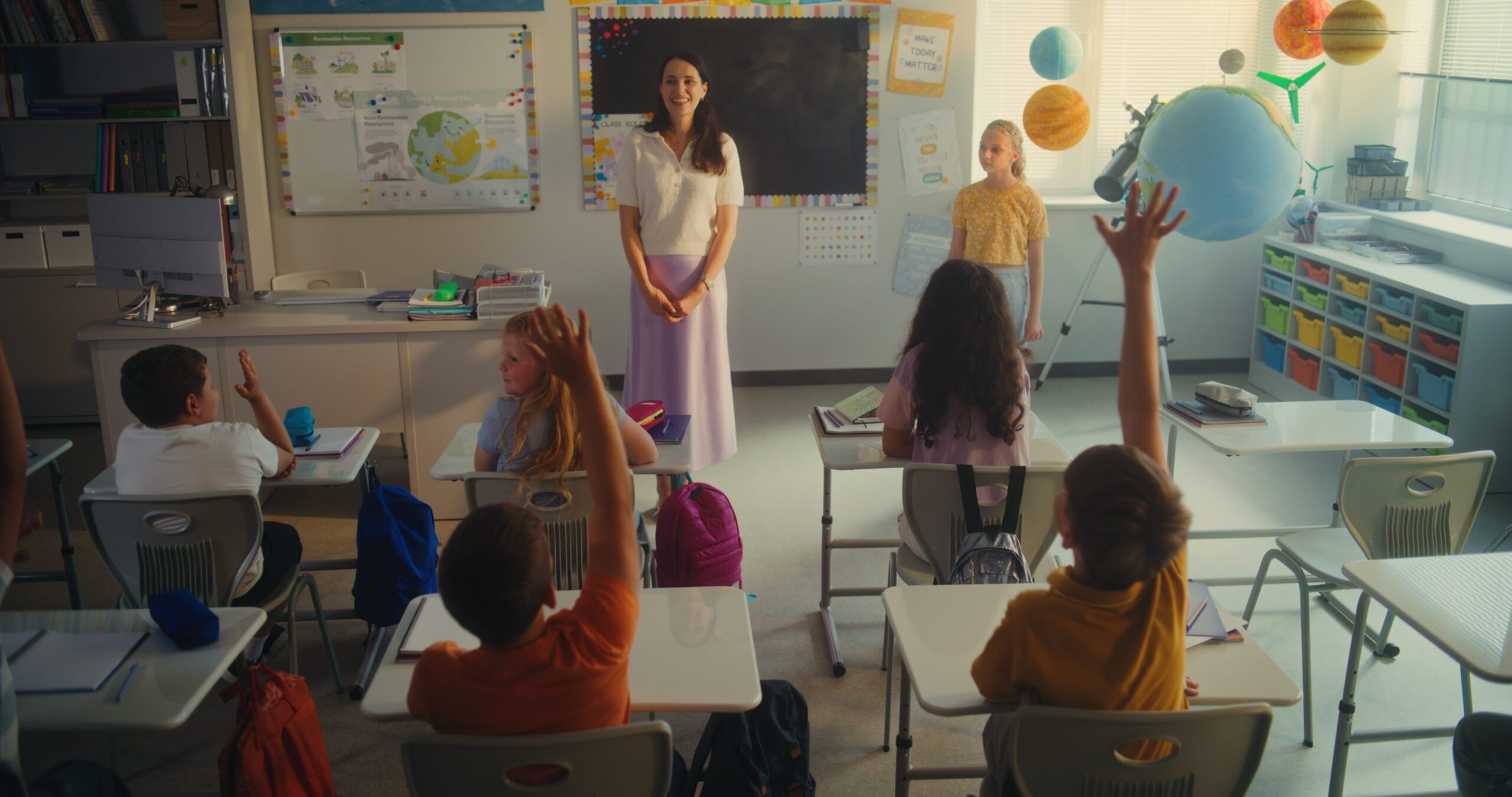
Fifth-grade science standards are exciting to cover with young scientists. Helping students gain a better understanding of the world around them and build critical thinking skills is a purposeful pursuit. Active engagement, coupled with hands-on experience, fosters learning. Moving away from basic memorization toward active experience is necessary to help students feel confident in their newfound knowledge. Earth science, physical science, and life science help students understand landslides, food webs, and energy. Connecting these independent systems to human impact and reliance helps students become informed humans. After completing the 10 activities and experiments, students will have covered: chemical and physical reactions, matter, energy, ecosystems, decomposition, radiation, and more!
What are the 5th Grade Science Standards?
Every state has its own set of standards, but they share a few core concepts. State standards cover life science, physical science, and earth and space science. Always check your state standards, but the material provided below is generally covered in 5th-grade science.
Physical Science: Focus on matter, chemical reactions, and energy through hands-on experiments. Exploring kinetic and potential energy relationships connected to conduction, radiation, and convection. Building an understanding of how energy moves through matter gives students the tools to understand the physical science they see in their daily lives. Why does the cold water bottle get condensation, or why does the mug get hot when they pour in warm liquid? These are the foundations for building a curiosity for the world around them.
Life Science: Studying living organisms, the relationships within ecosystems, matter cycles, how energy flows, photosynthesis, and decomposition. Students learn about how these individual cycles are interconnected and dependent. Life science connects all living organisms and matter cycles, briefly discussing how human involvement can shape them and how vulnerable they are when a piece of the web or cycle is missing.
Earth and Space: Learning where Earth is in the solar system, how water cycles shape Earth, and the human impact. The how and why of landslides, tectonic plates, and weathering are covered. Earth science covers thermal convection in the mantle and the effects of thermal expansion and contraction on tectonic plates. These topics help students understand energy as more than a vocabulary word but as a driving force behind Earth’s natural systems.
Fifth-grade science standards are expanding students’ learning from vocabulary to complex systems that require critical thinking and curiosity. Students participate in hands-on experiments to collect data, analyze results, and draw their own conclusions. Check your state standards to ensure the material aligns with them. There are ample science education resources to utilize, saving teachers time while actively engaging students.
10 5th Grade Science Experiments and Teaching Activities
Science activities to help students learn the 5th-grade science standards. Building an inclusive classroom is the first step towards effective teaching. Having students actively participate, engage with peers, and watch a complex concept unfold before them makes the concepts discussed in class become concrete knowledge. Visuals are necessary; using diagrams that illustrate convection, landslides, and phase changes while simultaneously depicting energy shifts gives students a point of reference.
Physical Science:
- Good’ol Baking Soda and Vinegar: Chemical v.s Physical change
Prep small cups of baking soda and vinegar for each lab pair. Discuss what evidence of a chemical reaction is as a class. Ask students to mix their cups and watch for any gas, bubbles, or temperature change. Follow up by asking: Did you notice a mass change? - Mad Scientist Lab: Discover Matter by Properties
Allow students to put on their lab coats and use deductive reasoning to identify the substances in front of them. Provide mystery powders (cornstarch, baking soda, salt, and powdered sugar) and test liquids (water, vinegar, and iodine). The students record the results for each mixture and identify the powders using scientific evidence. - Energy Transfer: Convection, Conduction, or Radiation
Set up three unlabeled demonstrations of heat transfer around the room. Have one booth be ice being placed directly onto metal (conduction). To demonstrate convention, drop food coloring into water in a clear container. For radiation, have students step into the sun. Have students, in groups, go to each demonstration and write down which form of energy transfer they think it is and why.
Life Science:
- Ecosystem Diagram: Energy Flow As a class, work through a food web diagram, adding colored arrows to illustrate the flow of energy from the sun to plants, then to producers, and finally to consumers. Ask them to predict what happens when a species is removed.
- Grow a Plant: Learn What They Need Set up the same plant in four different environments. One plant gets sun exposure, water, and healthy soil. One gets no light but the same soil and water. One gets sun and soil, but no water. One gets sun and water, but dirt with no nutritional value. The class makes weekly predictions, tracks progress, and, after a month, writes their conclusions.
- Levels of Decomposition: How Does It Work? Get four clear buckets of soil and organic material and place them in different environments (wet, dry, light, dark). After a few weeks, students collect evidence and write conclusions about which environment facilitated the fastest rate of decomposition. Ask students if they would try decomposition at home. What could be added to the soil to help organic matter decompose faster? What can be included in the compost pile, and what can not?
Earth and Space:
- Types of Water on Earth
On the whiteboard, write the percentages of Earth’s water distribution, including groundwater, freshwater, and saltwater, and have them draw and label a simple bar graph that depicts the water distribution. Discuss water distribution as a class and how important fresh water is for humans and other organisms. Ask them about the importance of conserving water. Do they think they will be more mindful of their water use going forward? - Energy Movement: Landslides
Give pairs of students a bucket with damp sand piled on one side and nothing on the other, and have them take turns triggering mini landslides while discussing potential and kinetic energy. This activity presents a great opportunity to apply differentiated instruction. Students ready for an additional challenge can apply the activity’s core concepts to plate tectonics, while those who need more support can benefit from facilitated peer discussion, guiding questions, or visual models. This approach helps meet students where they are and build on their current knowledge. - Earth Movement: Shadow Tracking Experiment
Students step outside the classroom to measure the length of a shadow cast by a fixed object multiple times a day. Graphing this data and writing a conclusion on Earth’s rotation. - Slinky Waves: Earthquake Simulator
Have one student volunteer to hold the opposite end of the slinking at the front of the class. Move the slinky to generate P-waves and S-waves. Ask the students to guess which is which. Connect this lesson to potential and kinetic energy if they have been previously discussed.
Teaching 5th-grade science is a great opportunity to get kids excited about learning and to help them become aware of the systems in the world around them. Taking abstract ideas and demonstrating them through a fun, engaging experiment helps students create lasting learning. It is important to continually consider how best to support students with diverse learning needs. One of the best ways to ensure everyone is learning is to repeatedly provide content in a variety of formats. Providing hands-on tasks, definitions, visual aids, and, when necessary, additional auditory examples. Learning should be meaningful and purposeful, and connecting 5th-grade science standards to human impact makes it so. When following the approach described, you can help students learn a new 5th-grade science standard in a real-world, connected way that will serve them outside of the classroom.
Discovery Education offers phenomena-driven, three-dimensional, standards-aligned science programs to build foundational and transferable skills across K–12. Their programs include Science Techbook for ready-to-teach K–12 lessons that engage students with real-world phenomena and hands-on learning, Mystery Science for K–5 investigative lessons anchored in everyday scientific phenomena, the Pivot Interactives supplement for grades 6–12 with 500+ interactive activities, and Discovery Education Experience for supplemental K–12 instructional resources that support high-quality Tier 1 science teaching and career readiness.