Key takeaways
-
Teaching kindergarten science is centered around exploration, curiosity, and real-world application.
-
Focusing on foundational concepts in the earth, physical, and life sciences aligns with most kindergarten science standards.
-
Cultivating young scientists develops thinking skills and confidence in their knowledge.
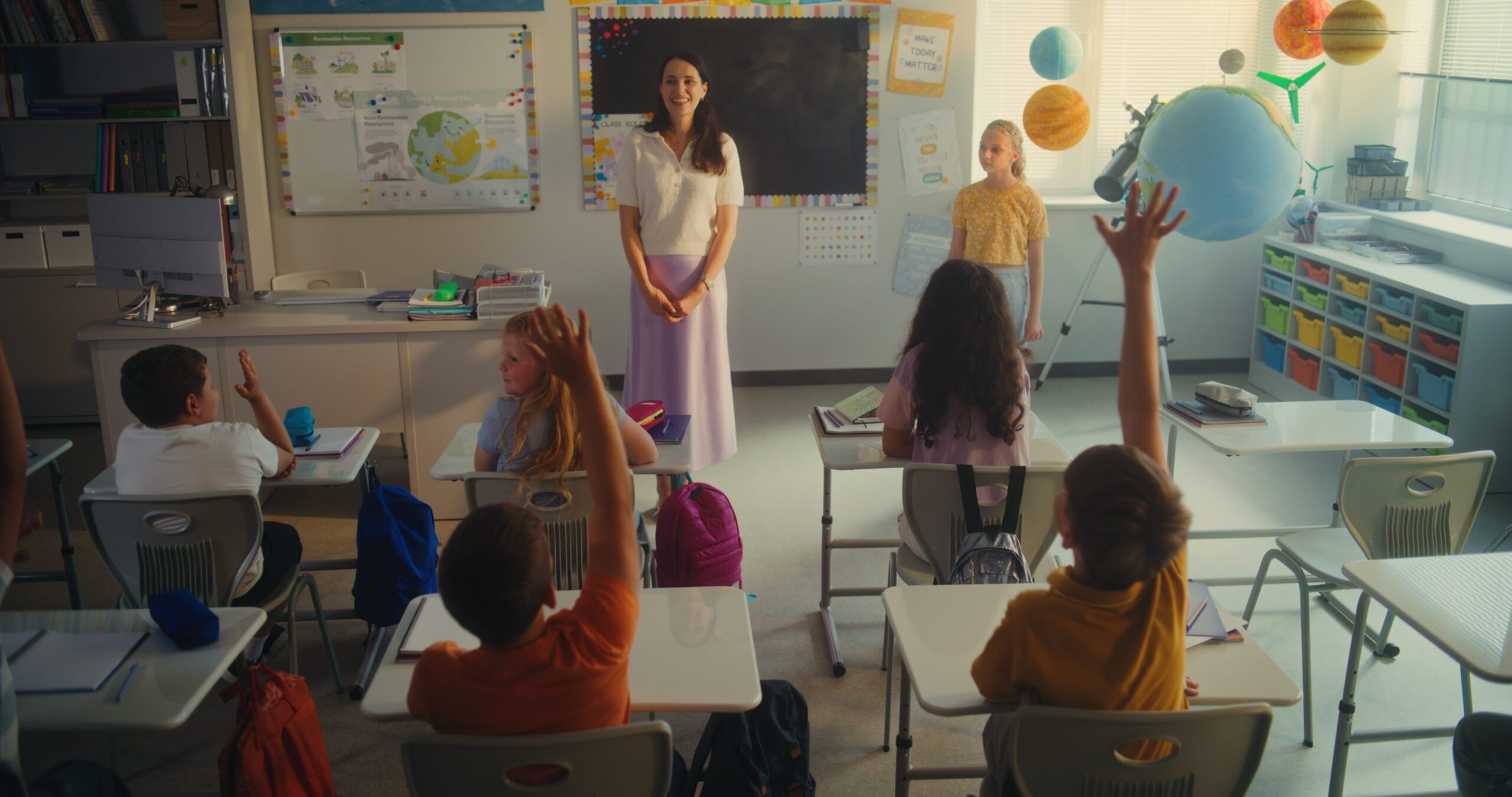
Teaching kindergarten science provides an opportunity to expose children to their first structured science lesson. At this age, lessons are not about memorizing vocabulary but about developing a scientific mindset and fostering healthy curiosity, observation, and independent hypothesis testing.
Kindergartners are naturally inquisitive, and it is important to encourage this mindset as it will serve them throughout their education. Students notice their environment and peers and learn through play. Structured play is an effective method to teach kindergarten science standards. Facilitating observation, prompting questions, and leading the class to form scientific explanations are important parts of kindergarten science activities.
What are the Kindergarten Science Standards?
The core of the kindergarten science standards is influenced by the Next Generation Science Standards (NGSS); however, each state may make its own adaptations. Kindergarten science standards focus on:
- Cross-cutting concepts
- Disciplinary core ideas
- Science and engineering practices
Because standards vary by state, kindergarten science standards are intentionally broad and adaptable. They guide teachers toward developmentally appropriate instruction while still allowing flexibility to build long-term understanding.
The majority of kindergarten science covers:
- Being able to name the four seasons and describe their characteristics.
- Patterns in nature.
- Exploring material properties such as hard, soft, big, and small.
- Observing motion through push and pull.
- Knowing what plants and animals need to live.
The purpose of these standards is not memorization but observational understanding. Students are asked to describe the weather, plants, and animals. A teacher may ask whether they notice any patterns in the weather. Promoting observation and explanation with simple language is necessary. Over time, students will see that science is not just a lesson but a tool for understanding the world around them. At five years old, they are natural scientists with plenty of questions.
To support educators with kindergarten science instruction, you can view a science curriculum to save valuable prep time. Allowing teachers to spend less time designing lessons and more time present with students. The Discovery Education Science Platform can help by providing ready-to-use, interactive, and informative lessons aligned with kindergarten science standards.
Science lessons are also a great opportunity for students to practice other subjects. Incorporating math, reading, or writing can be a natural bolster to the curriculum. Students can draw or label a concept, read a short description or labeled diagram, and count objects in a lesson to strengthen their growing math skills.
10 Kindergarten Science Experiments and Teaching Activities
To facilitate an effective kindergarten science lesson, it is important to maintain high energy and consistent interaction to keep students engaged. If students are not actively participating in an experiment or activity, they may lose interest at this grade level. Below are 10 kindergarten science activities that meet one or more of the kindergarten science standards. Repetition is important for learning at this age, so it helps to revisit successful activities multiple times.
These 10 kindergarten science activities are meant to meet students where they are, with their natural curiosity about the world around them, using a hands-on approach to keep them interested throughout the lesson.
1. Plant Growth Competition
Help students label and prepare three separate plant beds. One gets no water, the second gets no sunlight, and the third gets everything necessary to grow. Have students observe the seedlings over a few weeks. Give them time to ask questions and form scientific observations. Students can draw all three saplings.
2. Sink or Float
Set up a water station with a variety of objects for students to choose from. Ask them to formulate a hypothesis about which objects will sink or float, then test each one together.
3. Five Senses
Set up five stations around the room, one for each sense: sight, smell, touch, taste, and hearing. Ask students to describe each station and guess which sense it corresponds to. Be sure to double-check any allergies or dietary restrictions before this lesson. Taste can be a fun station when there are healthy and appropriate options.
4. Weather Watch
Every day, ask students to describe the weather and choose a symbol to represent it. Keep track of the weather on the board or another classroom visual. Helping students see patterns in nature. Consistency is integral here.
5. Secret Shadow
Allow students to pick classroom objects. Then use a flashlight to create a shadow and ask students to guess the object.
6. Magnet Madness
Give students magnets to experiment with through play. Offer gentle prompting and observation throughout, then ask students to share any patterns they noticed.
7. Nature Search
Take students outside and have them collect non-living items to bring back to class. Once back in the classroom, students can sort and share their findings. Offer an opportunity to draw, trace, or do frottage.
8. Ice Race
Have students pick three spots in or around the classroom to place ice. Ask them where they think it will melt first, second, and last. At the end, discuss why. To integrate math, teachers may have students time the ice melting.
9. Color Exploration
Give students primary colors, water, and paper. Let their imagination run. Ask them which two colors made a new color and how they would describe the result.
10. Bob the Builder
Give students recycled materials and ask them to build something strong. Once everyone is finished, test their creations with three weight levels—for example, a pencil, an empty pencil box, and a big book. Then give them a chance to rebuild.
All of these activities are fun ways to engage students. To help students learn the kindergarten science standards, it is important to include them in the dialogue during their activities.
Ask students:
- What changed?
- What do you see?
- What do you think happened?
- Why do you think it happened?
Guided play is where meaningful learning happens!
Kindergarten classrooms need to foster a sense of curiosity and independence. Keeping students’ materials low and accessible can help them get started. Keeping students’ finished projects around the classroom can bolster their confidence. Creating a daily routine of questions and discussion will keep them curious.
Digital tools created for science curricula can help keep students engaged. Discovery Education has a dedicated section focused on science curriculum to help students build a strong foundation.
Teaching kindergarten science is an opportunity to influence the next generation of scientists. It is easy to downplay the importance of sparking curiosity among younger learners, but a thoughtful approach to teaching kindergartners helps shape their academic interests early on. Planting the seed of a critical-thinking mindset starts here by encouraging questions, observations, and hypotheses.
Educators who teach the kindergarten science standards through engaging science experiments and activities are cultivating scientific mindsets. That will carry throughout their academics for years. Keep in mind that kindergartners learn best through exploration, so not every lesson needs to have a rigorous structure. These kindergarten science activities can be used again and again to reinforce a lesson or revisit a similar concept. Setting up the same activity and asking different questions can build on their existing knowledge. Be sure to cultivate open dialogue, because kindergartners have many thoughts, feelings, and ideas to share. They learn from sharing their thoughts out loud and building dialogue skills through explanations. Most science activities provide the perfect opportunity to promote student voices.
Over time, teachers will see students improve their understanding, explanations, and questions. At the cornerstone of any activity is developing curiosity. At five years old, students have it in spades, and educators have the opportunity to cultivate it into their next chapter. Teaching the kindergarten science standards in a fun way is the most effective approach.
Discovery Education offers phenomena-driven, three-dimensional, standards-aligned science programs to build foundational and transferable skills across K–12. Their programs include Science Techbook for ready-to-teach K–12 lessons that engage students with real-world phenomena and hands-on learning, Mystery Science for K–5 investigative lessons anchored in everyday scientific phenomena, the Pivot Interactives supplement for grades 6–12 with 500+ interactive activities, and Discovery Education Experience for supplemental K–12 instructional resources that support high-quality Tier 1 science teaching and career readiness.