Key takeaways
-
High-quality science instruction gets students actively practicing the reading, writing, speaking, and critical-thinking skills that define strong literacy.
-
There are parallels between the processes involved in scientific inquiry/engineering practices and those involved in text comprehension.
-
Integrating science and literacy instruction can be especially effective because students get more out of their reading and the thinking tools to make sense of it all.

Despite heavy emphasis on building student literacy across the nation, some schools and districts aren’t seeing the learning recovery that they have hoped for over the past few years. Education leaders are taking different approaches to address this problem, but there’s one that may be overlooked despite being backed by research: building literacy through science instruction.
How does this work in the classroom? Let’s look at three key ways that learning science also develops literacy.
1. Learning Science Strengthens Reading Comprehension
We know that reading comprehension isn’t simply decoding words but also drawing upon background knowledge to make sense of the content. So, greater background knowledge about a given topic translates into a deeper understanding of the information presented.
Science instruction is a particularly useful way to build background knowledge because students learn from coherent, interconnected ideas about the real world and how it works. A recent study showed that fourth grade students who read a set of conceptually connected science texts learned more vocabulary, built stronger content knowledge, and understood new text on a related topic better than students who read texts on unrelated subjects.
Further, as students are immersed in science, they are exposed to domain-specific vocabulary that can be valuable both in school and outside it. And the nature of content-rich science instruction supports ongoing reading skills growth. Ultimately, setting aside time for science instruction isn’t taking away from literacy development, it’s fueling it.
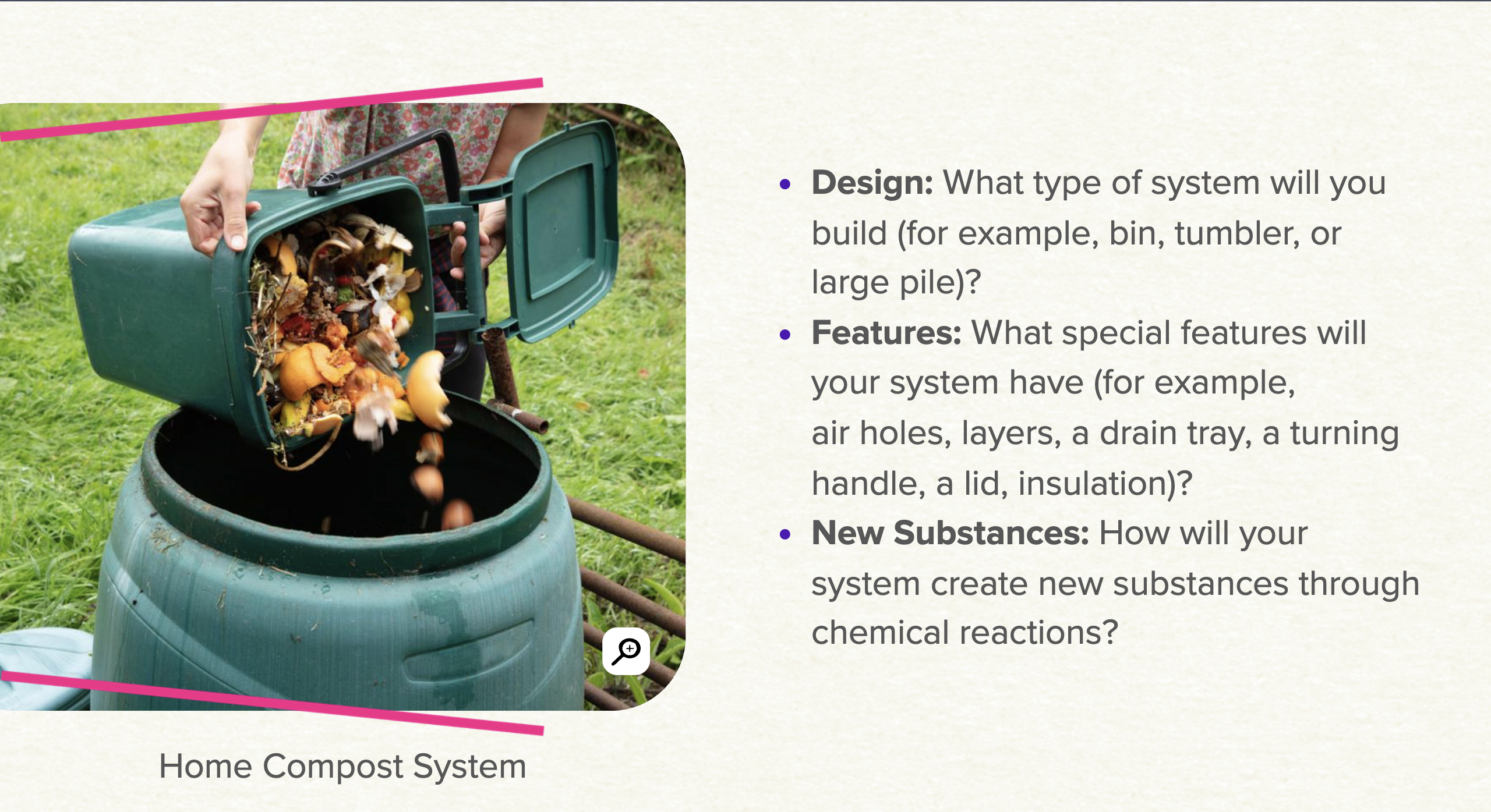
Discovery Education’s Science Techbook provides opportunities for students to strengthen their reading comprehension. One example is “STEM in Action” texts that ask learners to read topical content with intention and complete related activities after.
2. Learning Science Expands Vocabulary
Since vocabulary depth is one of the strongest predictors of reading comprehension, it makes perfect sense that expanding students’ vocabulary is a priority. As we mentioned before, science instruction exposes students to domain-specific vocabulary they wouldn’t necessarily see otherwise. Even better, students learn much more effectively when new vocabulary is presented in meaningful contexts rather than in word lists and memorization drills.
What could expanding vocabulary through science instruction look like in the classroom? Lessons might explore different topics, such as what happens when ice melts, why a ball rolls farther on a smooth surface, or how animals adapt to their environments. Students would see terms like evaporation, friction, or adaptation and could gain a better understanding of them through investigation and discussion.
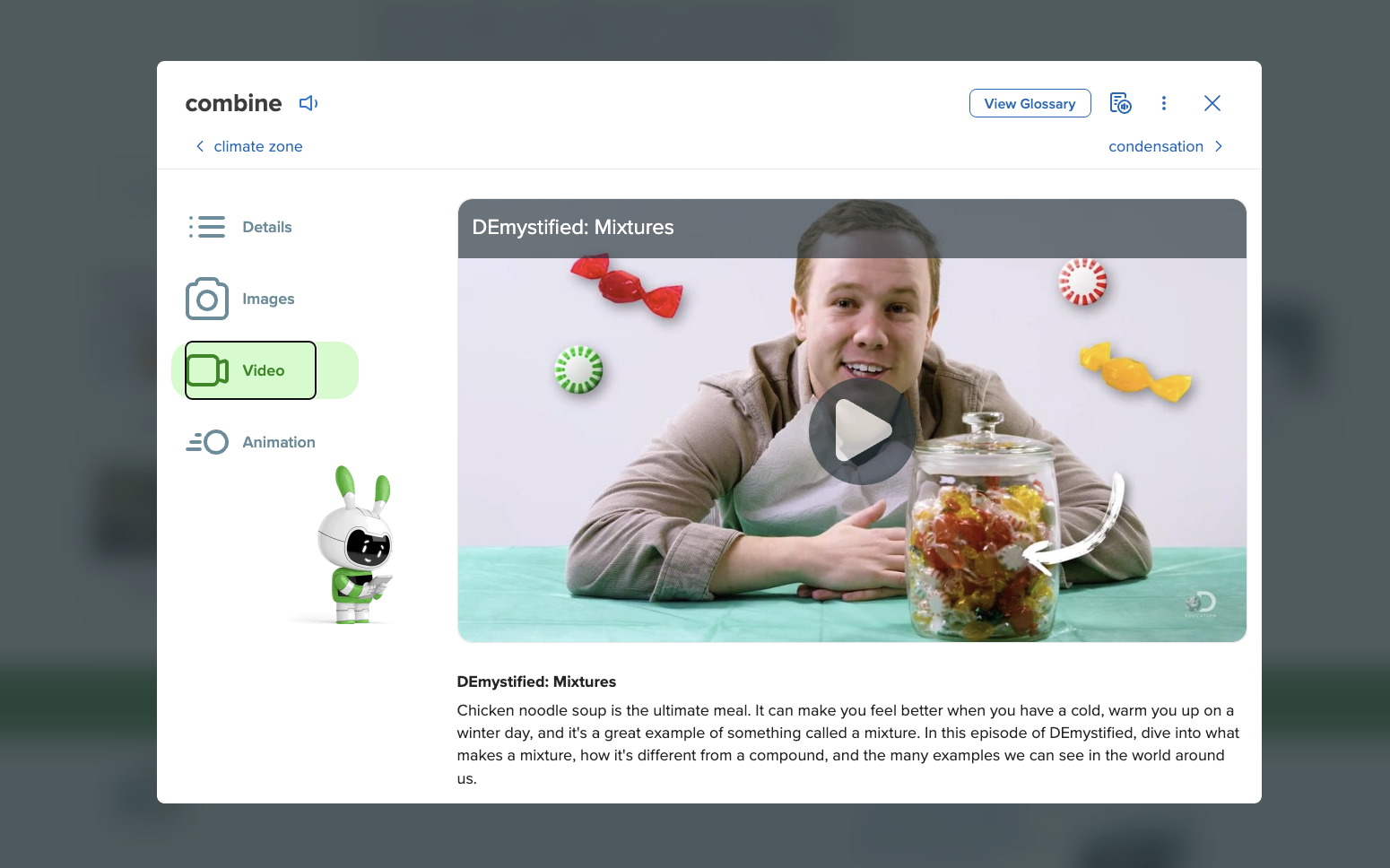
Science Techbook does exactly this as learners use the scientific method to explore natural phenomena. Besides giving context to terms in immersive videos and hands-on activities, this program offers key vocabulary strategies to help students strengthen their conceptual grasp of terms. One strategy is to construct a visual dictionary of vocabulary words:
- Writing down all the terms
- Defining them using their own words
- Drawing and labeling a representation of each word
- Assembling completed pages to form a dictionary
Another strategy is called “Connect the Dots,” in which students:
- Write vocabulary words on small pieces of paper
- Draw two at random
- Write down as many connections between the two words as they can think of
3. Learning Science Naturally Requires Literacy Behaviors
Would it be surprising to you that thinking processes used in one domain may be similar to processes used in another? Researchers found that there are parallels between the processes involved in scientific inquiry/engineering practices and those involved in text comprehension.
For example, when students plan and carry out an investigation, they’re constructing meaning, just like when reading a text. When they analyze data from multiple sources, they’re coordinating information originating from different kinds of texts: their notebooks, class posters, discussions, and printed materials. When they make evidence-based claims, they’re adopting the same evaluative stance that strong readers take as they read.
In practice, high-quality science instruction asks students to:
- Read and discuss informational texts, including trade books, researcher-designed texts, graphs, tables, and digital simulations
- Write scientific explanations and arguments using claims, evidence, and reasoning—the same structure ELA standards emphasize
- Interpret and create multimodal representations, such as diagrams, data tables, drawings, and models (transferable skills)
- Engage in evidence-based discussion, supporting their ideas, responding to peers, and revising thinking and conclusions as needed
These actions lead to deeper text comprehension (even going beyond what’s being explicitly taught), analytical reading rather than scanning for information, and stronger reasoning used in writing across disciplines.
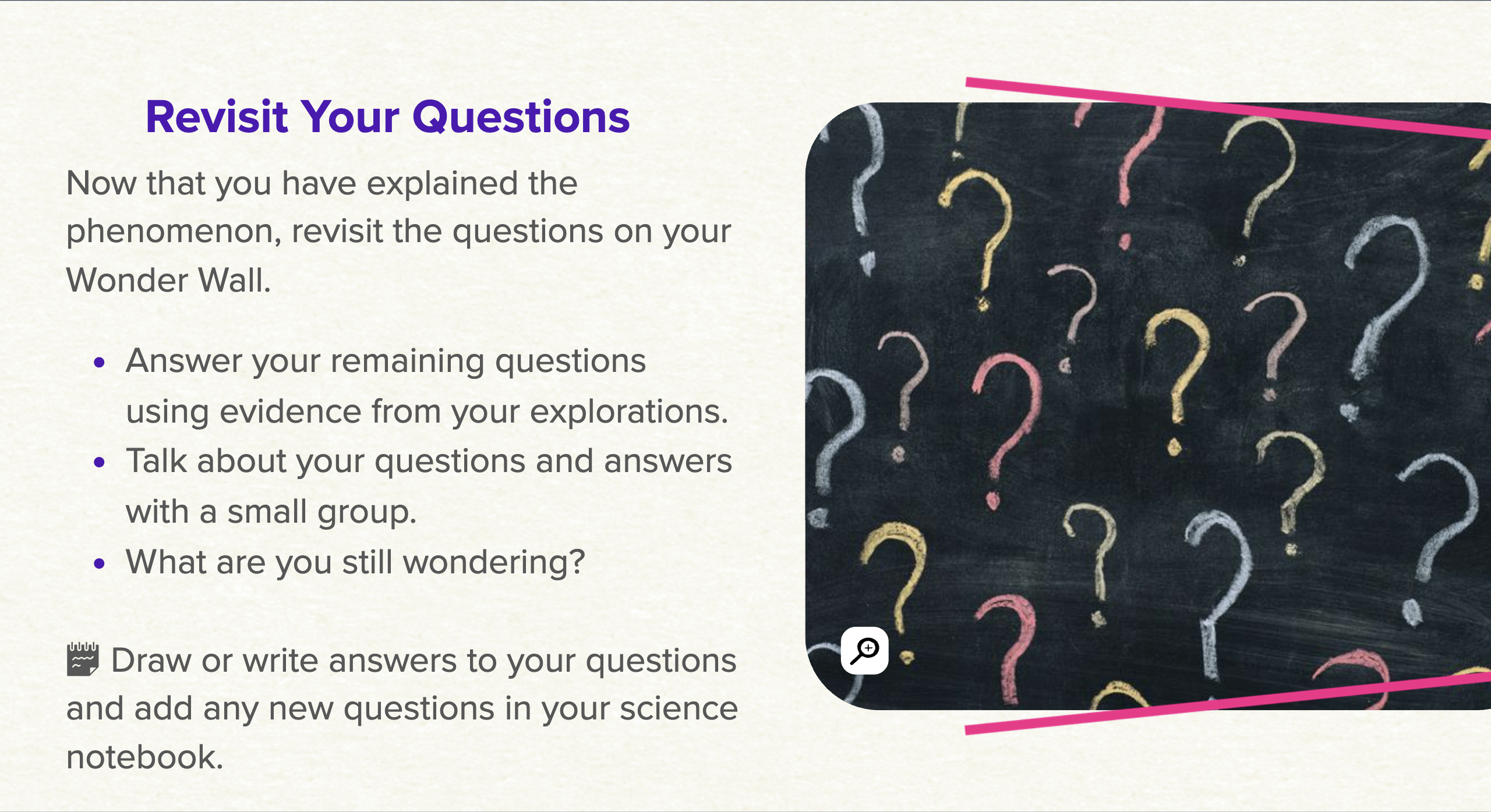
Built on the 5E inquiry model, concepts in Science Techbook use a lesson progression that incorporates the actions listed above:
- Engage: These lessons introduce a real-world phenomenon that students will return to throughout the concept.
- Explore: Students begin exploring a phenomenon through hands-on activity, interactive, video, literacy lessons.
- Explain: Using data and observations, students construct scientific explanations for phenomena.
- Elaborate: These lessons help students build upon the science ideas they’ve been learning and involve a hands-on project.
- Evaluate: Students sum up their learning and demonstrate understanding of core ideas.
Conclusion
High-quality science instruction at any grade level, including K–5, gets students actively practicing the reading, writing, speaking, and critical-thinking skills that define strong literacy. This may ease some curriculum decisions since you can embrace science instruction and know that you are continuing to boost student literacy. In fact, integrating science and literacy instruction can be especially effective because students get more out of their reading and the thinking tools to make sense of it all.
Finally, be sure to support your team with professional learning that increases their capacity for science and integrated science-literacy instruction, which will also positively impact student outcomes.
Interested in learning more about Science Techbook? Try our interactive preview!