Key takeaways
-
Career readiness activities help prepare students for a successful transition from the school environment to the workplace.
-
It is critical that schools prioritize incorporating career readiness activities into the classroom for all grades.
-
Career readiness activities help build valuable soft skills such as communication, collaboration, teamwork, and professionalism.
Think back to when you finished high school or college. Did you feel prepared to transition from academic life to work life? Did you have the skills necessary to be successful in the workplace? If not, you’re in good company. Many students don’t feel adequately prepared for this transition, highlighting the importance of integrating career exploration and career readiness activities into the classroom.
Career readiness activities help students build skills that are necessary and valuable in the workplace. Not only will these skills serve them well once they have a job, but they will also help students land a job and bridge the gap between being a student and being an employee.
There is a plethora of career readiness activities that can be incorporated into the classroom to address critical skills such as communication, critical thinking, professionalism, and teamwork, and help students succeed in the workplace. Below is a description of 15 such activities to use in your classroom.
1. Mock Interviews
Mock interviews are short practice sessions that simulate a real interview and help students build confidence in their interviewing skills. They can be facilitated by teachers from your school building or even local professionals whom you invite into the classroom for this purpose. Before the mock interview, students should be coached on a variety of professional skills, such as a firm handshake, eye contact, appropriate attire, and clear communication. It is also helpful to share common interview questions with students so they can be ready with clear, concise answers. After the mock interview is complete, it is critical that students receive timely, constructive feedback to help them further prepare for a real interview.
2. Resume Writing Workshop
When introducing resume writing to students, start by showing them a variety of sample resumes, both good and bad. It’s important that they see a broad spectrum of examples. Then, model writing a professional resume using your own experiences or those of a fictional candidate. Teach mini-lessons or have a variety of centers set up to focus on different aspects of resume writing, such as information gathering, writing a professional profile, listing skills, and using action verbs and adjectives. Consider providing a template for students to create their own resumes. As they work, be sure to provide constructive feedback and other resources that might be helpful. You might even consider inviting various professionals into the classroom to review students’ resumes and provide feedback.
3. Elevator Pitch Introduction
An elevator pitch introduction is a short, concise communication of a student’s experiences, skills, and interests. It can be used in a variety of situations and can be particularly useful during mock or real interviews. Students should receive explicit instruction on the key components of an elevator pitch introduction and be provided with constructive feedback after writing it. Helping students understand that it serves as a highlight reel for their resumes is important. Once their elevator pitch introduction has been fine-tuned, students should practice it so it sounds natural rather than rehearsed or forced. This practice can be done with other students or teachers from the school building.
4. Digital Footprint Audit
A digital footprint audit is the process of taking a good, hard look at your online presence to protect your privacy and reputation. This is particularly important for job hunters, as many employers rely on the internet to research candidates.
Key steps to take students through include: Googling themselves and reviewing the first few pages of information that appear, auditing their social media accounts by ensuring privacy settings are in place, reviewing any photos and posts they’ve been tagged in, removing all inappropriate or questionable posts, deleting unused accounts to minimize the risk of data breaches, and removing personal information by submitting opt-out requests to sites like WhitePages.
Additionally, it may be helpful to provide digital literacy instruction to students so that, after completing the audit, they know how to maintain a professional online presence as they transition from school to work.
5. Job Shadowing
Job shadowing provides high school students with short opportunities to observe individuals in careers or jobs they are interested in. You can use your own personal network, your school network, and local businesses to secure opportunities for students. Students should prepare to shadow by researching the organization or business, preparing questions to ask their host, and reviewing appropriate attire for that particular job. After the shadow, students should follow up with a thank-you note and have the opportunity to reflect on their experience. In a broader context, these job-shadowing opportunities should help students determine career paths that interest them and guide choices regarding higher education.
6. Career Day Panel
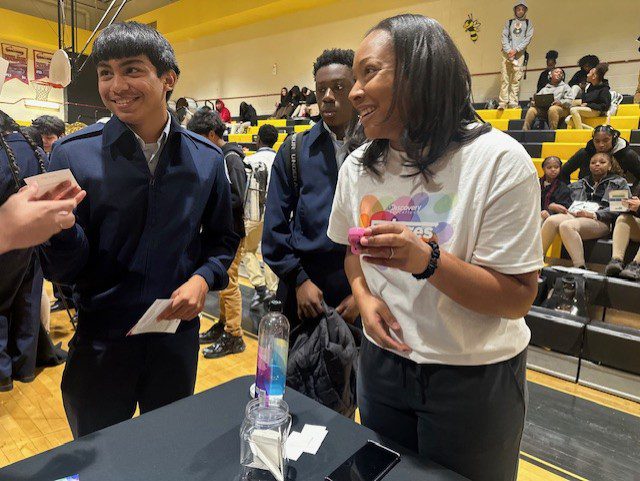
A Career Day Panel is an interactive session where students can interact with professionals from a variety of settings. Those professionals may discuss their job duties, the education or training required to do their jobs, highlight the best parts of their job, or answer students’ questions. Career Day Panels are a great way to connect classroom learning to real life by highlighting the skills needed in different businesses or industries and exposing students to a variety of career options. Career Connect is a valuable career readiness resource that can help you connect with diverse industry professionals.
7. Career Interest Inventory
A career interest inventory is a self-assessment tool that can be easily administered to students in the classroom. It helps them identify their interests and passions, then matches them to potential career paths. A career interest inventory is best used early on in a student’s high school career, as it is meant to be a starting point for career exploration and should be followed up with other career readiness activities. A variety of career interest inventories are available online.
8. Role Play
Role play is an extremely versatile career readiness activity. It can be used to practice a variety of scenarios students might encounter in the workplace, including handling customer service issues, resolving conflicts with colleagues, communicating with management, and pitching new products or ideas. This activity is meant to prepare students for real-life workplace challenges and instill confidence in their ability to handle them. Role play is also a great way to build a variety of soft employability skills necessary for success in the workplace.
9. Debate
Even in the most positive work environments, disagreements and conflicts will arise among colleagues. Students need to be prepared for handling these conflicts appropriately. By allowing students to debate in the classroom, we can provide them with low-risk opportunities to practice a variety of necessary conflict-resolution and productive-disagreement skills that will prove valuable in the workplace. Debates can center on an ethical dilemma or a common workplace dispute. Be sure to outline the scenario to students, set goals or objectives for the debate, and communicate expectations or guidelines. Students should also be provided with constructive, real-time feedback.
10. Problem-Solving Task Cards
Problem-solving task cards provide realistic scenarios that students may encounter in the workplace. They provide students with the opportunity to think through potential workplace, safety, or customer service conflicts in a low-risk environment. These problem-solving task cards also allow students to practice key soft skills, such as critical thinking, conflict resolution, and decision-making, with an adult or peers. Many examples of problem-solving task cards are available online.
11. What Would You Do?
“What Would You Do?” is a career-readiness activity that uses situational questions to assess and practice a range of soft employability skills. Questions might involve how they would handle a difficult team member, prioritize and manage multiple tasks, or tackle last-minute changes to project goals. The goal of this activity is to get students thinking about common workplace challenges, how they might handle them, and to strengthen the soft skills necessary for success in the workplace. This is also a great way to help students “think on their feet,” a skill that will prove valuable in preparing for interviews.
12. Escape Room Puzzle
Escape room puzzles are an engaging way for students to develop career-readiness skills such as critical thinking, teamwork and collaboration, problem-solving, and communication. These puzzles are widely available online and require students to work together to solve a challenge within a set time limit. The challenge can relate to a variety of career-readiness skills.
13. Vision Boards
Vision boards are a powerful tool for students preparing to transition from the academic environment to the work environment. They can help students map out their career goals and help them visualize success. A variety of materials can be used to create a vision board, and students should be encouraged to include any visual representation, such as pictures, words, and quotations that are especially meaningful to them, as they pursue their career goals and aspirations. Vision boards should be reviewed regularly to help students stay focused on their goals.
14. Design Challenge
Design challenges are similar to escape room puzzles in that they offer a fun, hands-on way for students to hone a variety of career-readiness skills. Students can be challenged to design just about anything, using all sorts of materials such as marshmallows, toothpicks, spaghetti noodles, tape, or cardboard. Be sure to provide students with clear expectations and review cooperative learning guidelines. Once students have completed the challenge or designed their prototype, they can present it to the class and receive and give feedback from peers, providing further practice in a variety of soft skills.
15. Budget Simulation
Financial literacy is a critical skill students need as they transition from school to work and from childhood to adulthood. Budget simulations immerse students in real-world decision-making involving financial topics such as income, expenses, savings, taxes, and unexpected costs. Students can practice living on different budgets and gain insight into the costs of items like groceries, gas, and insurance. Participating in this type of classroom simulation is a way for students to practice important life skills in a low-risk environment where they can learn from their mistakes under the supervision of an experienced adult.
What Skills Do Career Readiness Activities Help Build?
While attending trade or technical schools, certification programs, or college or university, students build the hard employability skills necessary to perform their specific job duties. Career readiness activities, on the other hand, help them develop the transferable skills that must be developed over time rather than being explicitly taught. These skills include communication, collaboration, critical thinking, problem-solving, adaptability and flexibility, technical writing, and interviewing.
More often, employers are seeking candidates with a healthy balance of hard and soft employability skills, particularly in our rapidly changing, technology-driven world. No longer can a candidate get away with simply being adept at the technical skills required of a job. Leaders are looking to bring the human element back to their businesses by prioritizing candidates with strong soft skills.
Not only are these skills necessary for success in the workplace, but they also build key competencies such as self-awareness, self-management, social awareness, relationship skills, and decision-making abilities. These skills help our students to be well-rounded humans, ready to tackle life’s challenges as they move from childhood into adulthood.