Key takeaways
-
Career interest assessments can help students understand their interests, strengths, and preferences, and connect them to careers they may want to explore.
-
No assessment should tell a student what career to choose. Results are most useful as a starting point for conversations, research, and real-world exploration.
-
Schools can make assessments more meaningful by connecting results to courses, career pathways, workplace experiences, and conversations with professionals.

Schools do more than teach academic content. We also help students understand their interests, recognize their strengths, and think seriously about life after graduation.
Career interest assessments give students a practical starting point for exploring possible careers and making more informed decisions about their future.
Students often know what they like and dislike, but they may not know how those preferences connect to the world of work. A student who enjoys solving problems may never have considered engineering, cybersecurity, or the skilled trades. A student who enjoys helping people may immediately think of nursing or teaching without realizing how many other careers involve those same interests.
A well-designed career assessment can help students make those connections.
Career assessments should help students explore possibilities, not decide their future. Students are still developing their interests, gaining new experiences, and learning about careers they may not even know exist. The value of these tools is that they help students better understand themselves and begin exploring what might come next.
What Is a Career Interest Assessment?
A career interest assessment is a tool designed to help individuals identify interests, preferences, strengths, values, or other characteristics that may connect to different types of work.
Depending on the assessment, students may answer questions about activities they enjoy, subjects that interest them, problems they like solving, environments where they feel comfortable, or things that matter to them. The results generally identify broad areas of interest or suggest occupations and career fields that share characteristics with the student’s responses.
For example, a student whose results show an interest in healthcare should not be directed toward one specific career. The results simply provide a broad field to explore, which may include physical therapy, medical imaging, health information technology, laboratory science, healthcare administration, nursing, or medicine.
For schools, career interest assessments work best as one part of a larger approach to career exploration for students. The assessment provides information; what happens after students receive that information is where much of the learning takes place.
What Are Examples of Career Interest Assessments?
There are many different career assessments available to schools and students.
Career assessments can examine different parts of a student’s interests and preferences. Some group responses into broad areas, such as working with people, solving problems, creating, leading, organizing information, or working with tools and technology. Others focus on skills, work values, personality, or preferred work environments.
Some career platforms combine several types of information and use the results to help students explore related career fields.
Schools can also use simpler career-interest inventories with younger students. Students might consider what they enjoy doing, subjects they like, whether they like working independently or with others, or whether they enjoy creating, building, organizing, helping, or solving problems.
The goal, particularly with younger students, should be exploration. An assessment should help students identify new interests and possibilities, not make them feel like they are being placed on a particular career path. At this stage, the results should give students more options to explore, not narrow their choices.
Assessment results reflect a student’s interests at a particular point in time. They should expand a student’s options, not limit them.
What Are the Different Kinds of Career Interest Assessments?
Career assessments can measure different things. Understanding those differences helps educators select appropriate tools and students make sense of their results.
Interest Inventories
Interest inventories focus on the activities students enjoy and the kinds of work that interest them. They can help students see whether they enjoy things like solving problems, working with others, creating or building things, staying organized, or leading others.
These can be especially useful for students who say, “I have no idea what I want to do.” Instead of starting with thousands of occupations, students can begin with a few broader areas that match their interests.
Skills and Aptitude Assessments
Skills assessments focus on what a student can currently do, while aptitude assessments may identify areas in which they demonstrate particular potential.
They can help students recognize strengths they may overlook, such as communication, spatial reasoning, mechanical ability, organization, or problem-solving.
A student’s current skills should not limit future options. Skills can improve with teaching and practice, so assessment results should help students explore possibilities.
What Students Value in a Career
What students value in a career is also important. Some may value helping others, while others prioritize independence, stability, creativity, income, or flexibility.
A career can align with a student’s interests and still be a poor fit if the work environment conflicts with what that student values. These assessments encourage students to look beyond job titles and think about what they want from their work.
Personality and Work-Style Assessments
These assessments look at how students prefer to work, including whether they enjoy working independently or with others, following a routine or trying new approaches, and working in a structured or changing environment.
The results can help students better understand their preferences, but they should not be treated as fixed. Like interests and skills, work styles can change as students gain new experiences.
What Are the Pros and Cons of Career Interest Assessments?
Like most educational tools, career interest assessments are only as useful as the way schools use them.
One of their biggest advantages is that they give students a place to start.
Students have more career options than they can reasonably explore on their own. Asking a 13- or 16-year-old to consider careers without providing some direction can be overwhelming. An assessment can narrow the initial search and introduce students to possibilities they may not have considered.
Assessments can also build self-awareness by helping students think more intentionally about the types of work they enjoy, the environments where they are most comfortable, the strengths they already have, and the skills they want to develop.
Assessment results can also help students make more informed academic choices. Once students identify areas of interest, teachers and counselors can connect them with relevant courses, career clusters, CTE programs, and work-based learning opportunities that allow them to explore those interests further.
There are limitations, though.
Students may answer questions based on how they feel that day, misunderstand a question, or have limited knowledge of the careers included in their results. More importantly, an assessment can narrow a student’s thinking if they take the results too literally.
A student who receives a list of suggested occupations should not assume those are the only careers that fit. Likewise, a career that does not appear in the results should not automatically be dismissed.
This is why I would never want a school to administer an assessment, hand students a report, and consider career exploration complete.
The assessment should start the conversation.
Turning Assessment Results Into Career Exploration
The most important question for educators is not which assessment students take, but what happens after they receive the results.
Give students time to review and think about their results. Ask which results seem accurate, which surprised them, and which they disagree with. Even disagreement can be productive because it requires students to think more carefully about their interests and goals.
Then have students choose two or three careers to investigate.
What does someone in that career actually do? What education, training, credential, or experience is typically required? What skills are important? What does the work environment look like? Are there related occupations the student had not considered?
From there, schools can make the exploration more real.
A student interested in healthcare might speak with a physical therapist or medical technician. A student interested in technology might meet a cybersecurity professional. Someone interested in construction could learn from an electrician, architect, or project manager.
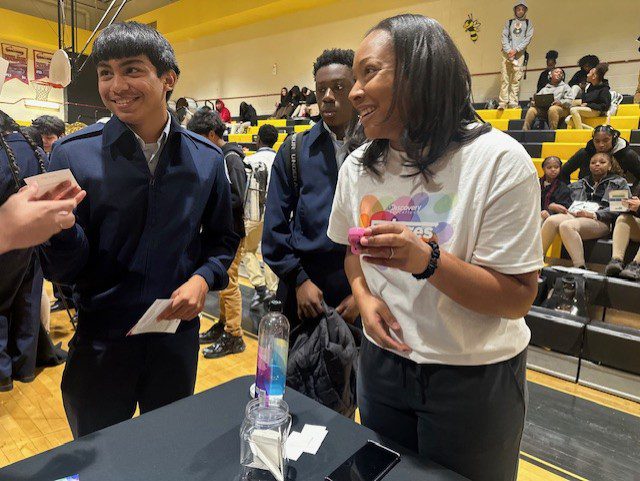
Schools can use a career readiness program to connect students with industry professionals and real career experiences. Career conversations, job shadowing, internships, career fairs, CTE programs, and work-based learning can help students decide whether an initial interest continues after they learn more about the work.
An assessment may identify a possible area of interest. Further exploration helps students decide whether they want to learn more, while firsthand experience helps them determine whether they could see themselves pursuing that career.
Using Career Assessments as a Starting Point
From a district perspective, I would not measure the value of career interest assessments by how many students complete one. Completion rates are easy to track, but they do not show whether the experience was meaningful to students.
I would want to know what students did with the information.
Schools should look at whether students discovered new careers, discussed their results with a counselor, teacher, family member, or professional, explored related education and training options, and developed a clearer understanding of their interests and goals.
A career assessment should not be expected to give students a final answer about their future. That is unrealistic for most young people.
We want students to leave with better questions, more options, and a clearer understanding of themselves.
When schools combine well-designed assessments with meaningful career readiness experiences, students can connect their interests and strengths with opportunities they may want to pursue.
Our responsibility is not to choose a path for students, but to provide the resources, experiences, and guidance they need to understand their options and make informed decisions about what comes next.