Key takeaways
-
Curiosity, confidence, and observation skills are developed through 3rd-grade science activities.
-
Allowing students to participate in simple hands-on 3rd-grade science activities helps them understand science lessons.
-
Strong instruction is necessary to facilitate student understanding of patterns, comparison, and discussion.
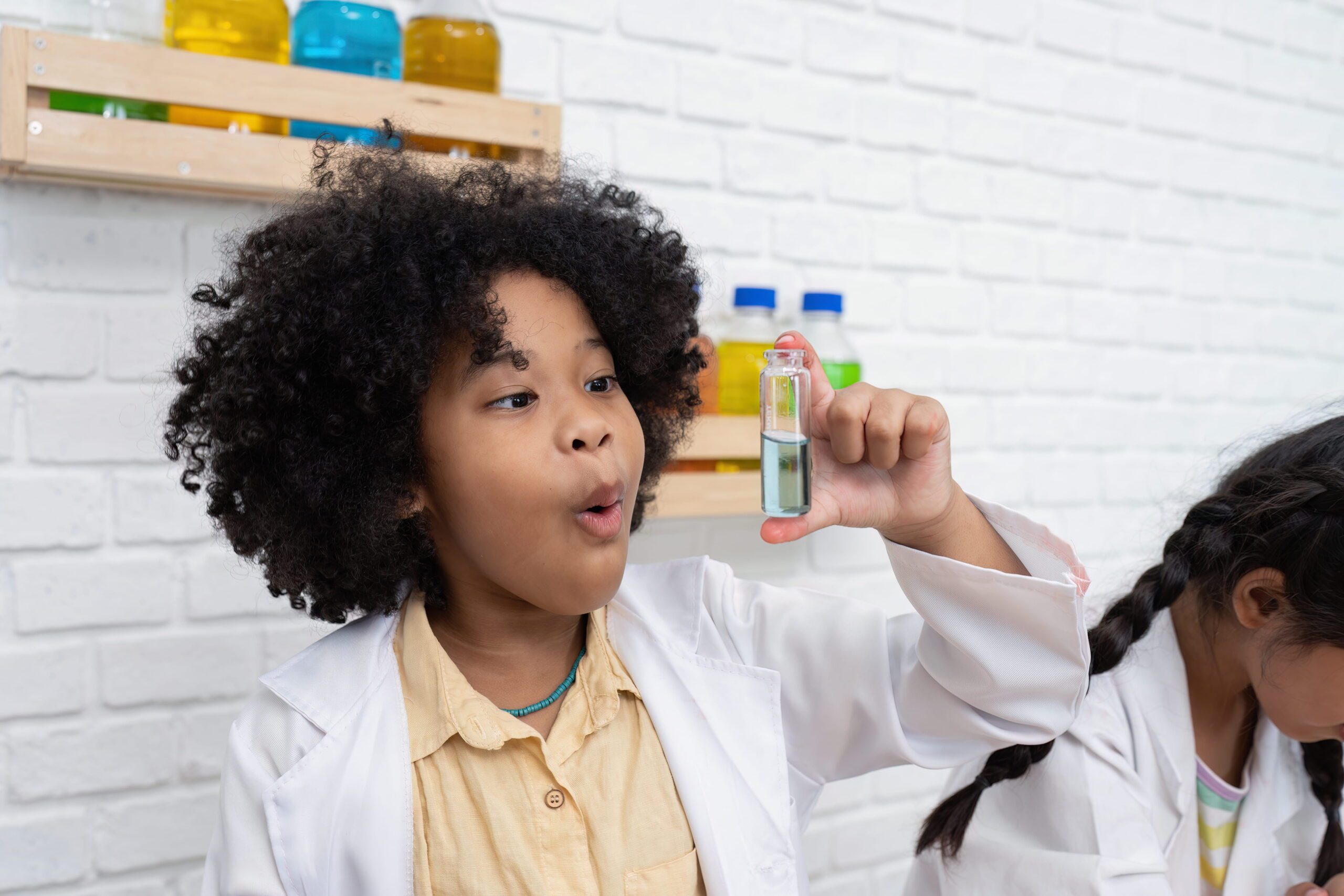
A third-grade science classroom is a wonderful opportunity to help students start to see themselves as young scientists. At this grade, students learn best through sorting, testing, touching, and talking about what they are seeing or doing. An engaging science lesson encourages students to make a guess, wonder aloud, or discover new things.
For 3rd-grade science, lessons should be approachable, active, or immersive. It is important to focus on building classroom habits rather than complicated scientific explanations.
Create opportunities for students to observe, compare, and voice their unique ideas or perspectives. Let them notice how things change. Hands-on learning is the foundation of 3rd-grade science. Discovery Education provides a science curriculum that offers pre-designed lessons and flexible resources to help keep students engaged.
What are the 3rd-grade science standards?
3rd-grade science standards explore some big ideas. Students learn about weather, rocks, matter, soil, erosion, plants, animals, and the water cycle. They also focus on improving science skills, including predicting, observing, comparing, and recording data.
Science lessons are centered on everyday experiences. Students can observe seed sprouting and the movement of shadows while strengthening their science skills. These lessons help students understand that science goes beyond the textbook. It is something they see around them and interact with daily. Connecting lessons to everyday phenomena helps students’ involvement.
Implementing the 3rd-grade science standards also helps build students’ confidence. Through data collection, discussion, and object sorting, students learn that they are independent and capable. As they improve at sharing their ideas, they gain confidence in their unique ideas and understanding.
10 3rd-Grade Science Experiments and Teaching Activities
These 3rd-grade science activities are direct, simple, and concise. They are designed for student understanding and engagement, with ample opportunities to observe and discuss their scientific discoveries.
1. Sound Sleuths
Set up multiple stations around the classroom. Fill multiple bins with a variety of materials, including but not limited to marbles, cotton balls, rice, beans, and paper clips. Place lids on all the bins and number each container. Have students go around the classroom, shaking and guessing what’s inside each container. Have them record their predictions. This strengthens their observational skills and data collection in a fun and engaging way.
2. Animal Cover-Pp
Show a variety of animal photos in their natural environment. As a class, ask students to identify the animals’ environment, what helps them survive, and any defining features. Students may discuss fur, habitat, body shape, camouflage abilities, and more. After the classroom discussion, students can sort animals and habitat cards into matching pairs and explain why. These activities help students become familiar with structure and environmental systems.
3. Float your Boat
This is a fun and challenging activity for a 3rd-grade science class. Students receive aluminum foil with the only direction: create a boat to hold as much weight as possible. After building their boats, students test them in a bucket of water by adding pennies one at a time, then revise their designs based on what they learned. With multiple opportunities to test, redesign, and improve, the activity introduces students to the engineering design process.
4. Animal Track Detectives
Teachers show multiple animal tracks- bird tracks, hoof prints, or paw prints. The class discusses which animal may have left the tracks and what they can infer from shapes, nails, and size. Students may create their own tracks in playdough using animal figurines for comparison. This activity helps students build observational skills.
5. Day and Night Sort
Students are given a set of cards featuring objects, animals, and activities commonly associated with day or night, such as the sun and moon, breakfast and dinner, or roosters and fireflies. They work together to sort or pair the cards, then discuss why they made each choice and whether some examples could belong to either category. This simple, approachable activity helps introduce the concept of day and night as a result of Earth’s rotation.
6. Sound Travel
Students play the age-old game of telephone by hooking a paper cup, a string, and a paper clip together. Let students discover if sound travels better through a tight string or a loose string. Through play, students are exposed to sound, how it travels, and how it is affected by different materials.
7. Static Balloons
Hand out balloons and wool cloths to students- leave them to explore what they can pick up around the classroom. They may find they can pick up strands of hair, small pieces of paper, or other classroom objects. Prompt them to share and explain their findings. This is a simple, visible way to introduce the concept of static electricity that utilizes their scientific skills.
8. Mini Water Cycle
Place a large Ziploc bag filled halfway with water at the window in direct sunlight. Students will be able to observe how it changes throughout the school day. Prompt them to keep an eye out for droplets forming. This is an understandable activity that touches on the water cycle.
9. Seed Growth
A simple classic activity that helps students strengthen observational skills and learn what plants need. Provide each student with seeds, soil, water, and a cup to plant them all in. Students can make predictions and run trials to determine how much water and sunlight the seedling needs to grow, while observing and documenting the process.
10. Cotton Clouds
With a few materials — clear cups, cotton balls, water, and food dye — students can create a cloud. Have students place the cotton balls in the top cup to represent clouds, then slowly pour water on top. This leads to a rain effect, with water dripping through the cotton balls into the lower cups. Ask students to observe and write what they see before, during, and after. These observations can be connected to a lesson on condensation and precipitation. Explain to students how the cotton balls function as clouds holding onto moisture until they are so dense that it rains.
Third-grade science is about keeping scientific curiosity alive while simultaneously building scientific skills. Teaching lessons that are hands-on, simple, and grounded in everyday experience helps students engage with the material and remember what they learn. 3rd-grade science activities should give students a chance to sort, compare, and observe semi-independently, followed by a classroom discussion to connect the activity to the current lesson. Supporting 3rd-grade science standards through hands-on activities helps students develop scientific thinking.
When teaching 3rd-grade science, it is important to be open to last-minute lesson changes and to maintain a calm, supportive demeanor. All students learn best in different ways, so it is important to provide visuals, written directions, and to repeat important concepts to help everyone. Giving students a variety of options to engage with the material makes the science content more accessible, meaningful, and memorable. Incorporating classroom discussion, exploration, and observation aligned with 3rd-grade science standards helps students develop a fundamental understanding.
Discovery Education offers phenomena-driven, three-dimensional, standards-aligned science programs to build foundational and transferable skills across K–12. Their programs include Science Techbook for ready-to-teach K–12 lessons that engage students with real-world phenomena and hands-on learning, Mystery Science for K–5 investigative lessons anchored in everyday scientific phenomena, the Pivot Interactives supplement for grades 6–12 with 500+ interactive activities, and Discovery Education Experience for supplemental K–12 instructional resources that support high-quality Tier 1 science teaching and career readiness.