Key takeaways
-
Ninth-grade science standards typically focus on Biology, asking students to explain living systems at the cellular, genetic, and ecological levels rather than merely describe them.
-
The strongest 9th-grade science instruction turns abstract vocabulary — mitosis, alleles, trophic levels — into phenomena students can observe, test, and argue about.
-
A well-built 9th-grade science curriculum sets the tone for the entire high school science sequence, building lab habits and evidence-based reasoning that chemistry and physics will later demand.
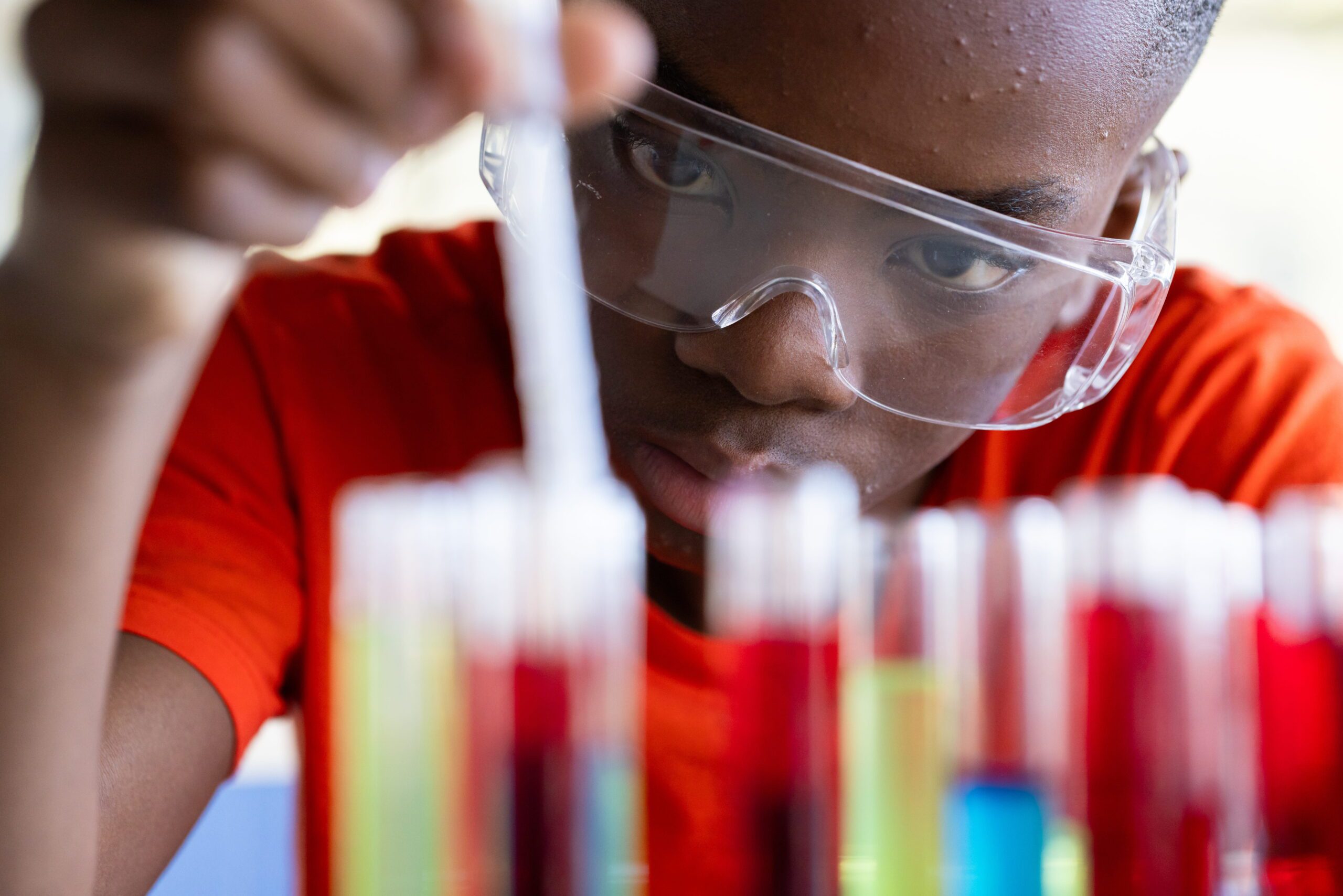
Ninth-grade science is the stage at which science ceases to be another subject and becomes a discipline. They enter having built up, through their middle-school years, to thinking in terms of systems — of matter, energy, forces, and evolution — and now they are expected to do that with a topic of enormous complexity — Life! In almost all states, 9th grade science is Biology, the first in a four-year progression of science studies in biology, chemistry, physics, and earth/space science. A large majority of students are choosing which areas of science to focus on and may develop a passion through choice. In some school districts, it’s called Physical Science or Integrated Science. The purpose remains the same in all cases.
It’s a year with real stakes attached — a first high school transcript, a first set of lab reports that actually count toward a grade point average, and often a student’s first sense of whether science is a subject they’re good at or one they’re just getting through. This guide breaks down the core topics that typically define 9th-grade science and explains how to teach each one so it actually sticks.
What Are the Core Topics of 9th-Grade Science?
Standards vary by state, and course titles vary even more, but most 9th grade science programs converge on the same handful of big ideas. Whether your course is officially called Biology, Physical Science, or something else entirely, students are generally expected to move through five major content areas, each one building scientific practices — asking questions, analyzing data, constructing explanations — right alongside the content itself. The Next Generation Science Standards’ School Life Science topics offer a useful reference point for how these areas typically break down, even in states that use their own frameworks.
Cell Biology and Biochemistry
Nearly every 9th-grade science course starts with the cell, because everything else in biology depends on it. Students learn cell structure and organelle function, then move into biochemistry — the chemistry of carbohydrates, lipids, proteins, and nucleic acids that make cellular processes possible in the first place. It’s so that photosynthesis and cellular respiration show up as the twin engines of energy flow through the living world.
Microscopes are worth the time investment. It helps students conceptualize what small cells are; even a slide of onion skin or a check cell helps them understand. Pairing microscopes with a diffusion lab, a dye dropped into water, or an egg for an osmosis demo gives students visual data to explain and introduce complex concepts and vocabulary. Students will have a basic understanding of selective permeability before they read about it.
Genetics and Heredity
It is in genetics that students first feel the effects of increased mathematics in their science course in the 9th grade. First, students learn about the structure of DNA and how proteins are formed; second, they learn how traits are inherited from parents to offspring through Punnett squares and probabilities. This will most likely be the first time students realize that genetic diversity is not just a background phenomenon but a key ingredient of evolution.
A genetics lesson provides an opportunity to facilitate student engagement and have students analyze the class data. Fast traits tests (tongue-rolling, attached/separate earlobes, knuckle hair, longer second toe) will help turn abstract theory into data collected during class and processed by the student personally. Then comes a very practical class of DNA isolation from strawberries (it smells much more pleasant than anything else).
Evolution and Natural Selection
Evolution asks students to think across timescales most of them have never really considered — thousands or millions of years, rather than a single lifetime. The core content covers evidence for common ancestry, including fossils, comparative anatomy, and DNA similarity, alongside the mechanism of natural selection itself: variation, selection pressure, and differential survival and reproduction.
The simulations will handle that. A straightforward simulation in which students play the predator role, selecting prey of varying colors on backgrounds that match or don’t match the prey’s color, enables students to collect their own selection data instead of having it explained to them by reading about Darwin’s finches. Once the students have conducted the simulations, the vocabulary of fitness, adaptation, and selection pressure will refer to processes they have seen at work.
Ecology and Ecosystems
Ecology expands the focus from the single individual to examine the transfer of matter and energy through populations, communities, and ecosystems. In this context, students explore food webs, energy pyramids, nutrient cycles, and how human activities interfere with these processes – perhaps the most relevant unit of the entire course.
Local data usually has more importance than textbook data. While working on a stream in their locality, a pile of compost at their school, or the population level in a nearby park, students will be interested because they know they can visit the particular ecosystem. Projects on “food web collapse,” in which a student removes a species from the food web and examines the effect on the whole ecosystem, will turn the topic into an argument.
Human Body Systems
It is very common for 9th-grade science classes to cover the human body systems at the end of the year, linking cellular and genetics topics to the body itself, which makes it easier for students to relate to. The circulatory, respiratory, digestive, and nervous systems are usually studied, with much focus on homeostasis.
Body systems are the easiest unit to make genuinely hands-on, because the phenomena in question are things students can measure directly on themselves. Tracking heart rate before and after exercise, timing reaction speed with a simple ruler drop, or measuring lung capacity with a balloon gives students self-generated data before they ever open a diagram of the circulatory system — which makes the terminology land as an explanation of something they just felt happen, not a list to memorize.
Bringing It Together
Quality 9th-grade science education lays the foundation for all other learning by creating an atmosphere that makes students feel comfortable working in a laboratory, using evidence-based reasoning, and being unsure of the answer. Because the content is based on laboratory work, simulations, and students’ data rather than PowerPoint presentations that need to be written out in notes, the transition from middle school science classes to high school Biology classes becomes natural and beneficial for future study of science.
Phenomena-driven, three-dimensional, standards-aligned science curriculum from Discovery Education can be used for developing foundational and transferable skills for K–12 students. Among those programs, you can find Science Techbook that provides research-proven four courses for high school which cover biology, chemistry, physics, and Earth and space science as well as SOS Instructional Strategies that allow students to process the newly acquired content collaboratively; Pivot Interactives supplementary program for grades 6–12 that offers 500+ interactive activities and Discovery Education Experience which provides supplementary K–12 instructional resources for high-quality Tier 1 science instruction and career readiness. Learn more about the offered programs on the Discovery Education homepage. There is a variety of support materials to help teachers be effective, impactful, and present in the 9th-grade science classroom.
Discovery Education offers phenomena-driven, three-dimensional, standards-aligned science programs to build foundational and transferable skills across K–12. Their programs include Science Techbook for ready-to-teach K–12 lessons that engage students with real-world phenomena and hands-on learning, Mystery Science for K–5 investigative lessons anchored in everyday scientific phenomena, the Pivot Interactives supplement for grades 6–12 with 500+ interactive activities, and Discovery Education Experience for supplemental K–12 instructional resources that support high-quality Tier 1 science teaching and career readiness.