
Key takeaways
-
Science teacher professional development is most effective when it is practical and connected to what teachers are doing in the classroom.
-
Effective professional development for science teachers helps them strengthen instruction, support inquiry, use technology purposefully, and make science more meaningful for students.
-
Supporting science teachers also supports student curiosity, problem-solving, engagement, and confidence.
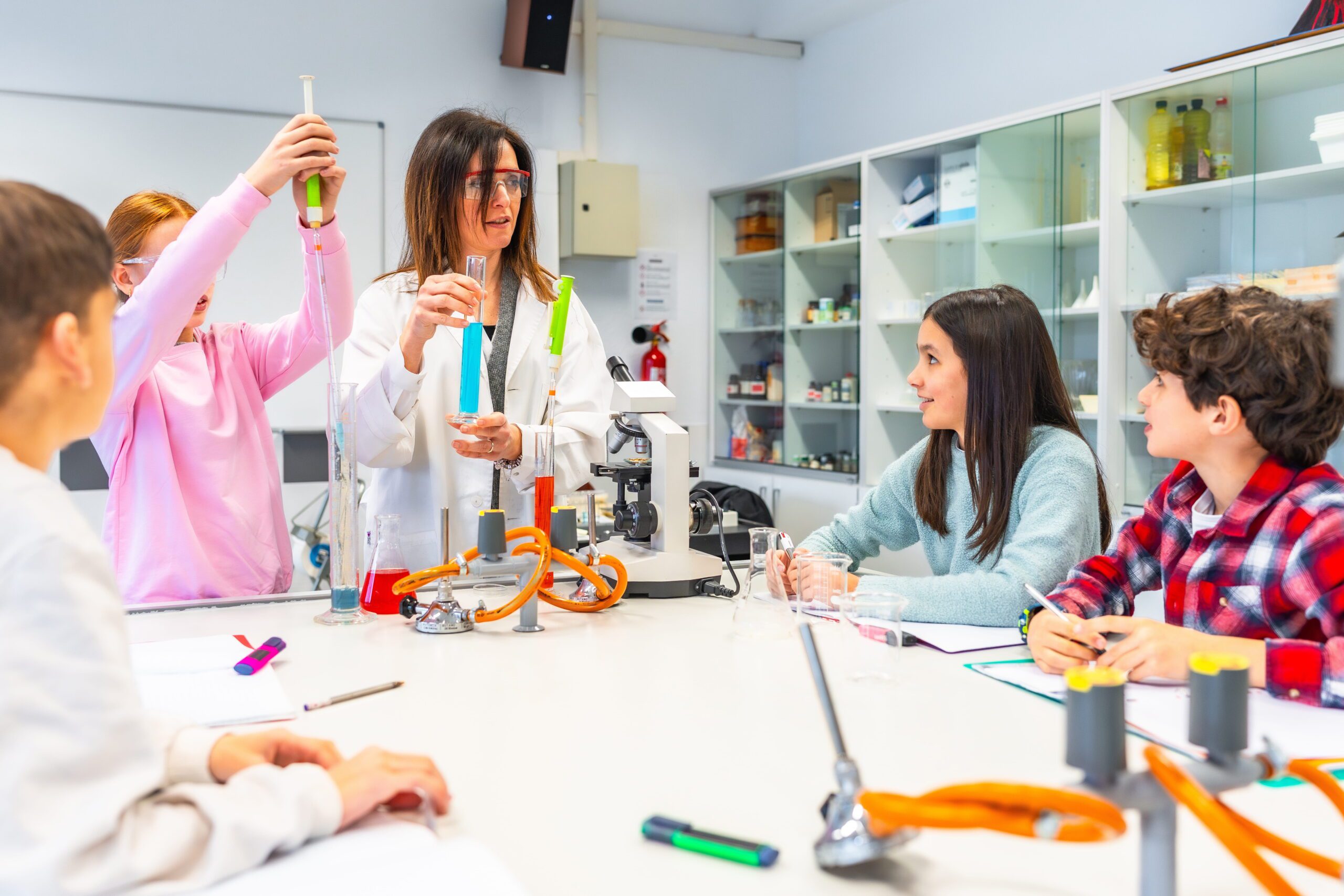
Science classrooms should be among the busiest and most engaging places in a school. The best ones are filled with questions, problem-solving, experimentation, discussion, and discovery. Students are not just memorizing key facts; they are learning how to think, observe, test ideas, revise their thinking, and better understand the world around them.
That kind of classroom does not happen by accident.
It takes careful planning, intentionally selected resources, and teachers who continue to grow in their practice. That is why science teacher professional development matters so much. Science is always changing. Instructional expectations are changing. Technology is changing. The needs of students are changing. Professional development helps science teachers keep up with these changes while staying focused on the most important part of the work: helping students learn.
Because of that, professional development has to be more than another requirement handed to teachers. Professional learning should be built around the work they are already doing with students. That is especially true in science. Teachers have to balance content knowledge, safety, literacy, technology, real-world connections, and student engagement. The most effective professional development recognizes what teachers already know and gives them time, support, and practical strategies they can use with their students.
What Is Science Teacher Professional Development?
Professional development for science teachers is ongoing learning and support that helps to improve science instruction, deepen content knowledge, and better support student learning. It can include workshops, conferences, peer collaboration, graduate coursework, certification programs, and online learning.
Professional development should help science teachers answer important questions, such as: How do I make this concept easier for students to understand? How do I help students think more like scientists? How do I use labs, simulations, and technology to improve learning?
The best science teacher professional development connects directly to what teachers are doing in the classroom. It should help teachers plan stronger lessons, ask better questions, use data, and create learning experiences where students do more than just listen to a lecture.
In science, this often means helping teachers move beyond “covering content” and toward creating opportunities for students to investigate, explain, and apply what they are learning. A lesson on ecosystems, forces, matter, weather, or chemical reactions becomes more powerful when students can connect the concept to something real.
What Are the Different Types of Professional Development for Science Teachers?
There is no single model that works for every teacher or every district. The most effective approach usually includes a mix of professional learning opportunities. Science teachers benefit from both formal training and informal collaboration, especially when the learning is connected to curriculum, standards, and student needs.
One of the most common types of professional development for science teachers is workshop-based learning opportunities. These sessions can be useful when teachers need a focused introduction to a new resource, instructional strategy, or curriculum update. An effective workshop should leave teachers with something concrete they can bring back to the classroom, not just a folder of materials they never open again.
Professional learning communities are also valuable professional development opportunities. When science teachers meet regularly to review student work, plan lessons, discuss challenges, and share strategies, professional development becomes part of the regular work of teaching. This is often where the most meaningful learning happens.
Conferences and statewide or national science education events can expose teachers to new ideas, current research, and innovative instructional practices. Online learning has also become an important part of science professional development for teachers, especially in districts where release time, travel, or substitute coverage may be limited.
What Kinds of Certifications Can Science Teachers Get?
Certification requirements often vary by state, grade level, and teaching assignment, but science teachers often have opportunities to pursue additional credentials or certifications that improve their practice and expand their professional opportunities.
Many science teachers begin with certification in a specific area such as biology, chemistry, physics, earth science, or general science. Depending on the state, teachers may be able to add additional science certifications by completing coursework, passing content exams, or meeting experience requirements.
Additional content area certification can be helpful for both teachers and districts. A teacher certified in more than one science area generally has greater flexibility in the courses that they can teach. This can be especially valuable in smaller districts, where student needs often shift from year to year.
Some teachers pursue advanced degrees in science education, curriculum and instruction, educational technology, or a specific science field. Others may seek certifications or micro-credentials in STEM education, instructional technology, environmental science, computer science, engineering, or career and technical education.
Explore Professional Development Resources
See how Discovery Education can support teacher growth through impactful professional learning.
What Are the Benefits of Professional Development for Science Teachers?
The most obvious benefit of professional development is improved instruction. When science teachers learn new strategies, strengthen content knowledge, and reflect on their practice, students experience better lessons.
But the benefits go deeper than that.
Strong professional development can increase student engagement. Science already has an advantage here because it invites curiosity. Students want to know why things happen, how systems work, and what causes change. Professional development helps teachers turn that curiosity into structured learning opportunities. It also provides teachers with strategies and tools for asking stronger questions, designing investigations, supporting collaboration, and connecting science to real-world issues.
Professional development also helps teachers support a wider range of learners. Science vocabulary, complex texts, data analysis, and abstract concepts are often challenging for students. Teachers benefit from strategies designed to make learning accessible without lowering expectations. This may include visual models, hands-on demonstrations, peer discussion, digital media, and opportunities for students to explain their thinking in different ways.
Another benefit of science teacher professional development is instructional consistency. When science teachers learn and work together, they are more likely to use similar language, have the same expectations, and take consistent approaches across grade levels.
5 Tips for Improving Yourself as a Science Teacher
Pay Attention to What Works
The best science teachers model curiosity. That should not stop with the students. Teachers grow when they remain curious about their own instruction. Why did one lesson work better than another? Why did students struggle with a concept that seemed clear during planning? What questions did students ask that could shape tomorrow’s lesson?
Improvement often starts with noticing. Science teachers do not need to change everything at once. Sometimes, one small adjustment can make a major difference.
Connect Science to the Real World
Students are more likely to engage when science feels relevant. This does not mean every lesson needs to be flashy or complicated. It means students should understand why what’s being taught matters.
Science is easier for students to understand when they can see it in action around them. For example, weather connects to storms, safety, and the decisions people make every day. Energy connects to homes, transportation, and the environment. Cells connect to health, medicine, and the human body.
Resources such as virtual field trips can help students see science beyond the classroom and connect lessons to careers, places, and real-world challenges.
Help Students Read, Write, and Think Like Scientists
Science teachers are also literacy teachers, whether they see themselves that way or not. Students need to read scientific information, interpret data, write explanations, use evidence, and communicate conclusions.
A big part of this is giving students time to talk and write like scientists. They need opportunities to explain what they notice, use evidence to support their thinking, learn vocabulary as part of the lesson, and work through difficult ideas aloud before they are expected to write about them.
When students learn how to explain science clearly, they tend to understand the subject more deeply.
Make Technology Support the Learning
Technology can make science more visual, interactive, and accessible. Simulations, videos, virtual labs, and modeling tools can help students see things that are too small, too large, too fast, or too dangerous to observe directly.
But technology should never be used just because it is available. The question should always be: Does this help students better understand the concept? Professional growth in this area means becoming more selective and intentional about the technology used in the classroom.
Learn From Other Science Teachers
Science teachers should not have to grow in isolation. Some of the best professional learning happens when teachers work together, share lessons, look at student work, and talk honestly about what is actually happening in the classroom.
Sometimes the most useful conversations are the simplest ones: How did you teach this? What lab worked well? Where did students get stuck? What would you change next time?
Those conversations help strengthen instruction across a department or school. They also reinforce an important point: professional growth should be a shared responsibility, not something left solely to individual teachers.
Why Science Teacher Support Matters
Science professional development for teachers is not just about attending a workshop or taking another online course. It is about helping teachers keep growing so students have better, more engaging science learning experiences.
When professional development is practical, ongoing, and connected to real classroom needs, it helps teachers strengthen their practice and helps students learn. It also helps create a school culture in which curiosity, reflection, and growth are expected of everyone.
That is what we should want from science education. Not just students who know more science, but students who think more scientifically. That starts with teachers who are supported as learners, too.
Discovery Education offers a variety of professional development solutions that improve educator knowledge, confidence, and impact on student learning. Their professional learning options include in-person, virtual, and hybrid sessions that are tailored to district needs and goals and the Everyday Teaching Essentials online library of short, actionable online resources that fit into educators’ busy schedules.