Key takeaways
-
First-grade social studies lays the foundation for citizenship.
-
The focus in 1st-grade social studies is on core concepts, not memorization.
-
Learning should be hands-on and connected to real life.
First graders are filled with curiosity about the world around them. Show them a picture of George Washington, and an endless supply of questions is sure to follow. Allow them to spin a globe, and their minds will be mesmerized with wonder about the continents and the places found on each one. From the rules we have to how people live in different places, a first grader’s mind is an active puzzle of assimilating knowledge about their community with the world around them. These early experiences build a foundation for understanding communities and making thoughtful decisions – both of which are central to 1st-grade social studies.
What is taught in 1st grade social studies?
Imagine asking a first grader, “Who helps our community?” and watching hands shoot up. This is an ideal time to explore the basics of geography, history, citizenship, and rules. Students begin to understand how people work together by comparing their own families to roles within the community. As they learn about service professions, they develop a clearer picture of how communities function and how people depend on one another. Bringing in guest speakers from service professions can make these connections even more meaningful.
Another big social studies skill for first graders is geography basics. For many, this may be their first time looking at a map, so helping them understand the symbols included and basic directions is key. Exploring the concept of place will help students see how social studies directly relates to their classroom, school, and community. Visuals and kinesthetic activities will help them experience basic geography in meaningful ways.
First grade social studies should help students understand the present and the past. There is no focus on memorizing dates; instead, help students see the differences between long ago and today. This can include having them reflect on their own progression from a baby to the present day. Simple timelines will help them compare the past to the present and better understand the concept of time.
Most students already know a little bit about rules, but helping them better understand responsibility and fairness is important too. Provide lessons that help students understand what it means to be a good citizen. Spend time exploring how sharing, helping, and listening are key parts of basic fairness and decision-making. This exploration of citizenship and rules will create an overlap between social studies and social-emotional learning, including scenarios such as “what should I do,” which will help students connect social studies to classroom expectations.
How to teach 1st grade social studies?
Once students are introduced to these concepts, the next step is to help them actively engage with the content in meaningful ways. Social studies is made up of five disciplines that students may not know the words for, but using activities to bring those areas to life is how their understanding of the subject develops. Using classroom routines and procedures to teach about rules, responsibility, and participation gives students an up-close look at civics. It can also be a valuable opportunity for them to learn about culture and respect others’ perspectives and backgrounds. In many classrooms, using the morning meetings model shows how communities function and supports discussions that teach powerful lessons, including listening, taking turns, and fairness.
Meanwhile, allowing students to share aspects of their culture and make simple economic choices teaches valuable lessons. When students talk about their traditions, foods, and holidays, they begin to understand that people live in different ways and that those differences should be respected. By discussing simple choices about lunch, toys, or jobs, students are practicing economic thinking and seeing how everyone makes decisions about what to spend money on. This task makes learning personal for students and keeps it relevant, which is very important in 1st grade social studies. To add the history component, use storytelling to help students understand the past vs. the present. Read-alouds and personal stories can bring abstract concepts to life and help students connect emotionally.
Giving students opportunities to role-play and make decisions is another authentic way to help them interact with social studies content. This might include voting on class decisions or role-playing different economic activities. These simple activities make civics and economics more than just social studies terms. Effective teaching strategies in 1st grade social studies help students build a well-rounded understanding of the world. Together, these topics align with common 1st-grade social studies standards and introduce students to the five social studies disciplines: civics, geography, history, culture, and basic economic concepts.
Many social studies activities can be implemented using simple classroom materials or printed images. One of the most effective ways to teach these concepts is to incorporate hands-on learning experiences into the social studies curriculum.
Explore K-12 Social Studies Resources
See how Discovery Education can support social studies.
5 1st Grade Social Studies Activities
Research from organizations like Edutopia shows that students learn best through active, hands-on experiences. Incorporate Social studies activities for 1st grade that are connected to students’ everyday experiences. At this level, students learn best by actively participating rather than listening to long explanations. The following activities are designed to build foundational skills across the social studies disciplines while keeping students engaged.
Activity 1: Community Helpers and Role-Playing
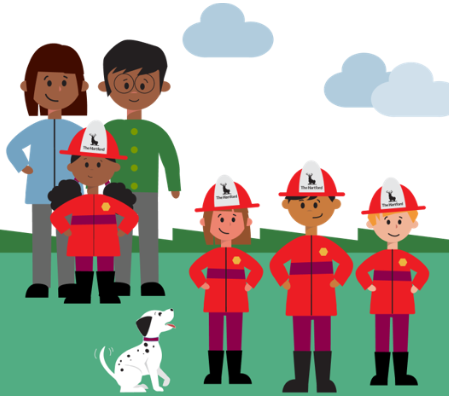
Students choose a community role. They act out simple scenarios showing them helping someone, solving a problem, or doing a task related to their job. Focus on service professions, such as teachers, firefighters, doctors, and store workers.
This activity builds civic understanding through speaking and problem-solving. Keep each scenario short and structured. Each role-play should take only 1-2 minutes.
Activity 2: Creating a Map
Students create a simple map of the classroom or school using drawings and symbols. Make sure students label key places within the selected location, including desks, doors, library, cafeteria, etc.
This activity focuses on geography and spatial awareness. Students use their observational skills to map a familiar space, which is a concrete experience that helps them understand geography without confusion.
Activity 3: The Past vs. the Present Sorting Activity
This activity requires the teacher to create a bundle of items for small groups to use for a sorting activity. Six to eight items are ideal for students to sort into two categories: past and present. Consider using classroom-friendly items that students can relate to. See the table below for items to use during the activity. If physical objects are not available, printed images work just as well.
The Past vs. the Present Sorting Activity: Item List
| Category | Past (Long Ago) | Present (Today) |
|---|---|---|
| Toys | Wooden toys, yo-yo, rag doll | Action figures, tablets, fidget toys, game controllers |
| Technology | Floppy disk, cassette player | USB drive, earbuds |
| Communication | Postcard, stamped envelope | Text message printout, emoji card |
| School Tools | Chalk | Dry-erase marker, sticky note |
| Clothing | Handkerchief | Shoelace |
| Household Items | Old-style coin | A dollar bill or a modern coin |
Students will have concrete examples of how things change over time. Time can be an abstract concept for young learners, so this activity makes it easier to understand and visualize.
Activity 4: Voting on a Class Reward
Students vote on a class reward or activity. Think of an upcoming event where students will receive a reward. Present some options, such as extra recess, a special treat, game time, or a brain break. Decide on the reward based on what makes the most sense for your class. Give students the option to vote either by placing ballots in a ballot box or by using stickers to apply to large charts. This civics activity gives students a chance to participate in decision-making and majority rule, increasing their investment in the outcome.
Activity 5: Shopping in a Classroom Store
In this activity, students use a token system to purchase something from a classroom store. Give students a way to earn money or tokens over a set time period. Then allow them to use their earnings to buy pencils, stickers, or snacks. The skills focus is on economics and deciding between needs and wants. It introduces basic economic concepts in a way students immediately understand. They are making choices with limited resources.
First-grade social studies plays an important role in helping students understand their world and their place in it. Social studies activities for 1st grade should be interactive, relatable, and connected to real-life experiences, so students are more likely to stay engaged and retain what they learn. By building these foundational skills early, teachers help students master 1st grade social studies standards and develop the awareness and understanding they will continue to use in later grades and beyond.
Discovery Education offers inquiry-based, standards-aligned social studies programs to build deep conceptual understanding, critical thinking, and literacy. Their programs include Social Studies Essentials for ready-to-teach K–5 lessons that support consistent Tier 1 routines and include content aligned to the C3 Framework, Social Studies Techbook for grades 6–8 project-based learning that includes primary source analysis, and Discovery Education Experience for supplemental K–12 instructional resources that support high-quality Tier 1 social studies teaching and career readiness.
Find other grades
Whether you’re planning your year, mapping out units, or looking for grade-specific social studies resources, we’ve got you covered.
Select your grade level below to access targeted social studies guides, core objectives, and teaching tools.